
DBT for Teens & Adolescents starts with one idea. Big feelings aren’t the problem. Not knowing what to do with them is.
Dialectical Behavior Therapy was built for people stuck in emotional pain that wouldn’t let up. Teens didn’t invent that struggle. Adolescence just multiplies it. A missed text can feel like rejection. A bad grade can feel like a verdict. DBT skills for teens exist to close the gap between the feeling and the fallout that follows it.
Here’s what actually gets taught. Four areas, not vague advice: staying present, getting through hard moments without making them worse, naming and steering emotions, and talking to people without torching the relationship. DBT for adolescents adds a fifth piece most adult programs skip, called Walking the Middle Path. It’s really just learning that two true things can sit side by side.
This guide covers how DBT works for teenagers, what DBT skills worksheets look like in daily practice, and what the research says about outcomes. Spoiler: it’s not nothing. Clinical research on dialectical behavior therapy for suicidal adolescents has shown real drops in self-harm and suicidal thinking among teens treated with it.
You’ll also find free dbt worksheets for teenagers below. Printable. No login wall. Built for practice, not just reading about it. Pair them with tools like an emotions worksheet for naming what’s happening inside, or coping skills worksheets for the distress tolerance piece specifically.
Quick Overview: DBT skills for teens build four things. Noticing emotions instead of getting swept by them. Getting through a hard ten minutes without making it worse. Saying what you need without losing the relationship. And holding two true things at once, which is harder than it sounds.
Table of Contents
Disclaimer
This blog is written and edited with the help of AI, then reviewed by me before publishing. As a result, the content is for general reflection only, not therapy or medical advice, and I’m not a licensed mental health professional. If you’re in crisis, please contact 988 if you’re in US or a local crisis service of your country instead of relying on this site.
DBT for Teens & Adolescents: What It Is and How It Helps
DBT for teens and adolescents pairs acceptance with real behavior-change skills. It helps a teenager manage big emotions. It helps them get through hard situations, patch up relationships, and make calmer choices under pressure. That’s the short version. The rest explains how it actually works.
What Is DBT?
Dialectical Behavior Therapy, or DBT, grew out of cognitive behavioral therapy. It teaches people how to handle emotions and shift behaviors that aren’t working anymore. DBT for adolescents, often shortened to DBT-A, bends that same approach around a teenager’s world. Caregivers usually get pulled into treatment too. Not optional in most programs.
The word “dialectical” sounds clinical. It isn’t complicated. It means holding two things at once: accepting where you are right now, and still working to change it. Both at the same time. For a teen, that might look like admitting the anger is real and makes sense, while still learning a steadier way to respond to it. Not denial. Not suppression. Just a different next move.
How Does DBT Work for Teenagers?
DBT isn’t a single conversation on a couch. It’s a structure. Individual therapy, skills-training groups, family sessions, and coaching calls between appointments can all show up, depending on the program a teen is in.
Inside that structure, teens learn to catch their own emotional triggers before the triggers run the show. They learn to pause. That’s the hardest part for most people, not just teens. They build tolerance for distress instead of making a hard moment worse, and they practice saying what they actually need out loud. DBT skills worksheets give teens a concrete way to run through that sequence on paper before they need it live.
Parents aren’t bystanders here. They often learn how to validate a feeling without fixing it on the spot, and how to back up the skill practice happening at home. Why does that matter so much? Because a teen who hears “that makes sense” at home practices the skill twice as often as one who doesn’t.
What Are the Five Core DBT Skills for Teens?
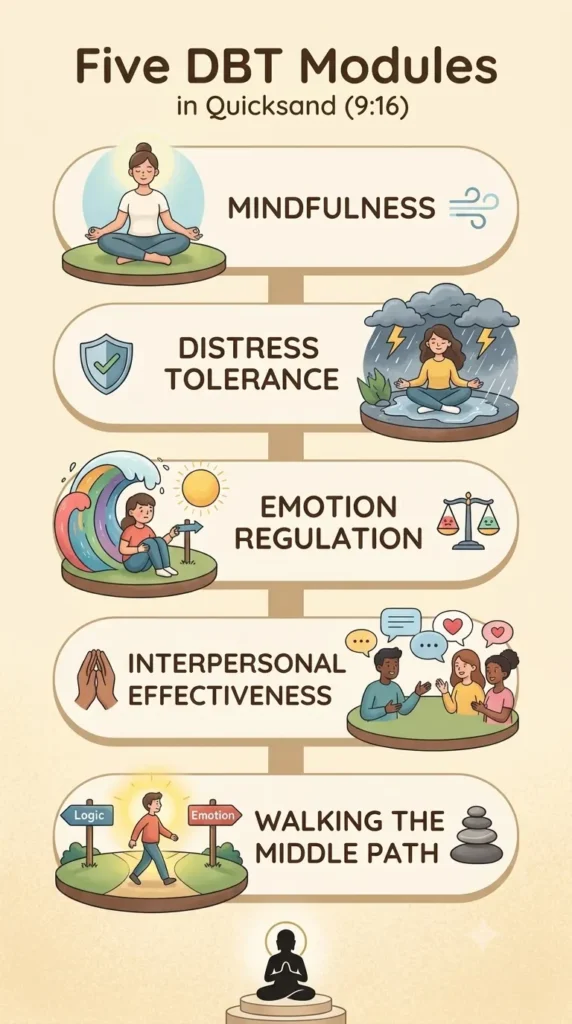
Adolescent DBT runs on five skill modules. Not four, like standard adult DBT. Teens get a fifth one built specifically for the push and pull of family life.
- Mindfulness: Noticing the present moment. No instant judgment attached. Mindfulness journal prompts give teens a lower-pressure way to build this one.
- Distress Tolerance: Getting through a rough moment without making it worse. Survival, basically. These coping skills worksheets cover the same ground from a broader angle.
- Emotion Regulation: Understanding what’s actually being felt, then responding on purpose instead of on autopilot.
- Interpersonal Effectiveness: Saying what’s needed, holding a boundary, and keeping the relationship intact while doing it.
- Walking the Middle Path: Trading all-or-nothing thinking for something closer to balance. Seeing another person’s side without losing your own.
That fifth skill is the one DBT-A adds for families specifically. Most teen-parent conflict runs on “you’re totally wrong” versus “I’m totally right.” Walking the Middle Path interrupts that pattern on purpose.
Who Can Benefit From DBT-A?
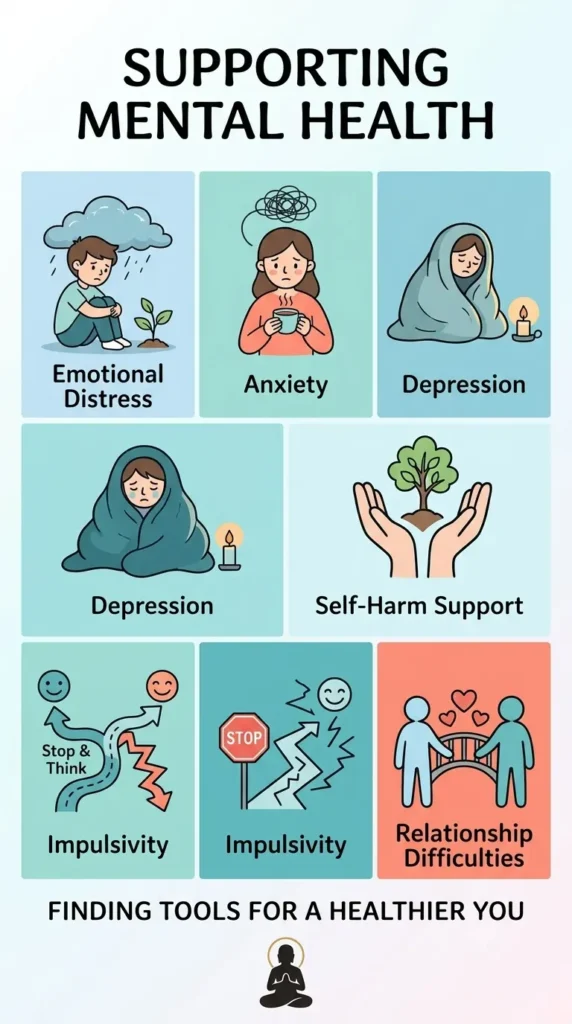
DBT-A often gets recommended for teens dealing with emotions that won’t settle down, impulsive behavior, self-harm, suicidal thoughts, or relationship patterns that keep blowing up. Here’s the part people miss: it isn’t locked to one diagnosis. A teen doesn’t need a specific label to benefit from the skills.
DBT-A shows up often alongside anxiety, depression, ADHD, and BPD, though it isn’t limited to those either. A qualified mental health professional is the one who should assess whether a full DBT program fits. Not a worksheet. Not a blog post.
For more on how this approach works for adolescents specifically, the New Hampshire Children’s Behavioral Health Resource Center’s guide to DBT-A is a solid next read.
If a teenager may be at immediate risk of self-harm or suicide, this isn’t a worksheet moment. Reach out to local emergency services, a qualified mental health professional, or the 988 Suicide & Crisis Lifeline right away.
What Mental Health Challenges Can DBT Help Teenagers With?
Most teens aren’t dealing with one problem. They’re dealing with five at once, badly, all before dinner. DBT for teens doesn’t fix every one of them. It gives a teenager something to reach for the next time one of these shows up.
1. Intense Emotions and Mood Swings
Some teens go from fine to furious in under a minute. A small comment at lunch turns into a slammed door at home. Nothing about that is rare. It’s how a brain still under construction handles a feeling that arrives too fast to name.
DBT’s emotion regulation skills slow that down. A teen learns to spot the feeling before it runs the show, trace what set it off, and pick a response that isn’t yelling or shutting down. Not instantly. Over weeks, with practice.
2. Anxiety and Stress
School. Friends. Family expectations that never seem to let up. Add a vague dread about the future and stress stops being occasional, it becomes background noise.
Mindfulness teaches a teen to notice an anxious thought without obeying it. That’s the whole trick. The thought shows up, gets named, and loses some of its grip. Distress tolerance skills work alongside that, giving teens a way to sit through a hard moment instead of escaping it.
3. Depression and Emotional Distress
Low mood doesn’t always look dramatic. Sometimes it’s just a teen who used to care about things and now doesn’t. Hopelessness. Flat affect. A room that stays dark longer than it should.
DBT skills build emotional awareness and steadier coping habits. They help a young person respond to a hard feeling instead of being flattened by it. One thing matters here: DBT supports treatment. It doesn’t replace a proper clinical assessment, and it was never meant to.
4. Self-Harm and Suicidal Thoughts
Some teens turn to self-harm when the pain gets louder than their ability to manage it. DBT teaches safer ways to ride out an urge and, just as important, how to ask for help before it escalates.
This one isn’t a wait-and-see situation. Self-harm and suicidal thoughts need professional attention, fast. For warning signs and where to turn, the National Institute of Mental Health has a clear, practical guide worth reading today, not someday.
5. Impulsive Behaviour and Risky Choices
Act first, think later. It’s a pattern, and it tends to end in arguments, regret, or choices a teen wouldn’t have made with ten more seconds to think.
DBT works on that gap. The STOP skill gives a teen a pause button: stop, take a step back, observe what’s happening, then proceed with some intention. Four words. Hard to apply at 15. Worth teaching anyway.
6. Relationship and Communication Difficulties
Friend drama. Family blowups. Peer pressure that shows up in a group chat at 11pm. Adolescence runs on relationships, and most of them get tested.
Interpersonal effectiveness skills give teens language for this. How to ask for what they need. How to hold a boundary without the whole friendship collapsing. How to actually listen mid-disagreement instead of just waiting for a turn to talk. None of it is complicated. It just takes reps, the same way coping skills and naming an emotion accurately take reps.
The Five Core DBT Skills for Teens and Adolescents
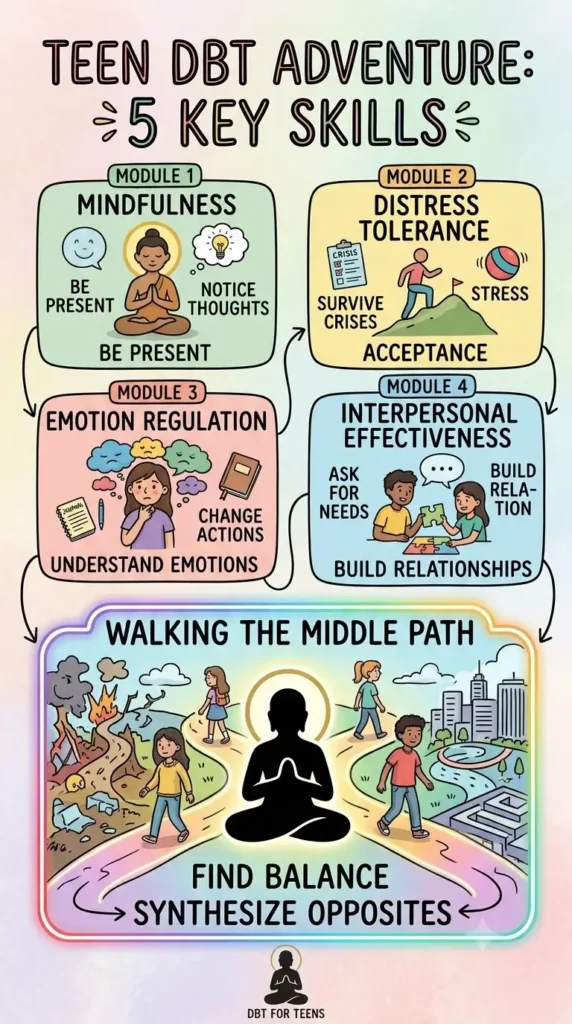
DBT for teens breaks down into five skill sets, not one big fix. Each module covers a different slice of daily life: emotions, stress, family friction, friendships. Learn all five and a teenager gets a real toolkit for responding to hard moments instead of just surviving them. Not perfect control. Just a wider gap between the feeling and the reaction.
1. Mindfulness
Mindfulness means noticing the present moment first. No judging the thought. No judging the feeling. Just noticing it. That pause is the whole skill. A teen learns to catch what’s happening before reacting on autopilot.
Picture an argument that’s heating up fast. A teenager who feels anger rising can notice it, take a breath, and actually listen before firing back a reply. That’s the skill working. Practising Wise Mind helps too, since it balances raw emotion against logical thinking instead of letting one side run the show.
Want the full module? The DBT mindfulness skills guide breaks down Observe, Describe, and Participate step by step.
2. Distress Tolerance
Some problems can’t be solved on the spot. Distress tolerance is built for exactly that. These skills don’t fix the situation. They stop a teen from making it worse while it’s still happening.
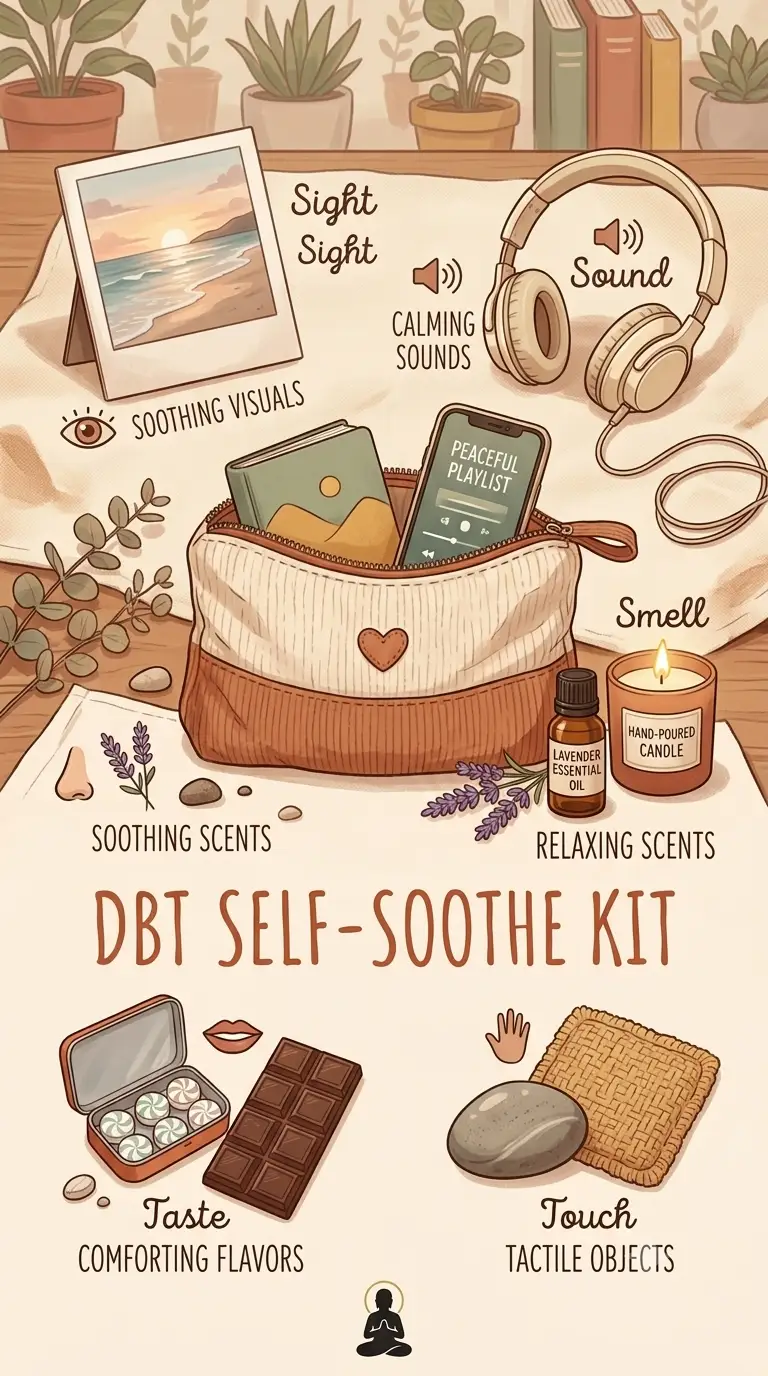
The STOP skill is the starting point: stop, step back, observe, proceed mindfully. Four steps, one breath between impulse and action. TIPP handles the moments when emotional intensity spikes hard and fast, bringing the body’s arousal down before any reasoning can happen. Self-soothing works differently. It leans on the five senses to create a little comfort when nothing else is available.
The DBT distress tolerance skills guide covers the full set. For step-by-step breakdowns, see the STOP skill, TIPP skill, and self-soothing guides.
3. Emotion Regulation
This isn’t about shutting feelings off. Emotion regulation teaches teens to understand what they’re feeling, spot what’s driving it, and respond in ways that actually help. The goal was never to erase difficult emotions. It’s cutting down how intense and how often they hit.
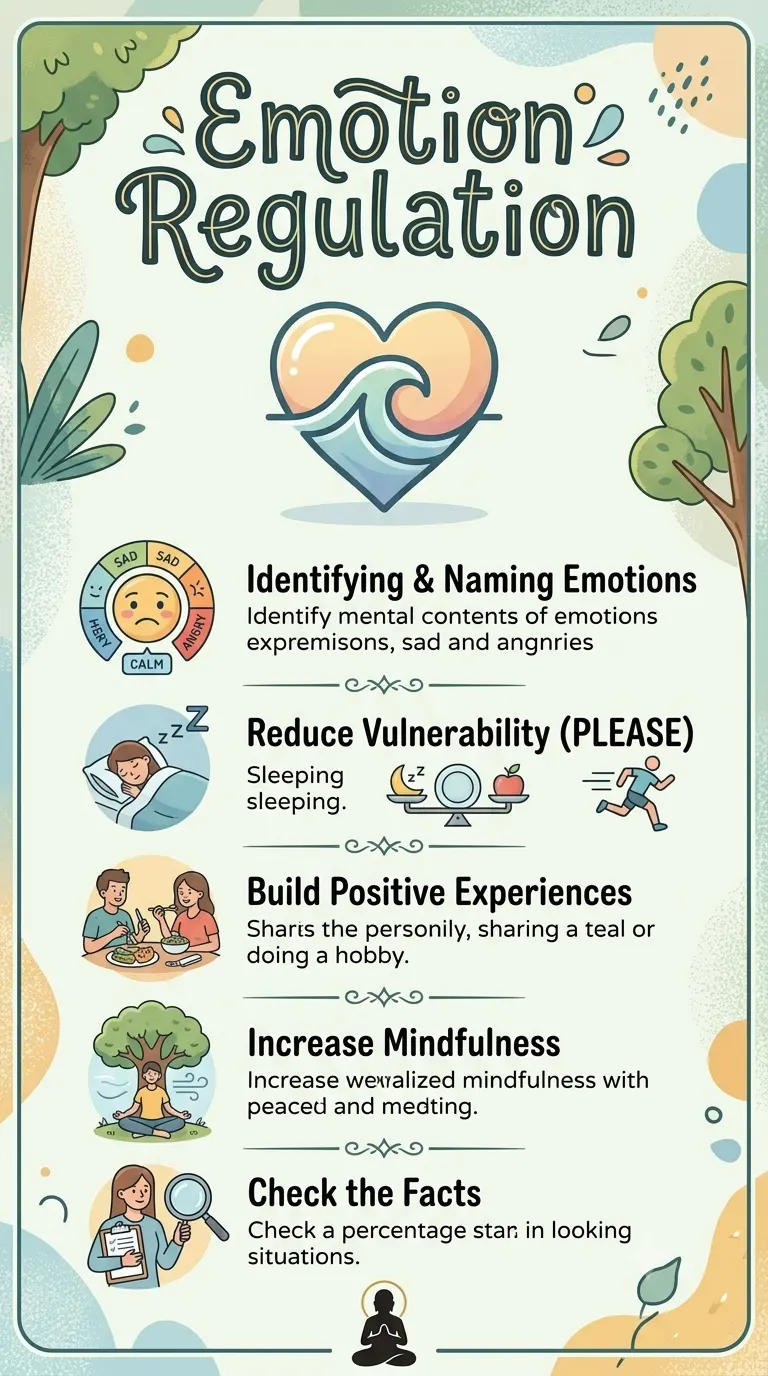
Sleep, regular meals, and movement do more for mood than most teenagers expect. The DBT PLEASE skill covers exactly that: caring for the body so the mind has less to fight. Pair it with the other emotion regulation tools and a teen has a real system for catching triggers before they spiral.
4. Interpersonal Effectiveness
Good relationships don’t happen by accident. Interpersonal effectiveness is the module that teaches teens to say what they need, hold a boundary, and keep the relationship standing afterward. Friends, parents, teachers, classmates, it applies everywhere disagreements show up.
A teen practises stating their own needs while still weighing the other person’s side. That’s harder than it sounds mid-argument. Self-validation rounds this out. It means acknowledging a feeling as real without needing someone else’s approval first.
Explore the full breakdown in interpersonal effectiveness skills, or go deeper on self-validation on its own.
5. Walking the Middle Path
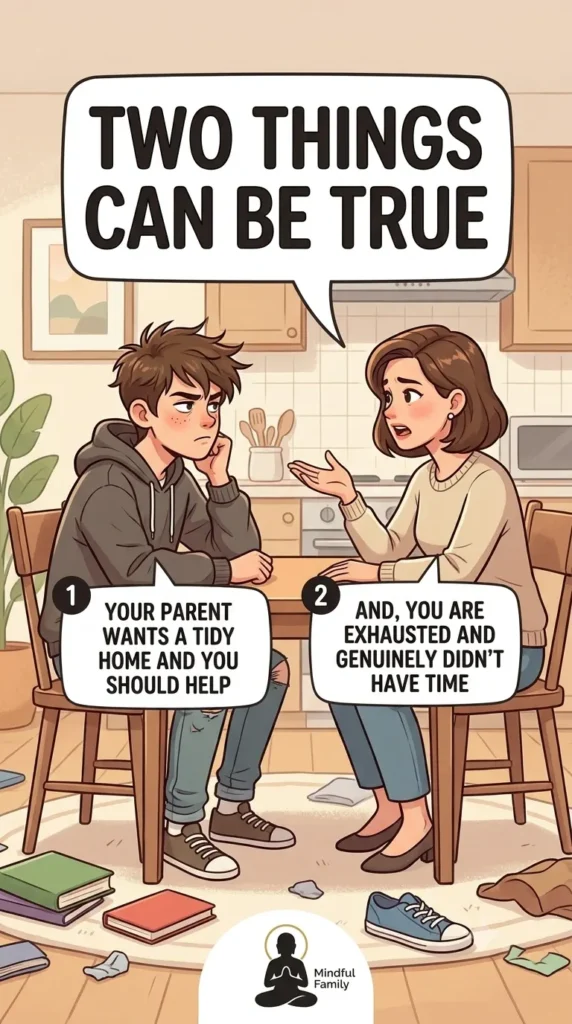
Here’s a module built just for teens and their families. Walking the Middle Path grew out of work by DBT researchers Miller and Rathus, who found that adolescents and parents tend to get stuck in all-or-nothing thinking. Two opposite ideas can both hold some truth. That’s the whole premise.
A teenager thinks, “My parents don’t understand me.” A parent thinks, “We’re trying to protect you.” Neither one is wrong. Walking the Middle Path asks both sides to listen, validate the other’s experience, and land somewhere workable. It also teaches teens to hold acceptance and change at the same time, get more flexible in how they think, and realise a disagreement doesn’t have to become a fight.
DBT values work fits naturally here too. It helps a teenager figure out what actually matters to them, then make choices that line up with it. Explore that process in the DBT values guide.
DBT Activities and Exercises for Teens
Reading skills in a workbook is one thing. Using them when your chest feels tight is another.
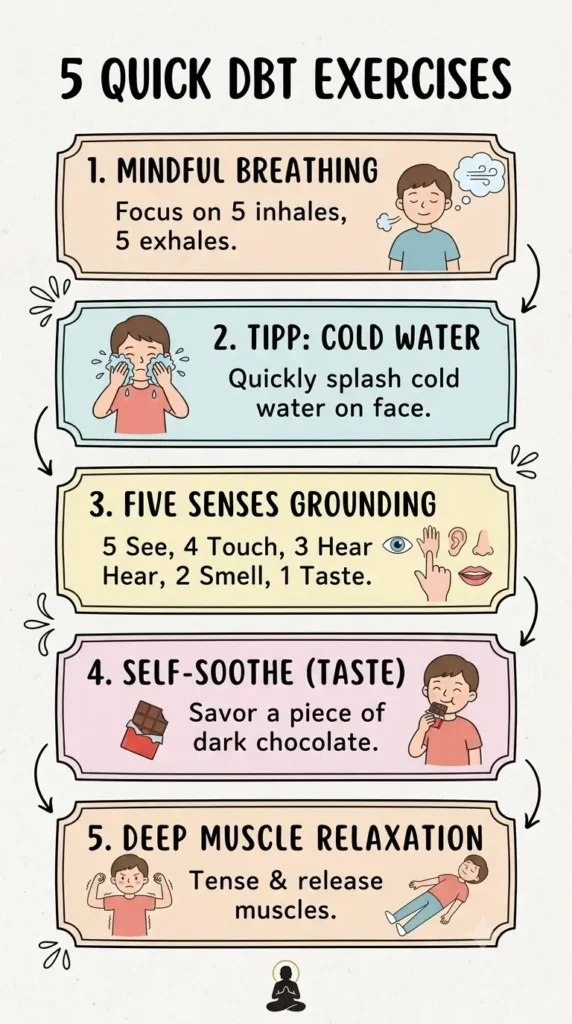
That gap is where DBT activities for teens actually earn their keep. These dbt exercises for teens take ideas from a full DBT skills worksheets program and shrink them down into small, repeatable moves. Something a teen can run through alone, in a journal, or with a parent or therapist nearby. No big production. Just practice.
Below are five dbt skills activities for teens worth trying this week.
1. Mindful Breathing Exercise
Find a seat. Breathe in slow. Breathe out slower.
Notice what the body does while it breathes. Shoulders dropping. Chest rising. Maybe a knot in the stomach that won’t quit. The mind will wander, and that’s not failure. Just notice it happened, then come back to the breath.
Two to five minutes is enough. This isn’t about clearing the mind. It’s about practicing return, and return is the actual skill. For extra prompts to pair with quiet moments like this, our mindfulness journal prompts work well alongside breathing practice.
2. Emotion Check-In Journal
Write down the feeling. Then write what happened right before it showed up, and how the response played out after.
Most teens react before they notice they’re reacting. That’s normal. The brain moves fast under stress, faster than it should sometimes. This check-in habit slows that process down enough to actually see it happening.
One more line matters most: what do I need right now? Sometimes it’s rest. Sometimes it’s space. Sometimes it’s just naming the thing out loud. Our journal prompts for mental health and emotions worksheet both pair well with this exercise for teens who want more structure.
3. Five-Senses Grounding Activity
Stress doesn’t ask permission. It just shows up, loud and sudden, and the body reacts before the brain catches up.
This is where grounding earns its name. Name five things you can see. Four you can feel. Three you can hear. Two you can smell. One you can taste.
Takes under a minute. Works anywhere. A classroom, a car, a crowded hallway. The senses pull attention back to now, which is usually the opposite of wherever a stressed-out brain wants to go.
4. Opposite Action Practice
Here’s the honest part: emotions lie sometimes.
Not always. But often enough that DBT treats “check the facts” as its own skill. Ask whether the urge actually fits the situation. If fear says skip the presentation and nothing dangerous is actually happening, that urge is worth questioning.
Opposite action means doing the thing the emotion is avoiding, carefully and on purpose. Approach the assignment instead of closing the laptop. Send the text instead of leaving it on read for three days. Small steps count.
5. Build a Personal Coping Skills List
A list only works if it exists before the hard moment, not during it.
Music. A walk around the block. Drawing badly on purpose. Stretching on the floor. Texting the one friend who always picks up. None of these fix everything. They don’t have to. They just need to interrupt the spiral long enough to think straight.
Keep the list somewhere visible. Stuck to a mirror, saved in notes, taped inside a notebook. A list buried in a drawer gets forgotten right when it’s needed most.
Want more structured practice? Our Coping Skills Worksheets walk through printable tools for managing tough emotions and stressful situations, step by step.
DBT Group Activities and Games for Teens
A worksheet teaches a skill alone. A group teaches something a worksheet can’t: what the skill looks like on someone else’s face. That’s the whole case for DBT group activities for teens. A trained facilitator runs the room, sets the tone, and makes sure nobody gets left out of the exercise.
These dbt activities for teens work best in a structured, voluntary setting. Nobody is forced to perform. Nobody has to explain their own life to the group. The activities below practice the skill. They don’t mine anyone’s history to do it.
1. Emotion Charades
Write emotions on cards. Frustration, embarrassment, excitement, disappointment. Keep them concrete. Each teen draws a card and acts it out without speaking while the group guesses. Simple rules, real practice.
Afterward, open it up. How did the face change? What did the body do? Here’s the part most people miss: two teens can act out “disappointment” completely differently, and both are right. Emotions don’t come with a single script. If a teen struggles to name what they’re feeling even in this low-stakes setup, this emotions worksheet gives them more practice putting a word to a feeling before the next session.
2. Mindful Listening Circle
Pair the teens up. One talks about something neutral, a hobby works fine, for one minute. The other just listens. No interrupting. No planning a comeback in their head. Then they switch.
What made it hard to just listen? Ask the group that directly. Most teens will say the urge to jump in was stronger than they expected. That’s the skill. Attention is harder to hold than people think, and this exercise makes that obvious fast. For teens who want to keep building present-moment awareness outside the group, these mindfulness journal prompts extend the same muscle on paper.
3. Wise Mind: Two Sides of a Situation
Hand each teen a scenario. A disappointing grade. A fight with a friend. Nothing drawn from their own life, just something plausible enough to feel real.
Ask for two reactions. First, the purely emotional one. Then, a response built only on facts. Neither extreme is the goal. What sits between them usually is. This is where Wise Mind lives, and nobody has to share a single personal detail to practice it. For a deeper walkthrough of the skill itself, including a printable worksheet, see this full guide to DBT Wise Mind.
4. Coping Skills Challenge
Stressful situations go on cards too. Feeling left out. Nerves before a presentation. A disagreement that’s spiraling. Small teams pitch a DBT skill they’d actually use for each one.
The facilitator’s job here is connection, not correction. Tie each answer back to mindfulness, distress tolerance, or emotion regulation so the teens see the module behind the moment. Teams that get stuck can borrow ideas straight from these coping skills worksheets rather than starting from a blank page.
Keep It Safe, Keep It Voluntary
None of this works if a teen feels cornered. Set the ground rules early. Respect, confidentiality, and the plain fact that confidentiality among peers can’t actually be guaranteed. Say that part out loud. Don’t soften it.
Every teen should be free to pass on a question, sit out an activity, or step away. Nobody should ever be pushed into sharing trauma or a personal disclosure to make an exercise “work.” That’s not the point of any of these games.
This isn’t just good practice. It’s documented practice. The American School Counselor Association’s position on group counseling calls for informed consent, voluntary participation, and screening before anyone joins a group.
UNICEF’s facilitator guide for adolescent mental health says something similar in different words: young people should only ever share what they’re actually comfortable sharing. Build the room around that, and the games do the rest.
How DBT-A Therapy Works: What Teens and Parents Can Expect
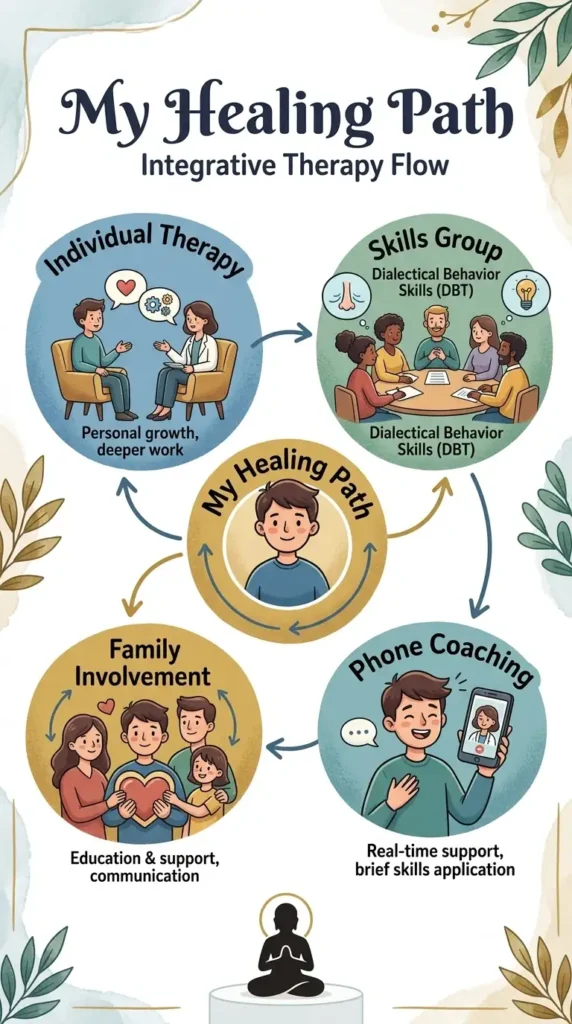
DBT for teens and adolescents isn’t one single session. It’s a web of parts working together. Structured therapy, skills training, and real support outside the therapy room, all at once. Teens learn to handle big emotions and messy relationships. Parents often join in too, reinforcing skills at home so progress doesn’t stop at the clinic door.
Five pieces make up most DBT-A programs. Here’s how each one actually works.
1. Individual Therapy
One teen. One trained DBT therapist. A regular slot on the calendar. That’s the starting point.
Together they map out which behaviors and situations keep causing trouble. They set goals. Then they work through real problems using DBT skills, not hypothetical ones. A session might focus on spotting an emotional trigger before it takes over. Or reducing a harmful behavior that’s already causing damage. Or just applying a skill to whatever happened at school that week.
Sound abstract? It isn’t, once a therapist sits down with a teen and asks what actually happened right before that feeling hit. That question does more work than most advice ever could.
Pairing sessions with a simple emotions worksheet can help teens name what they’re feeling before they even walk into the room.
2. DBT Skills Group
This isn’t a lecture. It runs more like a class, with lessons, discussion, and actual practice.
Teens learn four skill sets here: mindfulness, distress tolerance, emotion regulation, and interpersonal effectiveness. Adolescent DBT adds a fifth piece too. Walking the Middle Path, built to help teens and families balance acceptance with change. Neither side gets to win outright.
Specific skills inside each module give teens something concrete to reach for. Wise Mind balances emotion with logic. The STOP skill builds in a pause before a reaction takes over. DEAR MAN, part of the DBT skills worksheets library, gives teens a script for hard conversations with parents, friends, or teachers.
3. Phone Coaching
A skill learned on Tuesday doesn’t always show up on Thursday, right when it’s needed. That’s the gap phone coaching closes.
Teens can reach their therapist between sessions when a DBT skill needs to happen in real time, not after the fact. The goal isn’t a long conversation. It’s a quick nudge: use the skill now, not at next week’s appointment. Rules and availability shift from program to program, so it’s worth asking a provider directly what’s offered.
4. Family Involvement
Most people assume therapy only happens with the teen in the room. In DBT-A, that’s rarely the whole picture.
Parents or caregivers often sit in on skills groups alongside their teen. Some programs add separate family therapy sessions. Others run parent training on its own track entirely. The point isn’t to assign blame to anyone, parent or teen. It’s to build a home where the skills actually get used, not just discussed once a week.
Practicing communication. Understanding what’s driving a teen’s reaction. Responding differently the next time conflict flares up. For parents processing their own side of a hard week, these journal prompts for mental health can offer a quiet place to start.
5. Therapist Consultation Team
Teens and parents never sit in on this one. That doesn’t mean it doesn’t matter.
DBT therapists and skills trainers meet on their own, regularly, as a team. They talk through stuck cases. They support each other through the hard ones. They work to keep DBT delivered consistently across every therapist on staff. Full DBT-A includes this piece even though families rarely know it’s happening behind the scenes.
What Should Parents Expect?
A full DBT-A program brings all five pieces together. But the schedule, pacing, and exact level of family involvement still shift from program to program.
Family therapy and parent training in particular get adapted often. Some programs make them optional. Others build them in from day one, matched to what the teen actually needs. The Administration for Children and Families’ DBT-A program description lays out how these components typically run across a 24 to 52 week course.
Want the fuller picture first? Behavioral Tech’s explanation of DBT breaks down the four modes of standard DBT that DBT-A builds on.
How Parents Can Support Teenagers Practising DBT Skills
A teenager doesn’t learn DBT skills for teens from a worksheet alone. They learn it from a house where feelings get heard instead of graded. That’s the real starting point. Listen calmly. Practice together. Let independence grow at its own pace. Small moves, repeated often, beat one big lecture every time.
1. Model the Skills in Everyday Situations
Teenagers watch more than they listen. Pause mid-disagreement. Name what you’re feeling out loud. Respond instead of firing back. That’s the whole lesson, demonstrated, not explained.
You don’t need to get it right every time. Nobody does. Admit the moments you botched it. That single admission teaches more about emotional regulation than a dozen calm speeches ever could.
2. Validate Feelings Without Always Agreeing
Validation isn’t agreement. It’s proof that your teenager’s reaction makes sense from where they’re standing. “I understand why that upset you” works, even when you’d have seen it differently yourself.
Skip the dismissals. “You’re overreacting” and “it’s not a big deal” shut a teenager down fast. Say either one enough times, and they stop bringing you the hard stuff at all.
3. Practise DBT Skills Together
Try this as a family: a few minutes of mindful breathing, naming an emotion out loud, running through STOP before anyone responds to a stressful moment. Keep it short. Keep it loose.
Let your teenager pick the skill that actually feels useful to them. Not every rough evening needs to become a teaching moment. Sometimes it’s just a rough evening.
4. Encourage Independence and Recognise Progress
Hand over the choice. Let your teenager decide which skill to use and when they want support instead. Praise the effort, not just whether it worked.
Setbacks aren’t failure. They’re part of how the skill gets built. One rule matters above the rest: never turn a DBT worksheet or skill into a punishment. The moment it becomes a control tool, it stops being DBT.
5. Work With Their Therapist When Appropriate
If your teenager is in DBT-A, ask the therapist directly how to reinforce skills at home. Family involvement is often part of adolescent DBT treatment, though how much depends on the specific program.
Stay engaged with the agreed treatment goals. Respect what’s private. And don’t swap out professional guidance for a stack of self-guided worksheets. That’s not what they’re for.
Is DBT Effective for Teens? What the Research Says
Research suggests that Dialectical Behavior Therapy for Adolescents (DBT-A) can help teenagers who experience severe emotional difficulties, self-harm, or suicidal thoughts.
However, results vary across studies, and DBT-A is not a guaranteed solution for every teen. Looking at larger clinical trials alongside smaller studies gives a more balanced picture of its benefits and limitations.
What Research on Adolescent DBT Shows
Research on DBT-A (Dialectical Behavior Therapy for Adolescents) is most developed for teenagers who self-harm or experience suicidal thoughts. Studies also examine emotional dysregulation and borderline personality symptoms, but the strongest evidence currently concerns reducing self-harm and suicidal ideation.
What the 2011 Fleischhaker et al. Study Found
A 2011 pilot study by Fleischhaker and colleagues followed 12 adolescent girls receiving DBT-A. Researchers reported improvements across several areas, with effect sizes ranging from 0.54 to 2.14.
No suicide attempts occurred during treatment or the one-year follow-up. However, this was a very small pilot without a comparison group, so its results are encouraging rather than conclusive. Read the study on PMC. PMC+1
What Larger Trials and Reviews Add
A stronger evidence base comes from McCauley et al.’s 2018 randomized trial involving 173 adolescents aged 12–18 at high risk of suicide. Compared with supportive therapy, DBT reduced suicide attempts, nonsuicidal self-injury, and overall self-harm after treatment. The advantage between groups was no longer statistically significant during the subsequent follow-up period. Read the trial on PubMed.
A 2021 systematic review and meta-analysis covering 21 studies and 1,673 adolescents also found small-to-moderate benefits for reducing self-harm and suicidal thoughts. Read the review on PMC. PubMed+1
What Are the Limitations of Current Research?
Not every study uses the same treatment format, comparison group, or outcome measures. Some studies have small samples, and many participants are girls, limiting what researchers can conclude about boys and gender-diverse teenagers. Evidence is also less established for treating anxiety or depression alone.
How to Evaluate Whether DBT-A Is Appropriate for Your Teenager
A qualified child and adolescent mental health professional can assess whether DBT-A fits your teenager’s needs. Ask about therapist training, family involvement, treatment components, and progress monitoring. DBT-A is a structured treatment, not simply a collection of worksheets, and should be tailored to the teenager’s circumstances.
Free DBT Worksheets and Printables for Teens
Free DBT worksheets can help teenagers practise emotional regulation, mindfulness, distress tolerance, and communication skills outside therapy. The resources below connect each skill with its relevant guide. Check that each printable is suitable for adolescents before presenting it as a teen-specific worksheet.
DBT STOP Skill Worksheet
The STOP skill helps teens pause before reacting to a stressful situation. It encourages them to stop, take a step back, observe what is happening, and proceed mindfully. Explore the DBT STOP skill to learn how to use it.
DBT TIPP Skill Worksheet
TIPP offers practical ways to manage intense emotions and physical distress. Teenagers can learn about temperature, intense exercise, paced breathing, and paired muscle relaxation through the DBT TIPP skill guide.
DBT PLEASE Skill Worksheet
The PLEASE skill focuses on physical self-care as part of emotional regulation. It encourages healthy habits involving physical health, eating, sleep, and activity. Read the DBT PLEASE skill guide for more information.
DBT Wise Mind Worksheet
Wise Mind helps teenagers balance emotional reactions with logical thinking. It can support thoughtful decisions during disagreements, uncertainty, and stressful moments. Learn more in the DBT Wise Mind guide.
DBT Interpersonal Effectiveness Worksheets
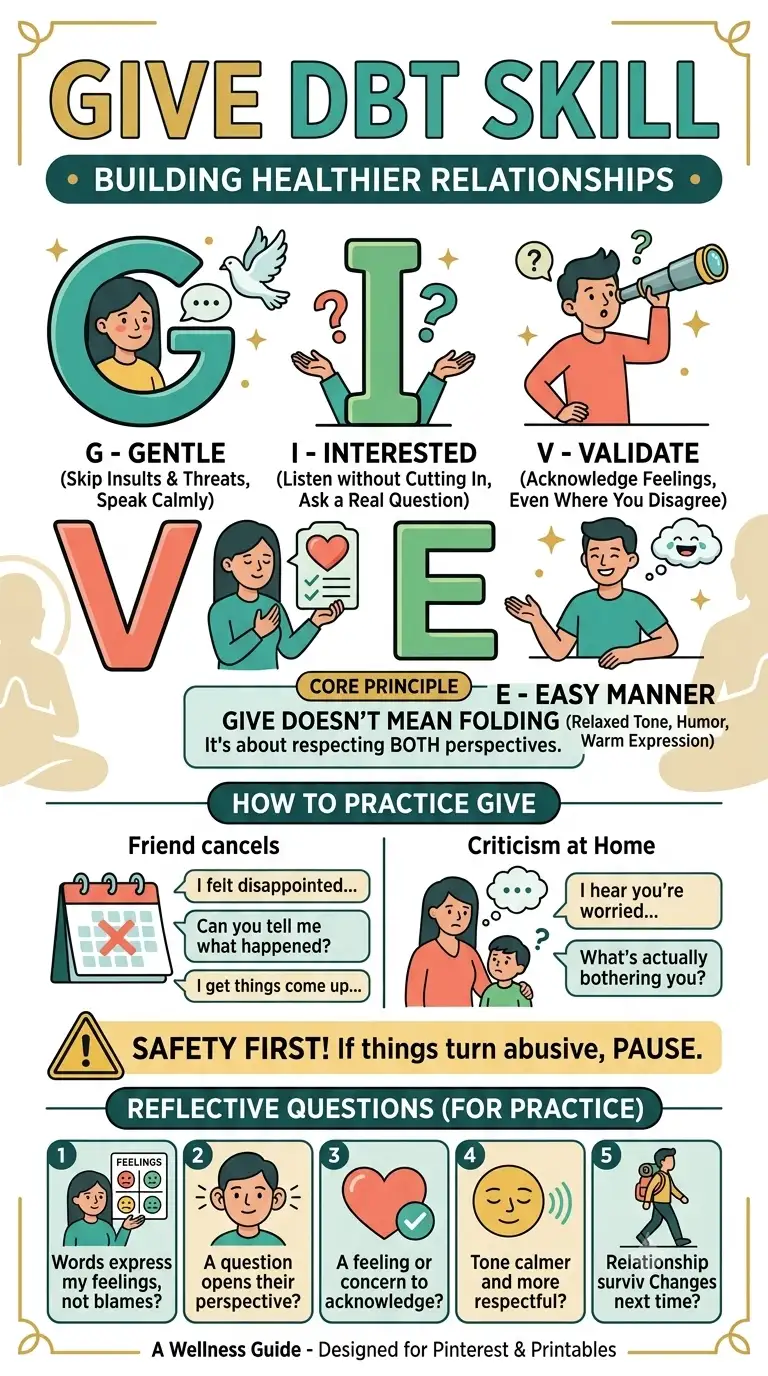
Communication skills can help teens express their needs, set boundaries, and maintain healthy relationships. Explore the DBT DEAR MAN, DBT GIVE, and DBT FAST skills.
DBT Self-Soothing and Emotion Regulation Worksheets
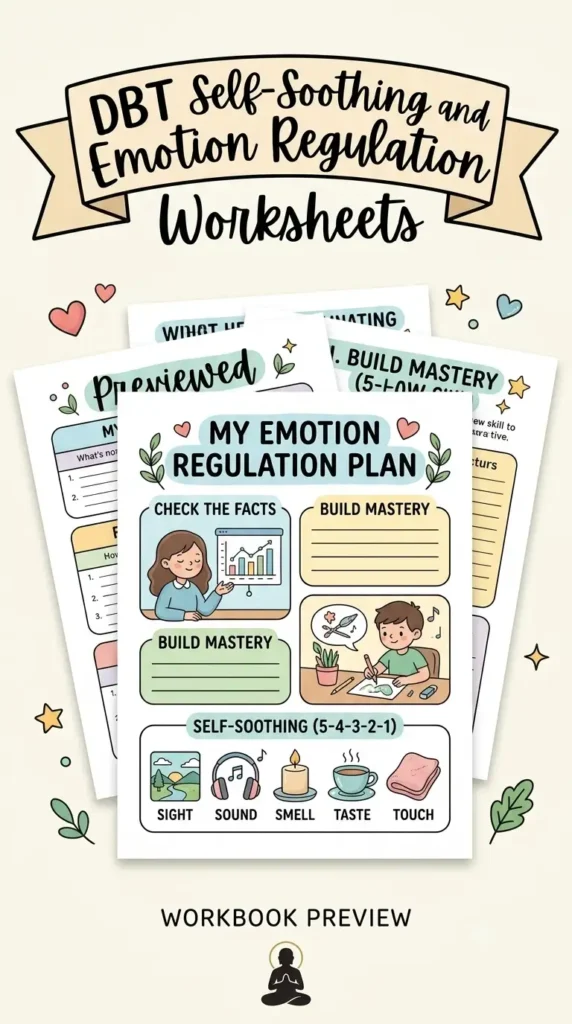
Self-soothing and emotion regulation activities can help teenagers respond to difficult feelings without acting impulsively. Explore DBT self-soothing skills and DBT emotion regulation skills.
When Should a Teenager Seek Professional DBT Support?
A teenager may benefit from professional DBT support when intense emotions, impulsive reactions, anxiety, or relationship difficulties regularly interfere with school, family life, friendships, or daily activities. It may also help when a teen struggles to manage anger, experiences repeated emotional crises, or uses harmful coping behaviours. A qualified mental health professional can assess their needs and determine whether comprehensive DBT for adolescents (DBT-A) is appropriate.
Parents and caregivers should seek prompt professional guidance if a teenager talks about self-harm, suicide, or feeling unable to stay safe. Do not rely on worksheets or self-guided exercises as a substitute for urgent care.
In the United States, teens can call or text 988 to reach the 988 Suicide & Crisis Lifeline. They can also text HOME to 741741 to connect with the Crisis Text Line. If there is immediate danger, contact local emergency services.
Conclusion
DBT for teens and adolescents offers practical tools to help young people understand their emotions, cope with difficult situations, and build healthier relationships. Its five core skill modules give teenagers ways to pause before reacting, manage distress, communicate clearly, and balance their own needs with those of others.
These skills can be practised at home, at school, or with guidance from a trained mental health professional. Worksheets and activities can make learning more accessible, but they are not a replacement for professional care when a teenager needs additional support. With consistent practice and appropriate guidance, DBT skills can support healthier emotional habits over time.
Frequently Asked Questions
At what age can teenagers start DBT?
DBT can be adapted for adolescents, often beginning around ages 12–13. However, the right starting age depends on a young person’s emotional needs, maturity, and treatment goals. A qualified mental health professional can help determine whether DBT is appropriate.
What is the difference between DBT and DBT-A?
DBT-A is an adaptation of Dialectical Behavior Therapy designed for adolescents. It often includes individual therapy, skills training, family involvement, and support between sessions. It also addresses challenges teenagers face at home, school, and with peers.
Can teenagers practise DBT skills without a therapist?
Yes. Teenagers can practise basic DBT skills through guided exercises, journals, and worksheets. However, self-guided practice is not a substitute for professional treatment when emotional difficulties are severe. Explore our free DBT skills worksheets for structured practice.
What are the five DBT skills modules for adolescents?
The five modules are Mindfulness, Distress Tolerance, Emotion Regulation, Interpersonal Effectiveness, and Walking the Middle Path.
Together, they teach teenagers to understand emotions, handle difficult situations, communicate effectively, and balance their own needs with others’ perspectives. See the Walking the Middle Path section for more.
How can parents help their teenagers practise DBT skills?
Parents can model calm communication, listen without judgment, validate feelings, and encourage regular skills practice. Learning DBT skills alongside their teenager can also help families handle disagreements more constructively. Avoid turning practice into criticism or punishment.
Are there free DBT worksheets and activities for teens?
Yes. DBT worksheets can help teenagers practise mindfulness, manage distress, understand emotions, and improve communication. Some general DBT worksheets can be adapted for adolescents. Explore the free DBT worksheets and printables for teens section for available resources.

It’s Bhaskar!
Well, I am not a psychologist a monk, or a philosopher by training. I’m just an engineering graduate.
‘The Empty Self’ is where I write about that idea, and what it actually means for ordinary life, anxiety, identity, habits, the stories we tell ourselves about who we are. I don’t have a psychology degree, and I’m not offering therapy or clinical advice. What I do have is thought and clarity, and genuine curiosity about why we suffer the way we do and how much of it might loose once we shed this ‘fixed identity’.