
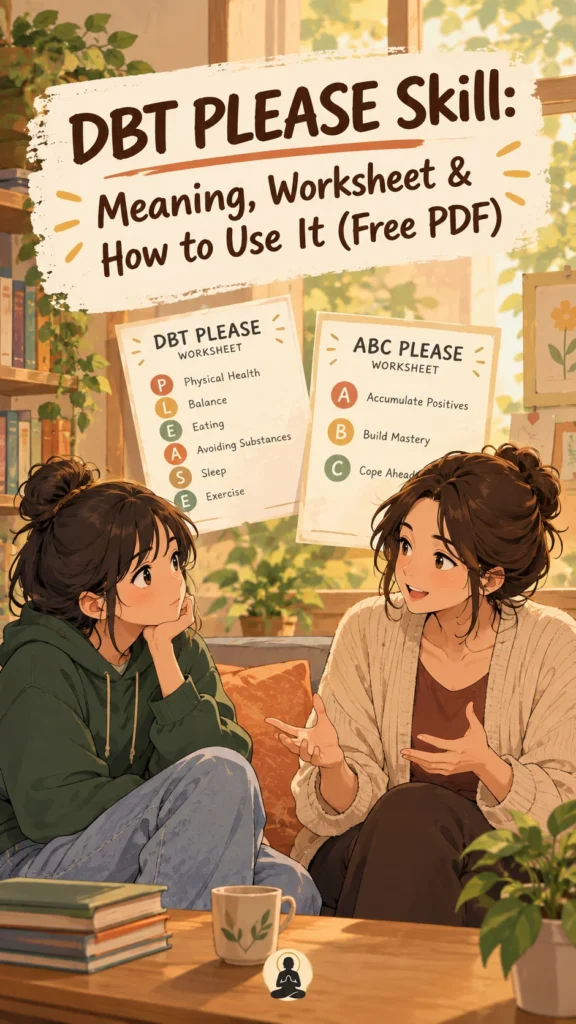
Big emotions don’t always start in your mind. Sometimes the body is maxed out first. Bad sleep, skipped meals, a cold you’re pushing through, weeks of stress stacked on top, any of these can be running the show. That’s where the DBT PLEASE skill comes in. It won’t fix the emotion itself. What it does is lower the odds that your body makes an already hard feeling worse.
PLEASE is an emotion-regulation skill from Dialectical Behavior Therapy (DBT). It covers five basics: treating physical illness, balancing eating, avoiding mood-altering substances, balancing sleep, and getting exercise. Not a wellness checklist. Just five questions worth asking before you decide an emotion is the whole problem.
Quick Overview: The DBT PLEASE skill lowers physical vulnerability to intense emotions. PLEASE stands for Treat Physical illness, Balance Eating, Avoid mood-altering substances, balance Sleep, and get Exercise. Five checkpoints. One goal: steadier emotions.
Key Takeaways:
- Lowers emotional vulnerability by covering physical basics: illness, food, substances, sleep, and movement
- Not generic self-care. A specific DBT emotion regulation tool built to support how you manage feelings
- ABC PLEASE adds three more skills on top of PLEASE: Accumulate Positive Emotions, Build Mastery, and Cope Ahead
Want the rest of the toolkit? The full DBT skills worksheets library covers PLEASE alongside every other emotion-regulation, mindfulness, and coping skills tool in DBT.
Table of Contents
Disclaimer
This blog is written and edited with the help of AI, then reviewed by me before publishing. As a result, the content is for general reflection only, not therapy or medical advice, and I’m not a licensed mental health professional. If you’re in crisis, please contact 988 if you’re in US or a local crisis service of your country instead of relying on this site.
What Is the DBT PLEASE Skill?
The DBT PLEASE skill lowers your risk of getting swept up by big emotions. It works by covering the basics your body needs first. Not by fighting the emotion head-on.
Most people try to talk themselves out of a feeling. That rarely works. PLEASE takes a different route. It treats your body as the starting point, not an afterthought. A body running on empty struggles to hold steady when stress hits.
Why Is PLEASE Part of DBT?
DBT doesn’t ask you to push emotions down. That’s not the goal. The goal is understanding them well enough to respond instead of react.
Physical care fits into that picture directly. An exhausted, hungry, sick, or sedentary body has less room to absorb stress. Ever notice how a small annoyance feels unbearable after a rough night’s sleep? That’s not weakness. That’s biology.
Think of PLEASE as turning down the background difficulty setting. Skip meals for a few days, sleep badly, feel physically off, and barely move all week. Now a single stressful text can knock you flat. Not because the text was that bad. Because nothing was left in reserve to meet it with.
This connects closely to what’s sometimes called the ABC PLEASE framework in DBT skills training, where ABC (Accumulate positive experiences, Build mastery, Cope ahead) pairs with PLEASE to round out the full emotion regulation approach.
If you’re working through related tools, our guide to coping skills worksheets walks through several that pair well with this one, and our emotions worksheet collection is worth a look if you’re trying to name what you’re feeling before deciding how to handle it.
PLEASE was developed within Marsha M. Linehan’s DBT framework. The Linehan Institute identifies Dr. Linehan as the developer of Dialectical Behavior Therapy and offers the skills training materials this approach is built on.

What Does PLEASE Stand For in DBT?
The DBT PLEASE skill is an emotion-regulation tool. It targets physical vulnerability, the body-level stuff that makes hard emotions harder to handle. PLEASE stands for treating physical illness, balanced eating, avoiding mood-altering substances, balanced sleep, and exercise. Five body basics. Nothing more mystical than that.
The goal isn’t perfect self-care. Nobody nails all five every day. It’s about giving your body a steadier base, so emotions have less to work with when they hit.
| Letter | PLEASE Skill | What It Means |
|---|---|---|
| P/L | Treat Physical Illness | Address illness and physical health needs |
| E | Balance Eating | Eat regularly and adequately |
| A | Avoid Mood-Altering Substances | Stay mindful of substances that affect mood or judgment |
| S | Balance Sleep | Maintain adequate, consistent rest |
| E | Get Exercise | Include regular, appropriate physical movement |
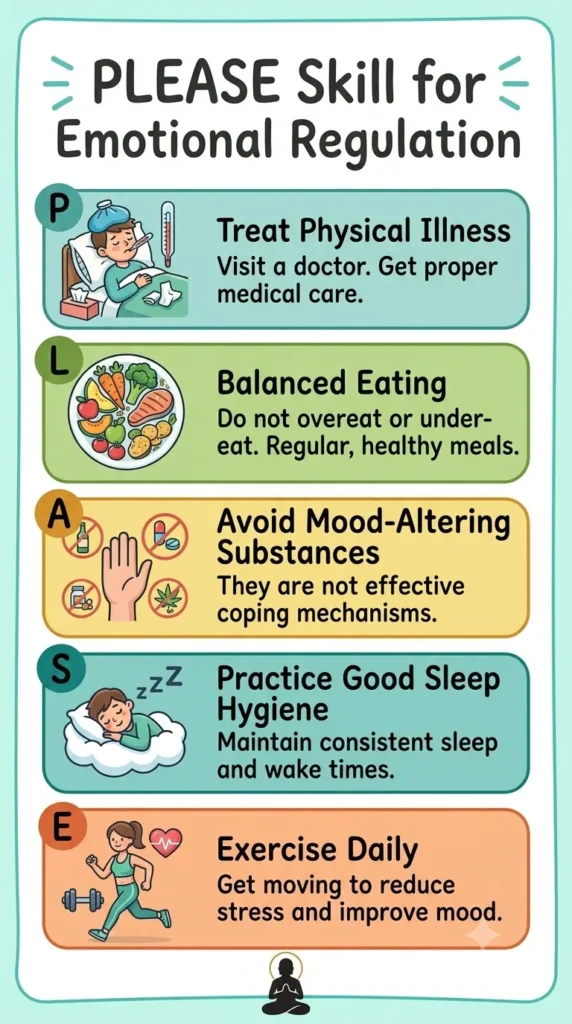
P/L — Treat Physical Illness
This isn’t about pushing through. Not even close. Treating physical illness means paying attention to health problems instead of expecting yourself to manage big emotions while your body is already struggling. That might mean booking the appointment you keep putting off. Or actually finishing the antibiotics.
Following prescribed treatment counts too, even the boring parts. One thing worth saying plainly: PLEASE is not a substitute for medical advice or treatment. If you’re sick, see someone qualified. This skill supports that process, it doesn’t replace it.
E — Balance Eating
Balanced eating means feeding your body on a schedule, not skipping meals until hunger turns into a headache. Why does this matter for emotions specifically? A body running on empty has fewer resources left for anything hard, including feelings.
This isn’t about dieting. It’s not about hitting some target body size either. It’s about cutting the kind of physical vulnerability that makes regulation harder than it needs to be.
A — Avoid Mood-Altering Substances
This part of the PLEASE DBT skill asks you to notice alcohol and other substances that shift mood, judgment, or your ability to regulate at all. No shame attached. This isn’t about labeling anyone “good” or “bad” for what they use.
There’s a practical risk too: alcohol can interact dangerously with certain medications. If you’re not sure, check with a pharmacist or healthcare professional before mixing anything. The NIAAA’s guide on alcohol-medication interactions breaks this down clearly.
S — Balance Sleep
Sleep balance means protecting enough consistent rest, and noticing when poor sleep is quietly wrecking your ability to regulate emotion. Perfect sleep isn’t realistic for most people.
Shift workers, new parents, chronic pain, take your pick. So aim for workable improvements instead of some ideal routine you saw online. A slightly earlier bedtime beats an unreachable perfect one.
E — Get Exercise
Exercise here just means regular movement that fits your body and your life. Walking counts. So does stretching, swimming, or dancing around your kitchen. Anything you can keep doing safely. The PLEASE skill is about lowering vulnerability, not punishing yourself with a workout you’ll quit in a week. Small, repeatable movement wins over an intense routine you abandon by Thursday.
Marsha Linehan’s original DBT materials place PLEASE inside emotion regulation work. The core idea stays consistent across her writing: caring for the body directly reduces vulnerability to negative emotions and to what she calls Emotion Mind. For a fuller breakdown of related tools, our DBT skills worksheets guide walks through the full skill set PLEASE belongs to.
Why Does the PLEASE Skill Help With Emotional Regulation?
The DBT PLEASE skill works by lowering physical strain before an emotion gets the chance to take over. That’s the whole function. Nobody in DBT claims that skipping a meal causes every rough moment you have. That’s not the theory. Instead, hunger, illness, and exhaustion do something quieter. They make it harder to respond well once a trigger actually shows up.
This lines up with a bigger DBT idea: emotion vulnerability. Some people feel emotional cues faster. Others feel them harder. And some take longer to settle back to their usual emotional baseline once a wave hits.
Research on Linehan’s biosocial model backs this up, at least partly. Studies have found greater baseline emotional intensity and biological vulnerability among people with borderline personality disorder. Still, the link between physical strain and emotion regulation isn’t a clean cause-and-effect chain. It’s messier than that.
This is where the please acronym dbt teaches actually fits in. Treating physical illness, eating enough, and watching mood-altering substances all chip away at background strain. So does enough sleep. So does regular movement. Together with other DBT skills, they lower the static that makes emotional regulation harder to manage.
So the real question isn’t “how do I stop feeling this?” It’s simpler than that. What can you do so your body isn’t making a hard moment even harder?
DBT research backs this framing too. Studies identify emotion regulation as one of the key mechanisms through which DBT produces lasting change. Pair PLEASE with other coping skills, and the body stops working against you during a hard moment.
ABC PLEASE: What Does It Mean in DBT?
The DBT PLEASE skill rarely shows up on its own. It’s usually paired with ABC, and that pairing confuses people. ABC PLEASE isn’t one long acronym. It’s two separate skill sets working toward the same goal. ABC builds emotional resilience through Accumulate Positive Emotions, Build Mastery, and Cope Ahead.
PLEASE lowers physical vulnerability, the body-level stuff that makes emotions harder to handle in the first place. Put them together and you get coverage on both fronts: what you actively do, and how you treat your body while you’re doing it.

A — Accumulate Positive Emotions
Make room for good moments. That’s the whole idea behind Accumulate Positive Emotions. It means building pleasant experiences into your life on purpose, not waiting for them to show up. Put on music you actually like. Call the one friend who gets it. Pick up a hobby you keep putting off. Plan something small to look forward to next week.
This isn’t about forcing yourself to feel happy. It won’t work anyway. The point is giving positive experiences a place in your life even while hard emotions are sitting right next to them. If gratitude practices are part of your routine, our guide on how to practice gratitude pairs well here, and our gratitude worksheets give you a structured way to start.
B — Build Mastery
Build Mastery means doing something that makes you feel capable. Not easy. Not impossible either. Somewhere in the middle, where effort is required but success is realistic.
That could be finally cooking the recipe you’ve been avoiding. Finishing the assignment that’s been sitting half-done. Practicing a skill you’re still shaky on. Small wins count here. Mastery isn’t a single big achievement. It builds through repeated practice, one completed task at a time.
C — Cope Ahead
This one isn’t about reacting in the moment. It’s about preparing before the moment arrives. Cope Ahead means picturing a situation you expect to be hard, naming the emotions or urges that will probably show up, and rehearsing your response before you’re actually in it.
Think of a job interview, a hard conversation with a parent, or a doctor’s appointment you’re dreading. You walk through it in your head first. You decide how you want to respond using your DBT skills. Then, when the real thing happens, you’re not improvising from scratch.
PLEASE — Reduce Physical Vulnerability
Your body affects your emotions more than most people admit. That’s the entire premise behind PLEASE skills. Skip meals, lose sleep, or skip a needed medication, and your emotional baseline drops before anything even happens to you.
PLEASE covers five areas:
- Treat physical illness, including taking medication as prescribed
- Balance eating, avoiding extremes of over- or under-eating
- Avoid mood-altering substances that aren’t prescribed to you
- Balance sleep, aiming for a consistent, adequate schedule
- Get appropriate exercise, even in small amounts
None of these fix emotions directly. What they do is lower the odds that your body makes a hard moment even harder. Charlie Health’s breakdown of the PLEASE skill covers this same territory if you want another angle on it.
So no, ABC PLEASE isn’t a longer version of the PLEASE acronym. They’re two connected pieces of DBT emotion-regulation work. ABC builds your emotional resources and gets you ready for what’s coming.
PLEASE lowers the physical vulnerability that makes you more reactive in the first place. Use them together, and you’re working both angles at once. For a fuller picture of where these skills fit into DBT as a whole, our DBT skills worksheets and coping skills worksheets are good next stops.
How to Use the DBT PLEASE Skill in Real Life
The DBT PLEASE skill isn’t a lifestyle overhaul. It’s a check-in. A small one, done often, not a demand to fix every habit at once.
Notice which physical-care area is dragging your mood down. Pick one realistic action. Then track what actually happens, instead of waiting for instant relief that probably won’t come.
Start With a PLEASE Check-In
You feel unusually irritable. Overwhelmed. Snapping at things that don’t deserve it. That’s the moment to pause and run through the five areas: physical illness, eating, mood-altering substances, sleep, and exercise.
No scoring system required. No fixing all five today.
Ask yourself one question instead: what have I neglected lately that I can actually address right now? Skipped lunch and slept four hours last night? Eating something real, or planning tonight’s sleep, will do more than trying to rebuild your entire routine in one sitting.
Choose One Manageable Action
Consistency beats perfection here. Every time.
Pick something that fits your actual day, not the version of your day you wish you had. That could mean taking prescribed medication on schedule, eating a real meal instead of pushing through hunger, walking around the block, or setting a bedtime you’ll actually keep.
Can’t exercise because of pain, illness, or another limit? Don’t turn PLEASE into a willpower test. Adapt it. The skill bends to you, not the other way around.
For a broader set of tools that pair well with this one, the DBT skills worksheets on this site walk through each module step by step.
Try the Skill During a Stressful Week
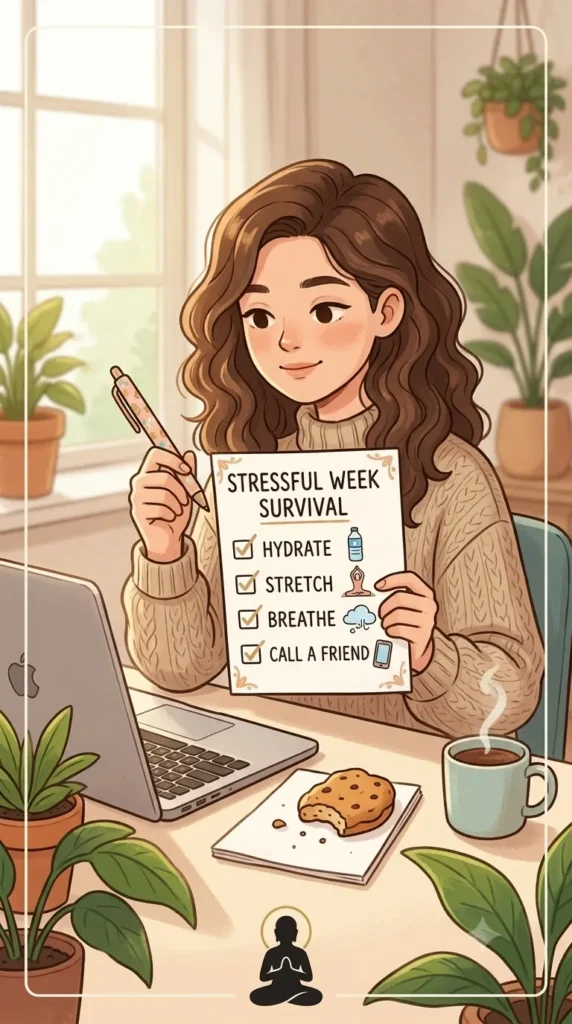
Picture this. Deadlines stacked three deep. Sleep down to five hours. Meals eaten standing up, whenever you remember. By Thursday, a two-line text from a friend feels like a personal attack.
Sound familiar?
That reaction isn’t a character flaw. It’s your body running on empty, and your emotions picking up the tab. This is exactly where a DBT PLEASE skill check-in earns its place. Eat something real. Take a short walk. Protect your sleep tonight, even if it means saying no to one more thing.
The emotion might still show up. But you’ve stripped away some of the physical noise underneath it, and that noise was doing a lot of the damage.
Pairing this with other coping skills worksheets can help you build a fuller toolkit for weeks like this one. For the clinical background behind the PLEASE framework, Marsha Linehan’s DBT Skills Training Manual remains the primary source clinicians train from.
DBT PLEASE Skill Worksheet: Free Printable
Five letters. One overwhelmed brain. That’s the whole problem the DBT PLEASE skill worksheet fixes.
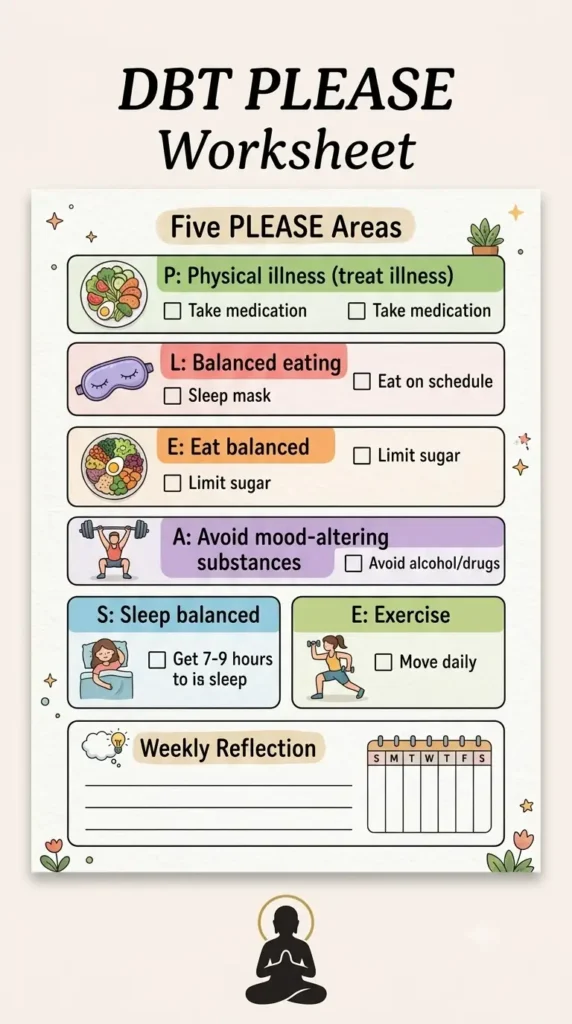
The PLEASE skill breaks emotional regulation down into five body checks: PhysicaL illness, Eating, avoid mood-altering substances, Sleep, and Exercise. Remembering all five while you’re already spiraling is hard. Nobody does that well under stress. A worksheet turns the acronym into something you can check off instead of something you have to recite from memory.
What the DBT PLEASE Worksheet Helps You Track
The worksheet gives you space to check in with physical illness, eating, mood-altering substances, sleep, and exercise. That’s it. No scoring system, no grade at the end.
The goal isn’t a perfect score. It’s noticing which area is quietly making everything harder to regulate. Skipped lunch? Three hours of sleep? Those aren’t small details. They’re often the reason a normal Tuesday feels unmanageable by 4pm.
This worksheet works best alongside a broader DBT skills worksheets practice, since PLEASE is one piece of a much bigger toolkit.
How to Fill Out the PLEASE Worksheet
Start by checking each PLEASE area. Write one short line on what’s actually been happening, not what should be happening. Then pick one realistic action for whichever area needs it most.
Skipping meals? Don’t redesign your whole diet. Just plan the next one. That’s the entire move.
A weekly version does something different. It shows patterns across days instead of one snapshot. Poor sleep before hard days. Missed meals during stressful weeks. Physical discomfort that quietly cranks up emotional sensitivity. You start to see the setup before the blowup.
Free PLEASE Daily Check-In
Some days call for less. Not a full worksheet, just five quick checks and a note.
Mark each PLEASE area. Add a line if something’s off. Pick one small action you can actually do today. This version works well paired with a running emotions worksheet, since physical state and emotional state rarely move independently.
Free Weekly PLEASE Skills Tracker
Daily check-ins catch what’s happening right now. The weekly tracker catches what keeps happening.
Look back over several days. Which area shows up again and again? That repetition is the signal, not any single bad day. It’s also a natural companion to coping skills worksheets, since a body running on empty makes every coping skill harder to reach for.
Why does a simple checklist work when nothing else did? Because it doesn’t ask for willpower. It asks for five seconds of honesty about your body.
If the site supports it, pair a fillable PDF with an on-page interactive checklist. Some readers want to print and check boxes by hand. Others want to tap through on their phone during a rough afternoon. Offering both covers more of them.
PLEASE Skill Activities for Teens, Adults, and Beginners
Forget the perfect routine. That’s not what this is about. The DBT PLEASE skill only works once it turns into something you actually do, not something you read once and shelve.
You don’t need a full overhaul. Pick the one physical-care area wrecking your mood right now. Find one small action you can repeat.
That’s it.
Simple PLEASE Activities for Teens
School, homework, friends, a schedule that shifts every week. Teens have to fit PLEASE around all of it. So keep it small. Keep a water bottle in the backpack.
Eat something before a three-hour study block. Set a bedtime reminder and actually follow it. Walk for ten minutes after the last class. Tell a trusted adult when a physical issue is dragging the whole day down.
Small adjustments beat big promises. Every time. Miss one habit and the skill hasn’t failed. Just try again tomorrow.
Simple PLEASE Activities for Adults
Adults don’t need a new routine for this. Hook PLEASE onto the one you’ve already got. Take prescribed medication the way it’s prescribed. Keep meal times steady, even on a packed workday. Put the phone in another room before bed. Walk for five minutes between meetings. Notice when alcohol, or anything else, starts bending your mood or your judgment.
Why bother tracking any of it? Because a pattern you don’t notice is a pattern you can’t fix.
This is where a DBT PLEASE worksheet earns its keep. It points at the one area that needs attention. It doesn’t ask you to rebuild your whole life overnight.
Low-Cost PLEASE Activities
PLEASE doesn’t need a gym membership. It doesn’t need expensive food or a wellness routine built for Instagram. Walking is free. Stretching at home is free. A basic sleep schedule costs nothing but a little discipline. Simple meals, prepped in bulk, save both money and time. Existing medical or community resources are already there. Use them.
PLEASE Activities for a Difficult Day
Some days are just hard. On those days, lower the target instead of dropping the skill. Can’t manage a full workout? Ten minutes of stretching still counts. Can’t fix your whole sleep schedule tonight? Protect the next hour of rest. Start there.
PLEASE was never about a flawless routine. It’s about chipping away at what makes you vulnerable, one small piece at a time. For more structured exercises that pair well with it, the DBT skills worksheets page has printable options, and the coping skills worksheets collection is worth pairing in on the tougher weeks.
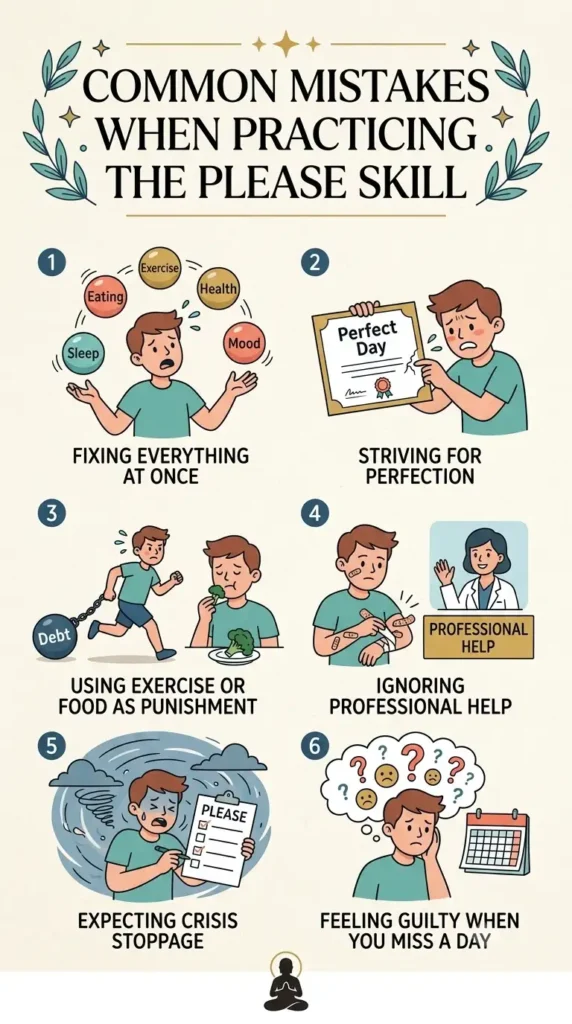
Common Mistakes When Practicing the PLEASE Skill
This isn’t about hitting a perfect score. The DBT PLEASE skill works as a flexible way to lower emotional vulnerability. It isn’t a checklist you must finish without a single slip. Not even close. The mistakes below turn something flexible into pressure, guilt, and rules nobody asked for.
Trying to Fix Everything at Once
One mistake shows up more than any other. You look at all five PLEASE areas and treat each one like an emergency. Bad sleep, skipped meals, no exercise, an ignored health concern, all competing for attention. Overhauling everything in a single week rarely works. It usually backfires.
Start with whichever area is hitting your emotional vulnerability hardest right now. Maybe that’s eating something before a long class. Maybe it’s a consistent bedtime. Not both, not yet.
One small, doable change gives you something real to practice, instead of five half-finished habits by Friday. Want the wider picture first? The DBT skills worksheets library covers all four modules, and none of them ask you to master everything at once.
Treating PLEASE Like a Perfect Self-Care Routine
PLEASE was never a test of clean living. Missing a workout doesn’t mean you failed. Neither does an odd meal, or one rough night of sleep. The goal is noticing a pattern, not living flawlessly. Progress beats perfect. Reduce the vulnerability you reasonably can, and let the rest go.
Using Exercise or Food as Punishment
PLEASE cares for your body. It never punishes it. Balance Eating means feeding yourself enough, not earning your dinner with a workout. Get Exercise means moving your body, not making up for what you ate. There’s no debt to pay off.
If eating or movement has turned distressing or compulsive, that’s a signal. Bring in a qualified professional. Don’t just push harder on the worksheet. The National Alliance for Eating Disorders runs a free helpline for specialized care. It’s a solid place to start.
Ignoring Medical or Mental-Health Needs
Handling everything solo isn’t the point of PLEASE. Treating Physical Illness might mean seeing a doctor, taking prescribed medication, or simply asking for help. Not just trying harder. A PLEASE worksheet can support therapy. It was never built to replace it.
Expecting PLEASE to Stop an Emotional Crisis
PLEASE won’t pull you out of a crisis. It reduces vulnerability before a crisis hits. It wasn’t built for the moment you’re already overwhelmed. Checking whether you’ve slept or eaten can still help.
But it might not be enough. Reach for a real distress-tolerance skill too. The coping skills worksheets cover options like STOP and TIPP for exactly that moment.
Feeling Guilty When You Miss a Day
A missed day is information. Not a verdict. Ask what got in the way. Was the plan too big, or just unrealistic for the week you actually had? Make the next step smaller. That’s it. Writing it down can make the pattern easier to spot.
These journal prompts for mental health are a good place to start. PLEASE is meant to build a steadier base for handling emotions, not another reason to criticize yourself.
PLEASE vs. Other DBT Emotion Regulation Skills
The PLEASE skill works on your body, not your thoughts. It lowers physical and emotional vulnerability. Other emotion regulation skills do something else entirely. They examine an emotion, change it, or respond to it on purpose.
That difference matters more than it sounds. Pick the wrong skill and nothing shifts. The real question isn’t “which skill is best.” It’s this: is the problem your vulnerability, the facts, the situation, or the urge itself?
How PLEASE Is Different
| DBT Skill | Main Purpose | When It Fits |
|---|---|---|
| PLEASE | Reduce physical and emotional vulnerability | You’re depleted, unwell, underslept, hungry, or otherwise more prone to intense emotion |
| Check the Facts | Examine whether an emotion fits the situation | Your reaction may rest partly on assumptions |
| Opposite Action | Change an unhelpful response by acting against its urge | The emotion doesn’t fit the facts, or acting on it wouldn’t help |
| Problem Solving | Change a situation causing a justified emotion | The facts support the emotion, and something practical can change |
These four aren’t interchangeable. Not even close. In Marsha Linehan’s framework, Check the Facts often decides what comes next. If the emotion fits the facts and the situation can change, problem solving may be the move. If the emotion doesn’t fit the facts, or acting on it wouldn’t help, opposite action usually comes next.
You may also see this taught as ABC PLEASE or PLEASE MASTER, depending on the source. Same core idea, different packaging.
Check the Facts
Check the Facts asks a blunt question. Does your emotional response match what’s actually happening? A short text from your boss might trigger real fear. But do the facts back up “I’m about to lose my job”? Usually not.
This emotions worksheet can help separate the event from the story your mind adds on top, which is often where Check the Facts starts.
Opposite Action
Opposite Action targets the urge attached to an emotion. Fear pushes you to avoid something safe. Avoidance makes it worse. So you move toward the situation instead. On purpose, not by accident.
That’s the whole mechanism. Simple to explain, harder to practice.
Problem Solving
Problem Solving is a different animal. It addresses a situation that genuinely needs to change. A recurring conflict at work causes real, understandable frustration? Tolerating it isn’t the goal here, and neither is acting opposite to it.
You need to name the actual problem and take a concrete step to fix it. A structured problem-solving worksheet can walk you through identifying the problem, weighing solutions, and picking one that works.
When Should You Use the PLEASE Skill?
The DBT PLEASE skill isn’t something to pull out only when things fall apart. Check in with it regularly. Use it the moment your routine starts slipping, stress starts stacking up, or you notice yourself getting worn down before it turns into a crisis. Fold it into your week and it stops feeling like a task.
As a Daily Prevention Tool
Run through the PLEASE areas in the morning or right before bed. Have you eaten? Slept? Moved at all today? Handled anything your body actually needed handled?
Pick one area. Just one. Trying to fix everything at once is how people quit by day three.
Check in even on the good days. That’s the whole point. Prevention only works before you’re already underwater, not after.
During Periods of Increased Stress
Exams. Deadlines. A fight with someone you love. Travel, work piling up, life throwing a curveball. This is exactly when PLEASE earns its place.
Watch the habits that vanish first. Meals get skipped. Sleep gets sacrificed. Those two go quietly, and nobody notices until the crash.
Don’t treat the checklist like a one-time fix. Stay with it for several days straight. Stress doesn’t clear in a single check-in, so neither should your attention to it.
When Your Emotions Feel More Intense Than Usual
This isn’t just about mood swings. It’s about noticing when irritability, anxiety, or reactivity shows up louder than usual and asking why.
Before reaching for another coping tool, ask one blunt question: has a basic physical need been ignored? Sometimes the fix isn’t emotional at all. It’s a missed meal.
If another skill is still needed after that, use it alongside PLEASE, not instead of it. Pair it with something like emotions worksheet work if naming the feeling itself is the harder part. PLEASE alone rarely resolves everything, and it was never meant to.
When Basic Needs Have Been Neglected
Several rough nights of sleep. Meals skipped without noticing. Days spent barely moving, or physical discomfort left untreated. Increased substance use creeping in. This is the moment PLEASE stops being optional.
Start small. Pick whatever’s realistic today, not the hardest item on the list.
Don’t turn this into a self-criticism exercise. That defeats the purpose. The checklist exists to flag what needs attention now, not to hand you another reason to feel bad about yourself.
When You’re Building a Sustainable Routine
Use the PLEASE worksheet weekly if you want it to actually stick. Not to judge single good or bad days, but to spot the pattern underneath them.
Track which areas keep tripping you up. Sleep might be fine while meals fall apart every time work gets busy. That pattern tells you where to focus, and it only shows up over time.
Build the routine around your actual life, not an idealized one. Work schedules, health limits, finances, caregiving responsibilities, all of it matters here. And remember: practicing the DBT PLEASE skill was never about hitting every category perfectly. It’s about showing up for most of them, most of the time. That’s enough.
Conclusion
The DBT PLEASE skill is less about creating a perfect routine and more about noticing when your physical needs are making emotional regulation harder. A missed meal, poor sleep, untreated illness, or lack of movement can leave you with fewer resources for handling stress.
You don’t need to fix every area at once. Start with the part of PLEASE that feels most manageable, use the worksheet to track it, and adjust as you learn what helps.
And remember: PLEASE is a DBT self-management skill, not a substitute for therapy or medical care. Small, consistent changes can give your emotion-regulation skills a stronger foundation.
Frequently Asked Questions
What does PLEASE stand for in DBT?
PLEASE is a DBT emotion-regulation skill that focuses on reducing physical vulnerability to difficult emotions. The acronym refers to treating physical illness, balancing eating, avoiding mood-altering substances, balancing sleep, and getting exercise. These habits are intended to support emotional stability rather than eliminate difficult feelings.
What is the difference between the DBT PLEASE skill and ABC PLEASE?
The DBT PLEASE skill focuses specifically on caring for physical needs that can increase emotional vulnerability. ABC PLEASE combines PLEASE with three additional emotion-regulation skills: Accumulate Positive Emotions, Build Mastery, and Cope Ahead. In other words, PLEASE is one part of the broader ABC PLEASE framework.
Is the PLEASE skill a DBT self-care technique?
PLEASE overlaps with everyday self-care, but it has a more specific purpose in DBT. Instead of treating self-care as a general wellness goal, PLEASE focuses on reducing physical factors that can make emotional regulation harder. It is best understood as a practical emotion-regulation skill rather than a complete self-care program.
How do you use a DBT PLEASE worksheet?
A DBT PLEASE worksheet helps you check in with the five areas of the skill and identify where physical vulnerability may be higher than usual.
You can record what you noticed, choose a realistic action, and track your experience. A weekly format can also reveal patterns over time.
How often should you practice the DBT PLEASE skill?
PLEASE is generally most useful when treated as an ongoing practice rather than something you use only during emotional crises. A brief daily check-in can help you notice neglected physical needs early. You don’t need to maintain every area perfectly; choosing one realistic adjustment can be a worthwhile starting point.
Can the PLEASE skill help when you are already emotionally overwhelmed?
PLEASE can still be useful when you’re overwhelmed, particularly if hunger, exhaustion, illness, substance use, or physical discomfort is adding to the problem.
However, PLEASE is mainly a vulnerability-reduction skill. During an acute crisis, you may need distress-tolerance skills or immediate professional support as well.

It’s Bhaskar!
Well, I am not a psychologist a monk, or a philosopher by training. I’m just an engineering graduate.
‘The Empty Self’ is where I write about that idea, and what it actually means for ordinary life, anxiety, identity, habits, the stories we tell ourselves about who we are. I don’t have a psychology degree, and I’m not offering therapy or clinical advice. What I do have is thought and clarity, and genuine curiosity about why we suffer the way we do and how much of it might loose once we shed this ‘fixed identity’.
Pingback: DBT Emotion Regulation Skills 2026: Module Guide With Free Worksheets | The Empty Self
Pingback: Cope Ahead DBT 2026: All You Need to Know With Free Printables | The Empty Self
Pingback: DBT Skills Cheat Sheet: All You Need to Know With Free Printables | The Empty Self