
DBT mindfulness skills train you to notice your thoughts, feelings, and actions. Without rushing to judge any of it. In Dialectical Behavior Therapy, mindfulness sits at the center. It’s a core skill module, not an add-on. The goal is staying present. And responding with more awareness, less autopilot.
Sound too simple? It is. That’s exactly why it works.
The module breaks into one core skill and two smaller sets. Wise Mind comes first. It’s the balance point between raw emotion and cold logic. A dedicated Wise Mind guide walks through that balance in more depth. Then come the three What skills: Observe, Describe, Participate. These are the actions you take.
Alongside them sit the three How skills: Nonjudgmentally, One-Mindfully, Effectively. These shape the manner behind the action, not the action itself. Seven pieces. One job. Stay present, respond on purpose.
Each skill hands you a different lever. Pulling it looks different depending on what’s happening. A racing mind during a hard conversation calls for Observe. A reactive moment calls for Nonjudgmentally. Pick the lever that fits the moment in front of you, not the one that sounds impressive on paper.
New to DBT? Or just looking for more structured reps? Simple exercises and worksheets turn these ideas into something you actually do. Not just read about once and forget by Thursday. Pair a worksheet with daily practice, and the skill starts showing up without you forcing it. That’s the real marker of progress, not how well you can define the term on a quiz.
Quick Overview: DBT mindfulness skills help you notice the present moment and respond with awareness instead of judgment. They include Wise Mind, the three What skills (Observe, Describe, Participate), and the three How skills (Nonjudgmentally, One-Mindfully, Effectively). Simple daily activities build all seven into everyday life.
Table of Contents
Disclaimer
This blog is written and edited with the help of AI, then reviewed by me before publishing. As a result, the content is for general reflection only, not therapy or medical advice, and I’m not a licensed mental health professional. If you’re in crisis, please contact 988 if you’re in US or a local crisis service of your country instead of relying on this site.
What Are DBT Mindfulness Skills?
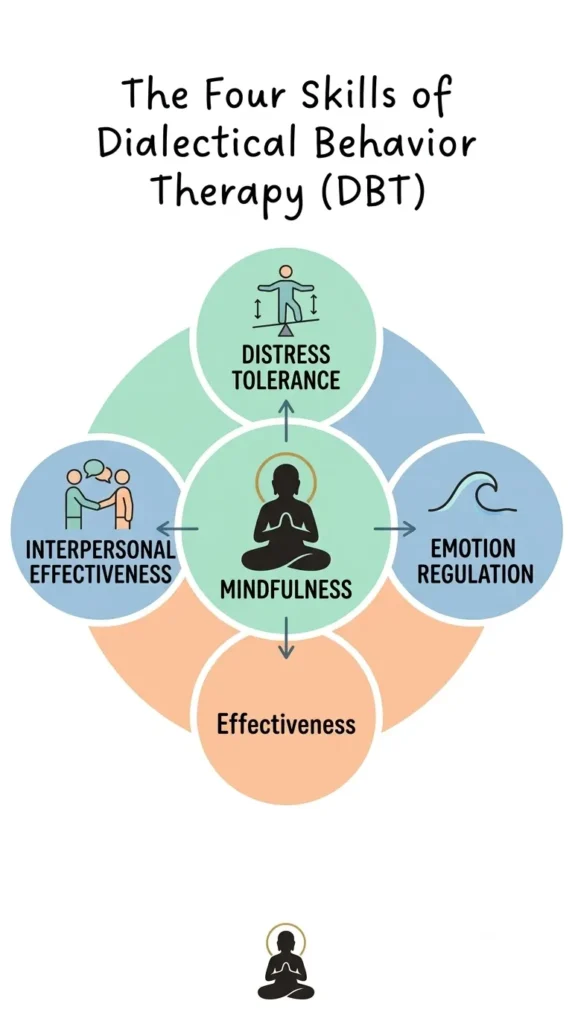
DBT mindfulness skills are practical tools. They help you notice the present moment, without judging it or reacting on autopilot. Nothing fancy. In Dialectical Behavior Therapy, mindfulness breaks into four pieces. There’s Wise Mind.
Then three What skills: Observe, Describe, Participate.
And three How skills: Nonjudgmentally, One-Mindfully, Effectively.
The goal isn’t to erase hard emotions, or force your mind quiet. Not even close. Instead, you learn to notice what’s happening, make sense of it, and choose how to respond.
Why Is Mindfulness a Core DBT Skill?
Mindfulness holds up the other three DBT modules. Distress tolerance, emotion regulation, interpersonal effectiveness: all of it leans on this skill first. Not optional. Marsha Linehan’s DBT Skills Training Manual places mindfulness right beside the other modules. It teaches skills meant to carry through the whole of DBT practice. That’s the design.
Notice anger rising, and you might pause before firing off a hurtful text. That pause is the whole skill. Catch fear without judging it, and you can reach for a distress-tolerance skill instead. That’s the shift.
Curious how mindfulness fits with the rest? Explore the four DBT skill modules for the full picture.
What Is the Difference Between DBT Mindfulness and General Mindfulness?
General mindfulness and DBT mindfulness aren’t quite the same thing. General mindfulness usually means noticing thoughts, feelings, body sensations, or surroundings as they happen. DBT takes that same awareness and turns it into skills you can actually practice. Simple as that.
Picture this: your heart is racing before an exam. You notice it, and name it as anxiety instead of weakness. Then you bring your attention back to the question in front of you. The anxiety doesn’t have to vanish first. That’s not the point.
If naming the feeling itself is hard, an emotions worksheet can help you get specific. Want a simple way to practice daily? These mindfulness journal prompts pair well with the What and How skills above.
Wise Mind, Emotion Mind, and Reasonable Mind
DBT mindfulness skills come down to one question. Is this thought coming from facts, from feeling, or from both? Dialectical Behavior Therapy names three states of mind: Reasonable Mind, Emotion Mind, and Wise Mind. Learn to spot which one is running the show. That pause is where a different choice becomes possible.
Reasonable Mind vs. Emotion Mind
Reasonable Mind runs on logic. Nothing more. You pull up your exam schedule and build a study plan around the hours you actually have. Cold, clear, fact-based.
Emotion Mind works the opposite way. Feelings lead. Logic follows, if it shows up at all. Get a disappointing grade back, and Emotion Mind skips straight to “I’m a failure.” It doesn’t weigh the effort you put in. It doesn’t ask what you’d do differently next time.
Neither state is the villain here. Facts matter. Emotions carry real information too, often about what you actually need. The problem starts when one of them takes over the wheel completely and the other one goes quiet.
What Is Wise Mind in DBT Mindfulness?
Wise Mind is where logic and emotional awareness meet in the middle. Not a tug-of-war. A balance. And it doesn’t mean muting your feelings so they stop causing trouble.
Say a friend cancels plans last minute. You feel hurt. That’s real. But you also don’t actually know why they cancelled yet. Wise Mind holds both pieces at once: the hurt is valid, and the full story isn’t in yet. Instead of assuming the worst, you ask your friend what happened. Small shift. Different outcome.
Want to go deeper? Our full DBT Wise Mind guide breaks down the skill step by step, with printable worksheets included.
These three states show up constantly once you start watching for them, especially alongside skills like naming what you feel on an emotions worksheet or working through mindfulness journal prompts built around present-moment awareness. Paired with a broader coping skills practice, Wise Mind stops being a concept you read about once and forget.

The Three DBT What Skills
DBT mindfulness skills break down into three moves: Observe, Describe, and Participate. Together, these make up what therapists call the DBT What Skills, because they answer one plain question. What do you actually do when you practice mindfulness? Not the breathing. Not the posture. Just the action itself.
You don’t need a cushion or a silent room for this. A commute works. So does washing a dish. That’s the whole point of mindfulness DBT in practice. It lives inside ordinary moments, not just meditation sessions. For a reflective way to build this habit on paper, these mindfulness journal prompts pair well with the three skills below.
1. Observe
Observe means noticing what’s happening inside you and around you. No pushing it away. No deciding if it’s good or bad yet. Just notice.
Sights. Sounds. Smells. Tastes. Touch. Body sensations. Thoughts. Emotions. All of it counts.
Picture an exam, ten minutes out. Your heart is racing. Your palms feel damp. A thought shows up: “I might fail.” Observe asks you to catch each piece on its own. The racing heart. The damp palms. The thought itself, treated as a thought passing through, not a verdict.
That distinction isn’t just a technique. A 2022 scoping review of mindfulness in DBT found something worth sitting with. Clinical use of DBT-taught mindfulness was linked to gains in participants’ own reports of mindfulness, especially nonjudgmental awareness and related measures like attention.
The researchers were careful to add that more work is still needed to map out exactly how those shifts happen. The gains show up. The mechanism is still being traced.

2. Describe
Describe means putting words on what you just noticed. Plain words. No story stacked on top.
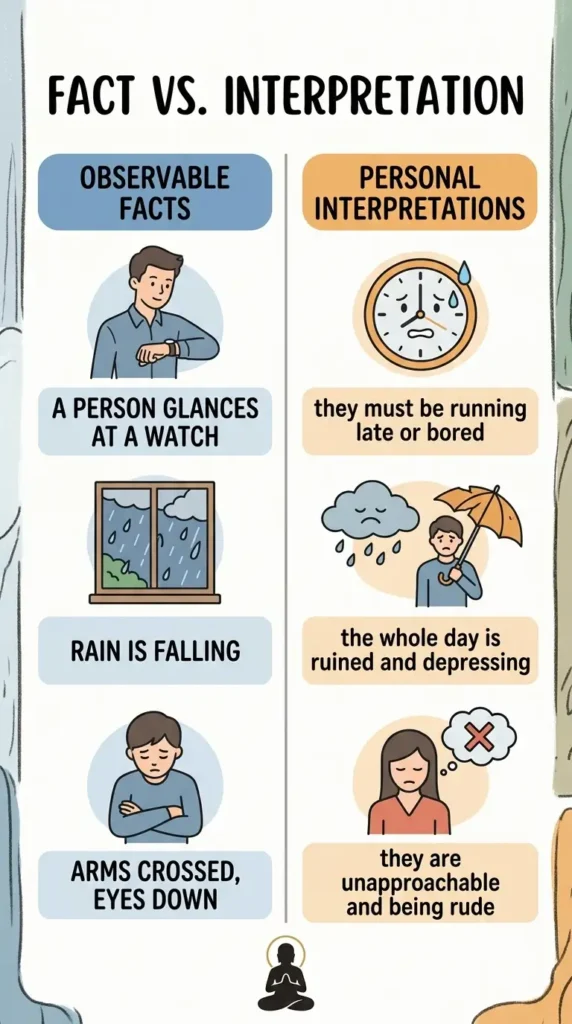
Here’s where most people slip. “My friend is ignoring me” sounds like a fact. It isn’t. It’s a guess wearing a fact’s clothes. “My friend hasn’t replied to my message in three hours” is the actual fact. The first version assumes a reason behind someone’s silence. The second just reports what happened, nothing more.
Why does that gap matter so much? Because the assumption is where the worry lives, not the event itself. Separating the two is most of the skill. For a worksheet built around that exact split between event and interpretation, this emotions worksheet walks through it step by step.
3. Participate
Participate means jumping into whatever you’re doing. All the way in. No watching yourself from the sidelines. No running commentary on how you look while you do it.
Eating? Notice the bite. Talking with a friend? Actually listen to their words instead of rehearsing your reply. Mind wanders? Fine. Bring it back. No scolding required.
That’s the loop behind all three DBT what skills: notice, name it plainly, then get fully inside the moment. Repeat. For the full worksheet library these three skills belong to, along with the rest of the mindfulness module, see this complete DBT skills worksheets guide.
The Three DBT How Skills
Mindfulness without a method stays vague. That’s the gap the DBT how skills close. These three skills, nonjudgmentally, one-mindfully, and effectively, turn the idea of mindfulness into something you can actually practice.
They’re part of the broader DBT skills worksheets framework, paired with the “what skills” of observing, describing, and participating. Together they tell you what to pay attention to and how to pay attention to it. Skip the how skills, and mindfulness turns into another thing you fail at quietly.
1. Nonjudgmentally
This isn’t about staying positive. Not even close.
Practicing nonjudgmentally means you notice what’s happening without slapping a label on it. No “good.” No “bad.” No “stupid” or “unfair.” You feel the thing. You name the thing. You skip the commentary track running underneath it.
Here’s the shift in practice. “I’m so weak for feeling anxious” adds blame on top of the feeling. “I’m feeling anxious, and my heart is beating faster” just describes it. Same anxiety. Different relationship to it. The second version gives you something to work with instead of something to fight.
Nonjudgment doesn’t mean approving of everything or letting harmful behavior slide. It means separating the fact from the verdict. Once you can see the two apart, you respond to what actually happened, not to the story you built on top of it.
2. One-Mindfully
One-mindfully means one thing at a time. That’s the whole concept.
Your mind will still wander. Everyone’s does. The practice isn’t stopping that. It’s noticing when it happens and bringing your attention back, without turning it into a reason to criticize yourself for losing focus in the first place.
What this looks like day to day: listening to a friend with the phone face down and untouched. Paying attention to each step while making breakfast instead of running tomorrow’s to-do list in your head.
Sitting with your breathing for one minute before homework starts. You’ll still get pulled away by stray thoughts. That’s expected. The skill lives in the returning, not in never drifting at all.
3. Effectively
Effectively means doing what works, not what you think should work. Those are two different things.
An argument leaves you angry. You want it resolved. The move that feels satisfying in the moment, firing off a message to prove you’re right, usually makes the resolution harder to reach. The effective move looks less dramatic: pause, figure out what you actually need, speak once you can say it clearly.
Being effective doesn’t mean abandoning your boundaries or trying to keep everyone happy. It means picking a response that fits the actual situation and moves things toward an outcome you can live with. Not the ideal outcome. A workable one.
These three skills rarely show up one at a time in real life. Pair them with the “what” skills using DBT mindfulness exercises and coping skills worksheets, and the practice starts to hold up outside of therapy sessions, in the moments that actually test it.
DBT Mindfulness Skills at a Glance
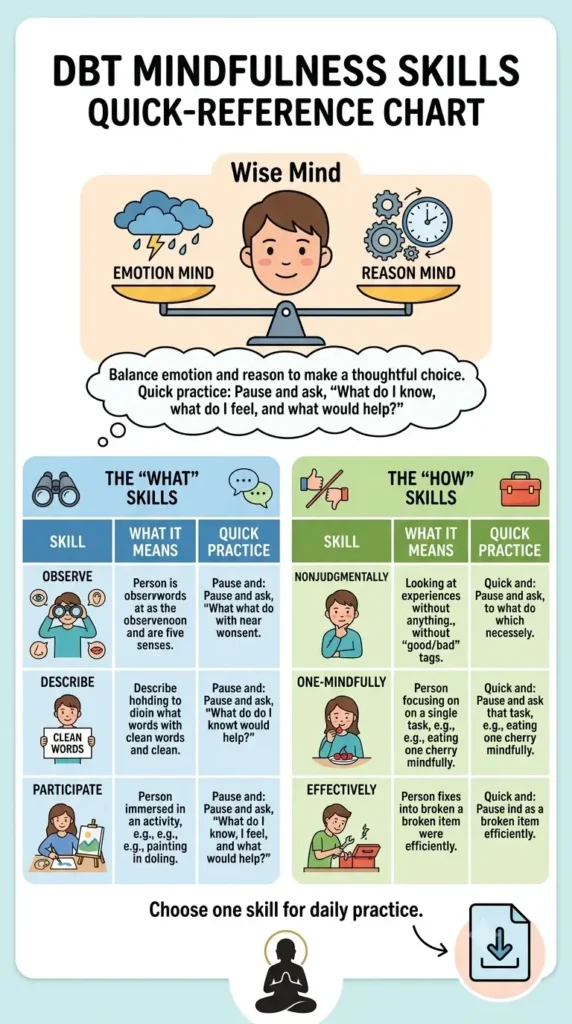
This isn’t about chasing a blank mind. DBT mindfulness skills work differently. They teach you to notice what’s happening, put it into plain words, and pick how you respond next. That’s the whole structure.
Six skills split into two groups. Three What skills: Observe, Describe, Participate. Three How skills: Nonjudgmentally, One-Mindfully, Effectively. One sits on its own. Wise Mind. It balances gut feeling against straight logic, so a choice doesn’t come from either extreme alone. Curious how that balance actually plays out in a tough moment? Our full Wise Mind guide walks through it step by step.
Together, these form the core of DBT what and how skills. They’re the building blocks behind nearly every other DBT mindfulness exercise.
| DBT mindfulness skill | What it means | Quick practice |
|---|---|---|
| Wise Mind | Balance emotion and reason to make a thoughtful choice. | Pause and ask, “What do I know, what do I feel, and what would help?” |
| Observe | Notice thoughts, feelings, sensations, and surroundings without trying to change them. | Identify five things you can see and three sounds you can hear. |
| Describe | Put your experience into clear, factual words. | Replace “Everyone hates me” with “I feel left out because no one replied yet.” |
| Participate | Give your attention to the activity you are doing. | Focus on the conversation instead of planning what to say next. |
| Nonjudgmentally | Notice experiences without labeling them as good or bad. | Change “I’m stupid for making a mistake” to “I made a mistake, and I can learn from it.” |
| One-Mindfully | Focus on one thing at a time. | Eat a snack slowly, noticing its taste and texture. |
| Effectively | Do what works toward your goal, rather than getting stuck on how things should be. | During a disagreement, focus on solving the problem instead of winning the argument. |
Keep this chart close by. Use it to pick one skill for daily practice. That’s it. No need to run through all six at once. It’s also part of the downloadable DBT mindfulness worksheet set below. Want to go deeper on daily reflection?
Try these mindfulness journal prompts next. For every other DBT skill outside this module, the DBT skills worksheets library covers the rest.
Why DBT Mindfulness Skills Help
DBT mindfulness skills train one specific move. You notice an emotion, a thought, or an urge before you act on it. That gap is the whole point.
Research backs part of this up. Regular practice is linked to better attention and steadier emotion regulation. Those are the same two things that let you respond on purpose instead of on reflex.
Sound too good to be true? It isn’t magic. These findings don’t mean mindfulness guarantees relief, and it clearly doesn’t work the same way for everyone.
Better Awareness of Stress and Emotions
Mindfulness practice can help you clock an emotional shift without rushing to judge it or act on it. That’s the skill underneath the whole module.
A 2024 study of 75 outpatients with borderline personality disorder tracked this week by week. When nonjudgmental awareness and body awareness went up during mindfulness training, emotion dysregulation improved the following week. Small shifts, measurable results.
Progress wasn’t a straight line, though. The same researchers found something else: emotional dysregulation itself made the skills harder to build. One bad week could stall the next. That’s not failure. That’s just how the mechanism works.
A Pause Before Acting on Impulses
DBT mindfulness asks you to spot an urge before you choose what to do with it. Here’s the scene: a message lands. Your jaw tightens. Your thumb is already moving toward the reply button.
Notice the urge. Pause. Then decide whether firing back right now actually helps.
A randomized trial analysis looked at adults with emotional regulation difficulties. Mindfulness and skills use lined up with lower emotional dysregulation at the same point in time. One catch, though.
The study didn’t show that these factors reliably predicted whether someone kept improving later. Correlation, not a crystal ball.
More Awareness in Relationships
Mindfulness can also sharpen how closely you listen mid-conversation. You start catching your own assumptions before they run the show.
Research on mindfulness skills and interpersonal functioning found two links. Mindful awareness tracked with how openly people expressed themselves socially. A tendency toward careful observation tracked with empathy too.
None of that proves DBT mindfulness alone fixes every relationship. It’s one piece, not the whole repair kit. Pair this kind of awareness with DBT self-validation work. That rounds out how you respond once you’ve actually noticed what’s happening.
The key takeaway: DBT mindfulness is a skill to practice, not a promise to feel calm. It exists to help you notice what’s happening and choose your next response with more awareness attached. Nothing more complicated than that.
Want the exercises themselves rather than the research behind them? The mindfulness section of our DBT skills worksheets guide breaks down the What and How skills, plus printable mindfulness activities for kids, teens, and adults.
For a reflective, paper-based version of the same present-moment focus, these mindfulness journal prompts work well as a companion practice.
8 Practical DBT Mindfulness Exercises for Beginners
DBT mindfulness skills help you notice a thought or feeling without reacting right away. No jumping on it. These eight exercises turn the six core mindfulness skills into something doable. Think making coffee, not meditating on a mountain.
They sit inside the wider DBT skills worksheets library, next to Wise Mind and the rest of the mindfulness module. What is mindfulness DBT, really? It’s paying attention on purpose, without the running commentary. Pick one exercise. Keep it short. Adjust it until it fits your week.
1. Five-Senses Observation Exercise
The Observe skill means noticing through your senses without judging what you find.
Choose one object: a mug, a leaf, a pen. Spend a minute on its color, shape, texture, smell, and any sound nearby. You don’t need to name everything. You don’t even need to find it interesting. Just bring your attention back when it wanders. Every time.
Try it when: You feel scattered and want to land back in the moment.
2. Describe an Emotion Without Judging It
Naming a feeling is not the same as explaining it. The Describe skill asks you to put words to an experience, not treat your interpretation as fact. Pause. Complete three sentences: “I notice…,” “I feel…,” and “My body feels….” Instead of “everything is going wrong,” try “I feel frustrated, my shoulders are tense, and I’m worried about this task.” That’s it. No story attached.
If naming emotions doesn’t come easily, an emotions worksheet can widen the vocabulary you’re working with.
Try it when: You’re upset but can’t tell what’s actually happening inside you.
3. Mindful Body Scan
Start at your feet and work up. A body scan uses Observe to notice physical sensations without a verdict attached. Sit or lie down if you can, then slowly move your attention from your feet toward your head.
Notice warmth, pressure, tension, or ease. Don’t force relaxation. If focusing inward feels uncomfortable, keep your eyes open and shift attention to objects in the room instead.

Try it when: You want to catch tension or fatigue before it builds.
4. One-Minute Mindful Breathing
Breathing is automatic. Attention to it is not. The One-Mindfully skill means giving one activity your full focus. For one minute, notice your natural breath. Don’t try to breathe a special way.
Just watch the air move in and out. When a thought pulls you away, return to the next breath. Nothing dramatic about it. If breathing itself feels distressing, pick a neutral sound or object instead.
Try it when: You need a short pause before a task or a reply.
5. Mindful Walking or Eating
Mindfulness doesn’t need a cushion or a timer. The Participate skill means getting fully involved in something ordinary. On a short walk, notice your steps, the ground, the sights around you.
While eating, notice texture, flavor, smell. Other thoughts will still show up. That’s fine. Just return your attention to the walk, or the bite, each time you catch yourself drifting.
These mindfulness journal prompts pair well here if you want to reflect on the exercise afterward.
Try it when: You want a mindfulness activity that doesn’t need a set-aside block of time.
6. One-Task Focus Challenge
Multitasking feels productive. It rarely is. Choose one small task: washing a cup, folding clothes, reading a page. Give it your full attention for two minutes. Notice when you reach for your phone or start planning something else. Then come back to the task. The goal isn’t perfect focus. It’s the rep of returning, over and over.
Try it when: Routine tasks start feeling rushed or scattered.
7. Catch and Reframe a Judgment
Judgments feel like facts. They aren’t. The Nonjudgmentally skill separates what happened from the label you slapped on it. Notice a thought like “I’m terrible at this.” Pause.
Describe what actually occurred instead: “I made a mistake on this question.” You don’t need to swap every harsh thought for a positive one. Just notice what you can observe, not what you’re ready to attack yourself over.
This habit connects closely to self-validation, which takes the same idea a step further.
Try it when: You catch yourself judging your performance, your appearance, or your own emotions.
8. Choose an Effective Next Step
Being effective beats being right. The Effectively skill asks what actually works for the situation and your goals, not what feels fair or how things “should” have gone. Before reacting to a difficult message, pause and ask: what outcome do I actually want here? Maybe that’s a clear question. Maybe it’s a boundary.
Maybe it’s waiting until you can respond without the heat behind it. Being effective doesn’t mean dropping your values or accepting harmful treatment. It just means picking the move that works.
Try it when: Strong emotions are making it hard to decide what to do next.
Free DBT Mindfulness Worksheets and PDF Printables
These worksheets expand on the mindfulness tools in our DBT skills worksheets library with longer practice sheets and a tracker. Use them to practise the six DBT mindfulness skills, record observations, and build a routine that fits your daily life.
DBT Mindfulness Skills Worksheet
This worksheet brings the core DBT mindfulness skills together in one place. It can update and extend the shorter mindfulness worksheets in our main DBT skills guide, giving you a more focused resource for practising each skill.
DBT What and How Skills Worksheet
Use this worksheet to practise the three What skills—Observe, Describe, and Participate—and the three How skills—Nonjudgmentally, One-Mindfully, and Effectively. Short prompts can help you identify which skill you are using and where you might apply it during a real situation.
DBT Mindfulness Exercises PDF
A mindfulness exercises PDF can guide you through practical activities such as noticing your senses, describing an emotion without judgment, or focusing on one task at a time. This is a new resource idea for the article, designed to give beginners clear, step-by-step practice instructions.
DBT Mindfulness Practice Tracker
A practice tracker helps you record the skill you tried, how long you practised, and what you noticed. Use it to spot patterns over time—not to judge yourself for missed days or expect every session to feel calm.
How to Use the Worksheets
Choose one worksheet and start with a single skill. Follow its instructions, write down what you notice, and repeat the exercise when it feels useful. These resources are intended as educational practice aids; they are not a substitute for personalised guidance from a qualified mental health professional.
DBT Mindfulness Activities for Different Ages and Settings
Age changes the activity. It never changes the goal. DBT mindfulness skills always come down to the same three moves: notice what’s happening, describe it plainly, then respond instead of react. A six-year-old does that through a game. A teenager does it between classes. An adult might do it over dishes. Same skill, different costume.
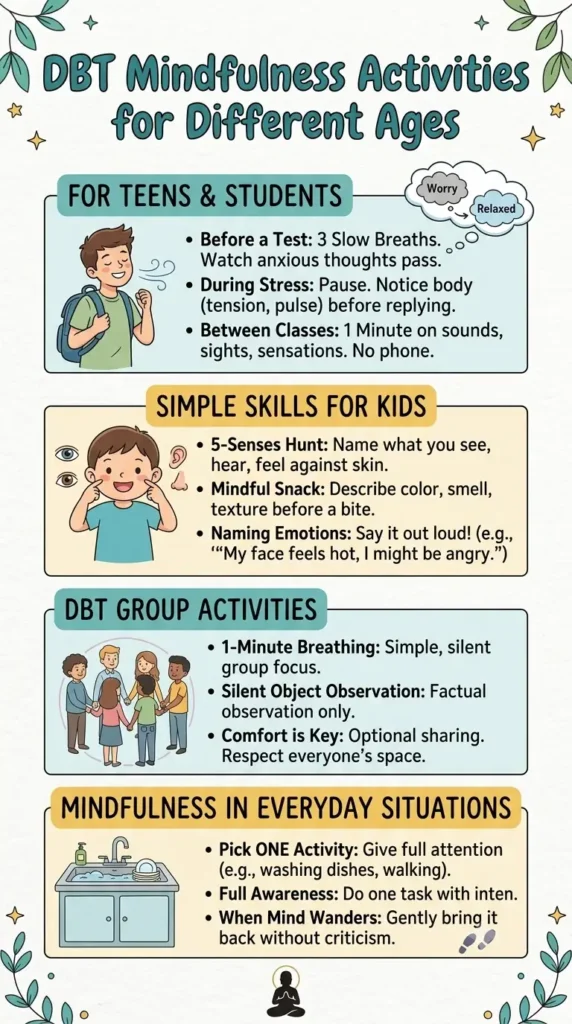
Mindfulness Activities for Teens and Students
Nobody hands a teenager a meditation cushion between periods. That’s the point. DBT mindfulness exercises for students have to survive a five-minute passing period, a group chat blowing up, or a test starting in ninety seconds. No quiet room required.
Before a test, three slow breaths work. Notice the thought “I’m going to fail” without treating it as a fact. Mid-argument, pause first. Feel for the tight shoulders or the pounding chest before a single word comes out.
- Before a test: Three slow breaths. Watch the anxious thoughts pass without grabbing onto them.
- During a stressful conversation: Pause. Notice the body first, tense jaw, racing pulse, before replying.
- Between classes: One full minute on sounds, sights, and sensations. Phone stays in the pocket.
These practices don’t erase stress. They were never built to. What they do is slower and smaller: a student catches the reaction before it runs the whole show, then picks the next move on purpose.
Simple Mindfulness Skills for Kids
Kids tune out lessons. They tune into games. That’s the whole design behind mindfulness for children. Keep the words short. Keep the activity under two minutes. Match it to whatever a six-year-old can actually sit still for, which isn’t long.
A five-senses hunt works well. Ask the child to name one thing they see, one they hear, one they can feel against their skin. A snack works too. Describe its color, its smell, its texture, before a single bite.
Naming an emotion out loud helps just as much: “My face feels hot. I might be angry right now.” A printable emotions worksheet can make that labeling step easier to repeat at home.
One rule matters here. Never call a feeling bad. The job is noticing it and saying it out loud, not judging it or stuffing it down.
DBT Group Mindfulness Activities
A classroom isn’t a therapy room. A skills workshop isn’t either. Group mindfulness has to work without anyone sharing something private. That’s the whole constraint a facilitator is designing around.
A one-minute breathing practice covers that. So does silently observing an object, or describing the same sound using only factual words, nothing interpreted. Simple exercises. Nobody has to reveal anything they don’t want to.
Sharing afterward should stay optional. Always. Comfort levels differ wildly in a group, and inward-focused exercises land hard for some people. Offer an alternative task for anyone who’d rather sit this one out than go inward on command.
Mindfulness During Everyday Situations
Washing dishes counts. So does walking, eating, or just listening to someone talk. Pick one activity. Give it your full attention for a short stretch, nothing dramatic, just one task done on purpose. For a related daily practice you can pair this with, these coping skills worksheets build out a broader toolbox beyond mindfulness alone.
The mind wanders. It always does. Notice where it went, then bring it back. No self-criticism tacked on afterward.
Sound too small to matter? It isn’t. Perfection was never the goal here, in DBT or anywhere else. Noticing the drift and returning, again and again, is the actual practice. That repetition is what builds the skill the other modules in the DBT skills worksheets library lean on.
Common DBT Mindfulness Mistakes and How to Handle Them
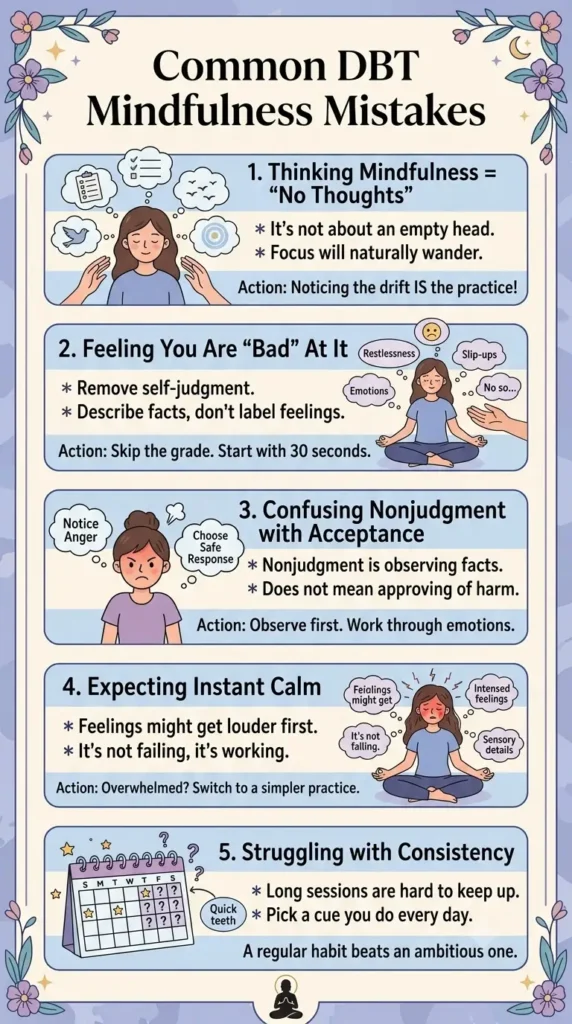
Learning DBT mindfulness skills isn’t a straight line. You’ll get distracted. You’ll judge your thoughts. Some days an exercise just won’t calm you down, and that’s not failure.
Knowing the common traps ahead of time makes practice easier to stick with. For a fuller breakdown of each skill, the DBT skills worksheets guide is worth bookmarking alongside this one.
Thinking That Mindfulness Means Having No Thoughts
This isn’t about emptying your head. Not even close. Thoughts drift in during a two-minute breathing exercise, a ten-minute one, all of them. When your attention wanders, pull it back.
Gently. Back to your breath, the room, whatever you’re doing. Here’s the part most people miss: noticing the drift is the practice. It’s not a sign you failed at it.
Feeling That You Are Bad at Mindfulness
Focus feels slippery some days. You can’t describe what you’re feeling, and that’s fine. Skip the self-judgment and just describe the facts instead. “I keep thinking about tomorrow.” “I feel restless right now.”
No grading attached. Start with 30 seconds. Thirty seconds, nothing more. Stretch the time only once it stops feeling like a chore. Pairing this with a few mindfulness journal prompts can give you words for what’s hard to name out loud.
Confusing Nonjudgment With Accepting Harmful Behavior
Nonjudgment means noticing facts without piling harsh labels on top. That’s it. It does not mean approving of harm, yours or anyone else’s. You can notice anger without pretending it isn’t there. You can name it, sit with it, and still choose a response that’s safe and respectful.
Observing isn’t the same as approving. Those are two different things entirely, and mixing them up is where this mistake usually starts. Working through an emotions worksheet can help separate what you’re feeling from what you’re about to do about it.
Expecting Every Exercise to Make You Feel Calm
Most people start mindfulness expecting instant relief. Wrong expectation. Paying closer attention to a feeling often makes it louder before it gets quieter, not the other way around. That’s not the exercise failing.
That’s the exercise working exactly as it should. If it ever tips into overwhelming, open your eyes. Look at three objects in the room. Or switch to something simpler, like a slow, mindful walk around the block.
Struggling to Practice Consistently
Long sessions don’t survive a busy week. They just don’t. Pick one daily cue instead, something you already do without thinking. Brushing your teeth. Waiting for class to start. Attach one skill to that moment and nothing more. A short, regular habit beats an ambitious one you abandon by Thursday. Missed a day?
That’s a reason to restart, not a reason to beat yourself up over it. If old coping patterns resurface during a rough stretch, the coping skills worksheets offer a steadier place to land than white-knuckling it alone.
When to Seek Help With DBT Mindfulness Practice
DBT mindfulness skills can help you notice thoughts, emotions, and urges without reacting to them right away. However, mindfulness exercises may feel uncomfortable for some people, especially when focusing inward brings up distressing memories, panic, or intense emotions. You do not have to push through discomfort to practice correctly.
If an exercise increases your distress, pause and try a gentler approach. You might keep your eyes open, focus on an object in the room, notice sounds around you, or take a short break. If mindfulness repeatedly makes you feel worse, ask a mental health professional about adapting the practice to your needs.
A therapist trained in Dialectical Behavior Therapy (DBT) can help you choose suitable skills, practise them safely, and work through challenges. You can also explore these coping skills worksheets for additional practice ideas.
Mindfulness is a skill, not a substitute for mental health care. If you are in immediate danger or experiencing a mental health crisis, contact local emergency services or a crisis support service.
Conclusion
DBT mindfulness skills help you notice what is happening inside and around you without reacting automatically. By practicing Wise Mind, the three What skills—Observe, Describe, and Participate—and the three How skills—Nonjudgmentally, One-Mindfully, and Effectively—you can build greater awareness of your thoughts, emotions, and actions.
You don’t need long meditation sessions or a perfectly quiet mind to begin. Start with one small exercise, use a worksheet to track your practice, and return to the skills when you need them. Progress takes time, and each attempt is an opportunity to practice responding with more awareness and intention.
Frequently Asked Questions
What are the six DBT mindfulness skills?
The six DBT mindfulness skills are Wise Mind, Observe, Describe, Participate, Nonjudgmentally, One-Mindfully, and Effectively. Wise Mind balances emotion and reason. The other six? Observe, Describe, and Participate are What skills; the remaining three are How skills.
What is the difference between DBT What skills and How skills?
DBT What skills describe what you do when practicing mindfulness: Observe your experience, Describe it with words, and Participate fully. How skills explain how you do it: Nonjudgmentally, One-Mindfully, and Effectively, focusing on what works.
What is Wise Mind in DBT mindfulness?
Wise Mind is the balanced state between Emotion Mind and Reasonable Mind. It helps you acknowledge feelings while considering facts and practical needs. For example, you can feel angry during a disagreement and still choose a thoughtful response.
Can you practice DBT mindfulness without meditation?
Yes. DBT mindfulness does not require sitting still or following a formal meditation. You can practice by noticing your surroundings, eating slowly, listening closely, naming emotions, or focusing on one everyday task at a time.
Where can I find free DBT mindfulness skills worksheets and PDF exercises?
You can use DBT mindfulness worksheets to practise Observe, Describe, Participate, and the three How skills. Look for printable exercises, reflection sheets, and practice trackers that explain each skill clearly. Explore our DBT skills worksheets library for related resources.
How can I practice DBT mindfulness skills when I feel overwhelmed or cannot focus?
Start with a brief, manageable exercise, such as noticing your feet on the floor or naming three things you can see. If focusing inward feels uncomfortable, try an external grounding activity. Stop or adapt the exercise if distress increases, and seek professional support when needed.

It’s Bhaskar!
Well, I am not a psychologist a monk, or a philosopher by training. I’m just an engineering graduate.
‘The Empty Self’ is where I write about that idea, and what it actually means for ordinary life, anxiety, identity, habits, the stories we tell ourselves about who we are. I don’t have a psychology degree, and I’m not offering therapy or clinical advice. What I do have is thought and clarity, and genuine curiosity about why we suffer the way we do and how much of it might loose once we shed this ‘fixed identity’.
Pingback: 10 Best DBT Books & Workbooks: Complete List for Teens and Adults | The Empty Self