
Your brain feels like 27 tabs open at once. A journal helps. But only the right one. Guided journals for mental health work differently depending on what you actually need. Some push you to name what you’re feeling. Others lean into self-compassion, anxiety, or plain daily reflection.
Pick the wrong format? It reads like homework. Sometimes it just feeds the same looping thoughts you were trying to quiet down.
Quick overview: guided journals for mental health hand you prompts and structure instead of a blank page. They help you sort through emotions, habits, stress, self-compassion, and growth, similar to the approach in these journal prompts for mental health. The right guided journaling pick depends on your goal, your time, and whether you want soft reflection or therapy-informed exercises. If mindfulness is the goal, mindfulness journal prompts are worth a look too.
For Gen Z, pick journals you’ll actually open again. Skip the prettiest cover on the shelf. A five-minute journal that fits your day beats an elaborate one. You’ll dump the elaborate one after four days anyway.
Table of Contents
Disclaimer
This blog is written and edited with the help of AI, then reviewed by me before publishing. As a result, the content is for general reflection only, not therapy or medical advice, and I’m not a licensed mental health professional. If you’re in crisis, please contact 988 if you’re in US or a local crisis service of your country instead of relying on this site.
What Are Guided Journals for Mental Health?
Guided journals for mental health give you something to write toward. A blank page doesn’t do that. These journals use prompts and small exercises instead. Each one points you toward a specific thought, feeling, or habit. That structure matters. Staring at an empty notebook can leave your mind just as empty.
Guided journals vs. blank journals
A guided journal gives you a structure to follow. A blank journal gives you total freedom. That difference matters more than it sounds.
In a blank notebook, you might write “today was rough” and stop right there. A guided journal would ask what happened. What emotion showed up. What you needed in that moment. Whether your read on it changed once time passed.
Neither format wins outright. Blank journals work when you already know how to reflect. Guided journaling helps more when an empty page leaves your mind blank too.
Guided journals vs. guided therapy journals
A guided therapy journal usually builds around therapeutic concepts and exercises. A general guided journal casts a wider net, covering reflection, wellbeing, gratitude, or personal growth.
The wellness market blurs these lines constantly. A journal labeled “therapy” isn’t automatically therapy. Using one doesn’t create a therapist-client relationship either. Think of it as a structured self-reflection tool, one that can sit alongside professional support.
Guided journals vs. CBT workbooks
CBT workbooks are more specific. A CBT workbook generally teaches and applies cognitive behavioral techniques. Guided journals borrow from many approaches without following one formal framework.
A CBT workbook might include thought records, cognitive restructuring drills, or behavioral experiments. A guided journal might just ask you to name an emotion. Or reflect on your day. Or notice a pattern that keeps repeating.
What guided journaling can and cannot do for mental health
Guided journaling can help you put vague thoughts into words. It can help you notice emotional patterns. Reflect on what actually happened. Build a steady self-awareness habit, one entry at a time. It also gives you a private place to slow down before you react.
But journaling isn’t a cure-all. It shouldn’t replace therapy, medication, crisis support, or other professional care when you need those. And if writing sends you deeper into rumination instead of helping you process things, a different approach might serve you better. Healing journal prompts built around a specific issue can sometimes offer that different angle.
Can Journaling Make Things Worse? What to Watch For
More journaling isn’t automatically better. Not even close. A guided journal for mental health can build real awareness. It can also do the opposite.
If a prompt keeps circling the same thought, or pushing you toward judgment, or forcing a positive spin you don’t feel, something’s off. The point of a good prompt is space. Not a trap.
When prompts feed rumination instead of reflection
Reflection and rumination look almost identical on paper. They aren’t.
Reflection moves you somewhere. You understand what happened, name what you felt, and figure out what comes next. Rumination just spins. Same distress, same loop, zero new ground.
Research summarized by the APA built on expressive-writing work associated with psychologist James Pennebaker. Writing about hard experiences can genuinely help.
But how you process them matters more than how much you write. Replaying an upsetting event without building any real understanding tends to help less than writing that connects feeling to insight.
Here’s what that looks like on the page. “Why am I such a failure?” That question can eat twenty minutes and leave you worse off. “What happened, what am I feeling, and what do I need right now?” Same blank page. Completely different direction.
Old wounds especially need this kind of guardrail, which is part of why our healing journal prompts lean on specific, forward-moving questions instead of open-ended ones.
The “who’s doing the journaling” problem (self-critic vs. reflective self)
Open a journal and whoever’s loudest in your head gets the mic.
If your inner critic already runs the show, saying things like “you should’ve handled that better,” a heavily evaluative prompt just hands that voice more pages. More room. More fuel.
Try observation instead of judgment. Sound too small a shift to matter? It isn’t. “I noticed I felt rejected when…” sits nowhere near “Why do I always ruin relationships?” Same event. Completely different self talking.
Putting a feeling into words does something real, too. Research on affect labeling found that naming an emotion is linked to reduced amygdala activity when people face negative emotional images.
Naming isn’t a soft skill. It’s a nervous-system one. If this idea interests you, our guide to journaling for emotional intelligence goes further into naming feelings before reacting to them.
Forced positivity, guilt-based journaling, and repetitive prompts
Not every guided journal for mental health handles hard days well.
Some quietly turn self-care into homework. Miss a day, feel guilty. Have a rough one, get redirected straight to gratitude anyway. Same five prompts, week after week, until reflection starts feeling mechanical instead of honest.
A mental health journal shouldn’t require you to fake being okay. “What is one thing I’m grateful for?” has its place, and practicing gratitude really can shift a hard week. But it shouldn’t replace the harder, more honest question: “What is actually hurting today?”
Look for prompts that leave room for difficult emotions. For uncertainty. For a day that just wasn’t good.
Signs a journal isn’t the right tool right now
Some signals mean it’s time to stop, or at least change direction.
Pause the practice if journaling consistently leaves you more distressed than before you started. Same if you’re stuck in one thought loop, growing more self-critical by the entry, or feeling pressured to keep writing even though it’s making things worse. The APA notes that writing about painful experiences can temporarily increase distress, and expressive writing doesn’t land the same way for everyone.
You bought the journal. That doesn’t mean you owe it a finished streak. Some days call for a shorter, gentler prompt instead, like the grounding ones in our mindfulness journal prompts guide. Other days call for something a page can’t give you: an actual conversation with a mental-health professional.
How to Choose the Best Guided Journal for Your Mental Health
Forget the cover art. The best guided journals for mental health are the ones that match your actual needs, your attention span, and your comfort level. Nothing fancier than that. Before you buy anything, check three things: what the prompts actually ask of you, how much time they eat up, and whether they let you reflect without piling on pressure.
Start With Your Goal, Not the Cover
Figure out what you want the journal to help you work through first. Anxiety, self-criticism, emotional awareness, mindfulness, gratitude, general self-reflection. Each one needs a different style of prompt. A therapy journal built around anxiety won’t do much for someone working through self-critical thought patterns. A pretty cover won’t fix that mismatch either. If the questions feel unrelated to what you’re actually dealing with, put it back on the shelf.
Watch for Forced Positivity and Guilt Traps
A mental-health journal should never make you feel like you failed just because today was rough. Be careful with prompts that demand a silver lining, insist on daily completion, or treat hard emotions like something to rush past. That’s not reflection. That’s pressure wearing a nicer outfit.
Choose the Right Level of Structure
Some journals spell out almost every sentence for you. Others hand you one question and a blank page. New to guided journaling? More structure helps. It cuts down on decision fatigue. Experienced writers usually want the opposite. They want room to wander off-script.
Check the Time Commitment
Look at how long an entry actually takes, not how long the marketing copy claims. A five-minute journal fits into a life full of classes, commutes, and work shifts. A journal built around a 30-minute evening ritual does not. Be honest about which one you’ll open on a Tuesday night when you’re exhausted.
Look at Prompt Variety and Depth
Repetition builds habits. It can also turn into mindless box-checking. Neither extreme works alone. Look for a mix. Some familiar prompts for routine, and a few that catch you off guard and make you think sideways for a second.
Dated vs. Undated Journals
Dated pages build routine. Undated pages give you permission to skip a day without falling behind. Ask yourself which one you actually need. If a calendar keeps you consistent, go dated. If missed days trigger guilt, undated is the safer call.
Consider Size, Paper, and Writing Space
Physical details matter more than people expect. A compact journal travels well. A larger one gives longer entries room to breathe. Check whether the blank space actually matches the depth of the questions being asked. A one-line prompt paired with a full page can feel like homework.
Look for Real Clinical Input
Not every journal labeled “for mental health” is backed by anything clinical. Some are just aesthetic notebooks with a therapeutic-sounding title slapped on. If a journal makes psychological claims, dig for transparency. Who wrote it? What’s the methodology? Was a licensed professional involved anywhere in the process, the way emotional intelligence journaling work tends to require?
Consider Price Per Day, Not Price Per Cover
Don’t judge value off the sticker price alone. A $20 journal you use for six months beats a $6 journal you abandon in two weeks. Every time.
Decide Between Physical and Digital
Last call: pick the format you’ll actually stick with. A physical notebook creates real distance from your phone. A digital journal suits someone who already reflects through an app and wants privacy, searchability, or quick access on the go. Neither one is objectively better. The one you’ll open tomorrow is the right one.
15 Best Guided Journals for Mental Health for Gen Z
The best guided journals for mental health aren’t the prettiest ones. They aren’t the most-liked ones either. The real question is smaller. Do you need five minutes a day? Anxiety-specific prompts? Something to sit next to therapy, not replace it? These 15 stand out for different reasons. Use the choose this if / skip if notes below. Don’t treat the ranking as gospel.
| Journal | Best For | Time/Day | Structure |
|---|---|---|---|
| The Five Minute Journal | Quick daily reflection | 5 min | Undated |
| Inside Then Out Better Every Day Journal | Broad self-reflection | 5–10 min | Dated |
| Worry for Nothing | Anxiety-focused reflection | 5–15 min | Guided |
| Clever Fox Mental Health & Anxiety Journal | CBT-style tracking | 5–10 min | Guided |
| The Self-Love Workbook | Self-compassion | 10–15 min | Guided |
| Mindfulness Journal | Mindful reflection | 5–10 min | Guided |
| Let That Sh*t Go | Emotional release | 5–15 min | Guided |
| 52-Week Mental Health Journal | Long-term consistency | 5–10 min | Dated/weekly |
| ACT Daily Journal | Values-based reflection | 10–15 min | Guided |
| My Therapist Told Me to Journal | Creative emotional exploration | 10–20 min | Guided |
| The Burnout Workbook | Burnout recovery | 15–20 min | Workbook |
| Two Minute Mornings | Busy mornings | 2 min | Dated |
| One Question a Day for Self-Care | Simple self-care | 5 min | Dated |
| Daily Contemplations Journal | Deeper reflection | 10–15 min | Guided |
| Clever Fox Self-Care Journal | All-around wellness | 5–10 min | Guided |
Best Guided Journals for Beginners and Busy Gen Zs
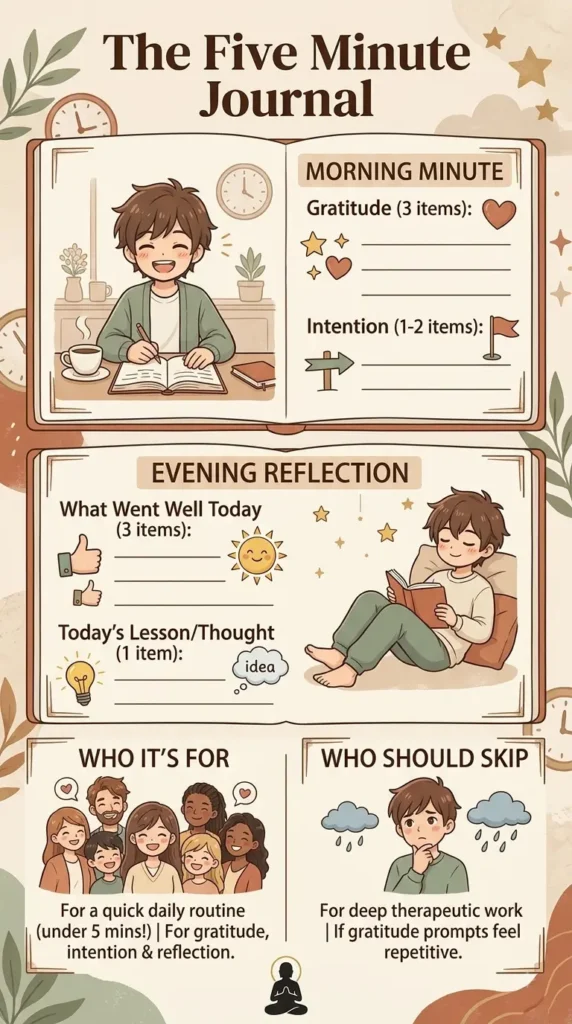
A blank notebook can feel like a dare nobody asked for. The Five Minute Journal skips that entirely. Its whole draw is the small daily ask. Gratitude, intention, reflection. Nothing more.
Choose this if: you want a routine that fits in a few minutes, no negotiating.
Skip if: gratitude prompts start feeling repetitive, or you want to dig deeper into what you’re actually feeling.
Two Minute Mornings pushes that low-friction idea even further. It fits around a commute. A first coffee. A five-minute gap before class starts. It was never built to become a 20-minute ritual.
Choose this if: showing up daily matters more to you than writing long entries.
Skip if: you want real therapeutic work, not a quick check-in.
Best Guided Journals for Anxiety and Stress
Anxiety doesn’t need vague encouragement. It needs structure. Worry for Nothing: Guided Anxiety Journal takes a CBT-oriented approach built around naming worry patterns, not just “thinking positive.” Current 2026 comparisons describe it as a portable pick built around guided worksheets and anxiety-focused exercises.
Choose this if: anxiety and recurring worry are the actual reason you picked up a journal.
Skip if: you want something open-ended that covers broader personal growth.
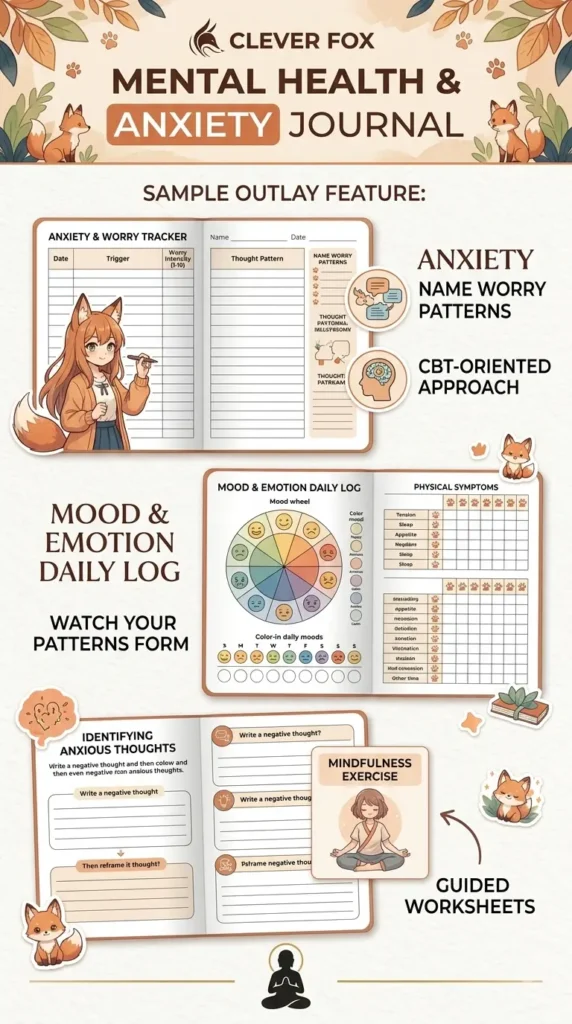
Clever Fox Mental Health & Anxiety Journal works for readers who like seeing the shape of their own patterns. It pairs CBT-style prompts with mood and emotion tracking. More interactive than a standard daily diary. Less passive too.
Choose this if: you want to watch your moods and thoughts form a pattern over time.
Skip if: trackers turn journaling into one more task on your list.
Best Guided Therapy Journals and CBT-Informed Options
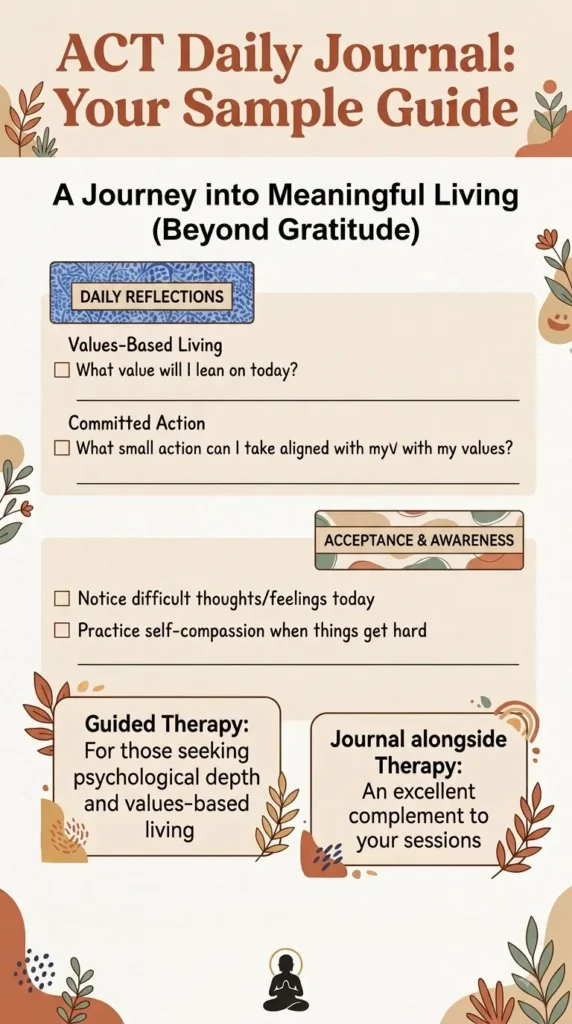
Most wellness journals stop at gratitude. ACT Daily Journal doesn’t. It leans on Acceptance and Commitment Therapy, so values, awareness, and meaningful action become part of the actual reflection, not an afterthought.
Choose this if: you want prompts tied to real psychological concepts and values-based living.
Skip if: you’re after a light five-minute gratitude routine and nothing heavier.
A guided therapy journal can sit next to therapy. It can’t replace it. That’s the whole distinction. A journal hands you exercises and space to reflect. A therapist brings assessment, clinical judgment, and a relationship built around you specifically.
If you want to journal alongside therapy sessions, our upcoming therapy journal prompts guide walks through prompts built for exactly that.
Best Guided Journals for Self-Compassion and Negative Self-Talk
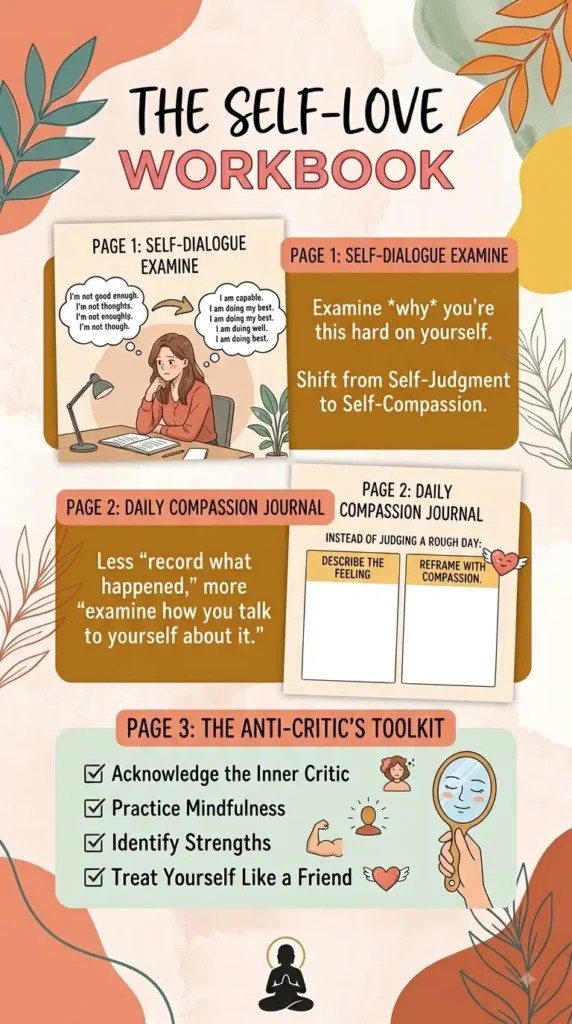
Sometimes the problem isn’t the day. It’s how you talk to yourself about it. The Self-Love Workbook fits that exact gap. Less “record what happened,” more “examine why you’re this hard on yourself.”
Choose this if: your entries keep turning into self-judgment sessions instead of reflection.
Skip if: you’d rather have structured mood tracking or CBT worksheets.
That distinction actually matters. A journal can ask about a rough day without turning it into another chance to tear yourself apart.
Best Guided Journals for Mindfulness and Emotional Awareness
Some journals want you to fix the problem. Mindfulness Journal wants you to notice it first. Sensory detail. Present-moment prompts. Awareness exercises instead of gratitude lists stretched thin.
Choose this if: you want to notice a feeling without rushing to solve it.
Skip if: you need targeted anxiety worksheets instead.
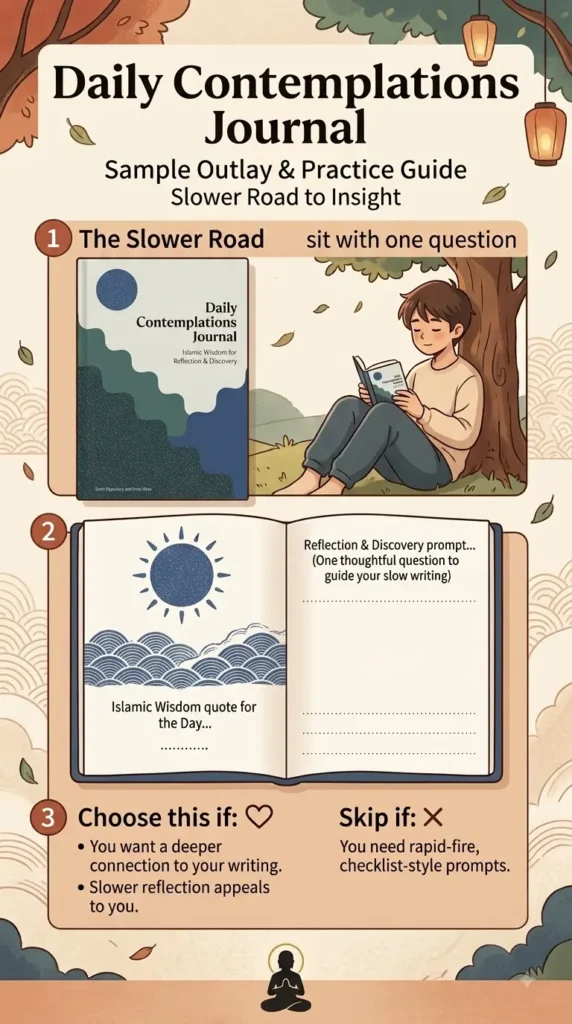
Daily Contemplations Journal takes the slower road. It suits readers who’d rather sit with one question than race through a checklist.
Choose this if: slower, more thoughtful writing actually appeals to you.
Skip if: you need sharp, specific prompts for one particular concern.
Best Guided Journals for Gratitude and Positive Reflection
The Five Minute Journal earns its spot here too. Gratitude sits at the center of its daily format. A small positive-reflection habit, no page-filling required.
Choose this if: gratitude just needs to be one part of your day, not the whole thing.
Skip if: you’re moving through something hard right now, and positivity-focused prompts feel dismissive instead of helpful.
Want to go further with the practice itself? The Empty Self’s how to practice gratitude guide and gratitude worksheets work well as companions here. Not replacements. Companions.
Best Guided Journals for Self-Discovery and Personal Growth
Not every journal wants to lock you into one issue. Inside Then Out Better Every Day Journal doesn’t. Current product comparisons describe it as a 365-prompt journal covering reflection, self-love, growth, gratitude, wellness, and healing.
Choose this if: you want variety, and you’re building a long-term daily habit.
Skip if: you need something narrower, like an anxiety or therapy workbook.
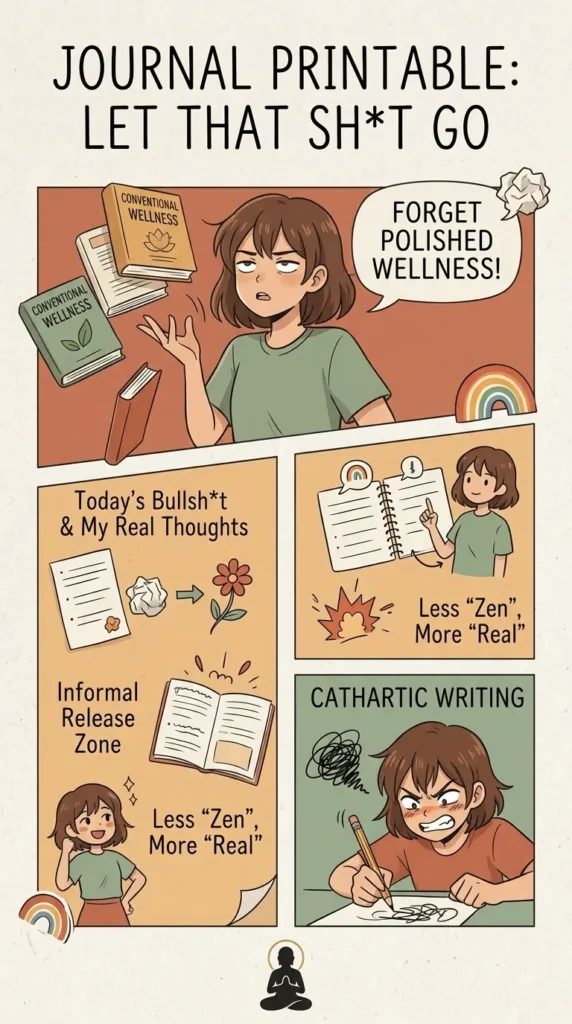
Let That Sh*t Go flips the tone entirely. Informal. Irreverent. Built for emotional release, not polished wellness language.
Choose this if: conventional self-help phrasing makes you roll your eyes.
Skip if: you’d rather have clinical terms and structured therapeutic exercises.
Best Guided Journals for Mood, Habits, and Overall Wellbeing
Clever Fox Self-Care Journal is the flexible all-rounder on this list. Reflection meets wellness tracking and planning in one place. Good for anyone who wants mental-health journaling connected to daily routines, not floating off on its own.
Choose this if: you’d rather one journal cover reflection, habits, and self-care together.
Skip if: you want a journal devoted entirely to emotional processing.
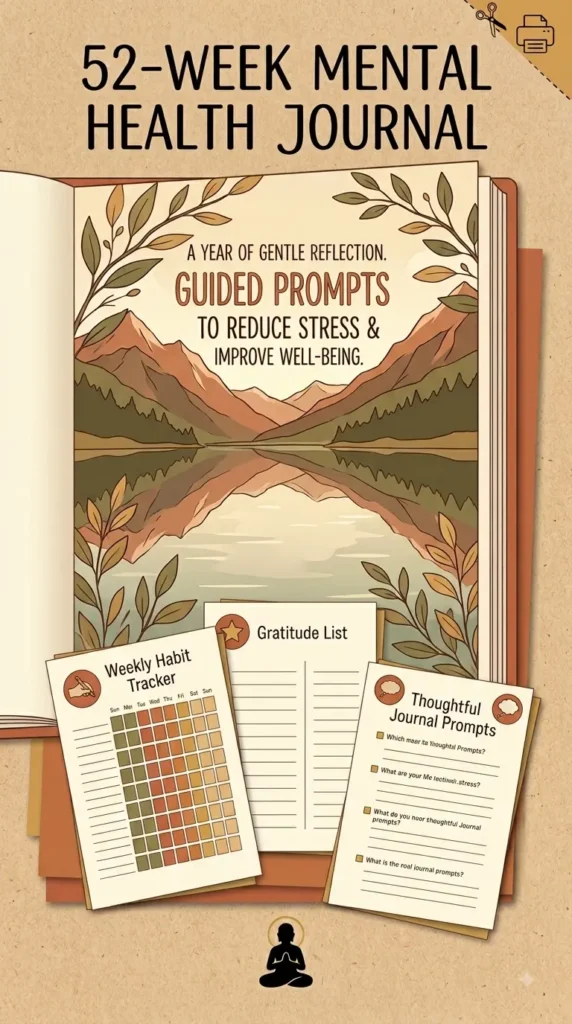
52-Week Mental Health Journal suits a longer runway instead. A weekly structure feels lighter than facing a blank page daily, while still giving you a steady check-in point.
Choose this if: you want a year-long habit without heavy daily writing.
Skip if: a long schedule staring back at you feels like pressure, not comfort.
Best Premium Guided Journals
Not every problem is general burnout adjacent. Some of it is burnout, full stop. The Burnout Workbook is the pick for that. More workbook than diary, meaning structured exercises instead of one question per page.
Choose this if: burnout itself is what you’re actually trying to work through.
Skip if: you want something lighter for casual daily reflection.
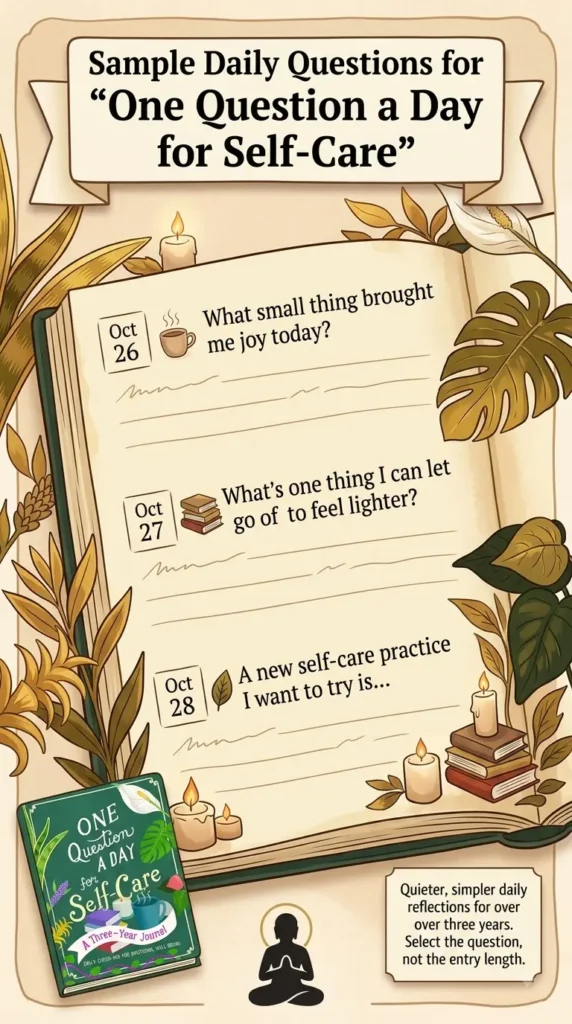
One Question a Day for Self-Care takes a quieter, simpler route. A premium-feeling physical book built for readers who want to return to it over time, without committing to long daily entries.
Choose this if: one thoughtful question feels like enough structure for you.
Skip if: you need step-by-step exercises to actually get anywhere.
Best Guided Journals for Gen Z Budgets and Digital Habits
Not everyone wants another hardcover object cluttering their desk. Digital journaling deserves a real spot in this conversation. App-based prompts cut the friction of carrying a notebook around, and digital formats make reminders and searchable entries easier to manage.
Mindtalk’s journaling resources, for example, show how structured prompts can work just as well delivered digitally across different journaling approaches.
Budget-conscious? Check for a digital version, a free trial, or a low-cost prompt library before paying full price for a premium physical edition. The better question was never “which journal is cheapest.” It’s “which format will I actually use?”
Most of your day already lives on your phone. Digital journaling might win purely on convenience there. But if your phone is also where every notification and distraction lives, a physical journal becomes the smarter pick. It puts a little distance between you and the screen. Sometimes that distance is the whole point.
Which Guided Journal Is Best for You?
There’s no single best journal for mental health. The right guided journals for mental health match your needs and your attention span. That’s the whole test.
A five-minute prompt journal can beat a deep workbook when your day is packed. A therapy-focused journal makes more sense once you’re already doing structured emotional work, the kind covered in journal prompts for mental health.
If You Only Have 5 Minutes a Day
You don’t need a twenty-minute ritual to benefit from reflection. Not even close. Pick a short-format guided journal built around one focused prompt or a small daily check-in. Dated pages help.
So does a prompt short enough to answer without it turning into homework. If quick and light is what you’re after, a set of quick mindfulness journal prompts works the same way, five minutes and done.
If You’re New to Journaling
Blank pages are more intimidating than people expect. Start with clear prompts and predictable structure instead. A beginner-friendly guided journal tells you exactly where to start.
It shouldn’t feel like an assignment every single time. Something like 365 journal prompts for mental health works well here too, one new starting point a day, no guesswork required.
If You’re Already in Therapy
A guided therapy journal fills the gap between sessions. Use it to track recurring thoughts. Use it to flag what you want to bring up next time. Choose one that complements your therapeutic approach.
A journal was never built to replace it, since real psychotherapy is a professional, collaborative treatment, not a notebook habit. Our upcoming guided therapy journal guide covers this in more depth.
If You Tend to Overthink or Ruminate
Be picky here. A journal that keeps sending you back to the same upsetting event will keep you circling it. That’s rumination, not reflection.
Look instead for prompts that move you somewhere: noticing a thought, naming the emotion, grounding yourself, then asking what you can actually do next. This is closer to journaling for emotional intelligence than open-ended venting, and the difference matters more than it sounds.
If You Don’t Like Forced Positivity
Skip anything built almost entirely around gratitude, affirmations, or “find the silver lining” prompts. Not if those feel dismissive on a hard day. Emotional honesty matters more than sounding upbeat on paper. Look for journals that leave room for uncomfortable feelings without rushing to fix them.
That said, gratitude still has its place when it’s not the whole plan. Structured gratitude worksheets can sit alongside harder prompts just fine, as long as they’re not standing in for them.
If You Want Deep Emotional Reflection
Look for longer prompts and generous writing space. Questions about values, patterns, relationships, and self-understanding work best here. These journals ask more of you. That’s the point.
They work better when you actually want to sit with a question, not squeeze it into a five-minute slot. Our healing journal prompts collection leans in this direction, for the days you want to go past the surface.
If You Prefer Creative Prompts
Too much structure can flatten the whole experience. Choose a journal that mixes conventional questions with visual exercises, lists, check-ins, and free-writing space. Your mind might process things associatively, not in neat lines. A rigid format can fight that instead of supporting it.
If You Want a Journal That Looks Good Enough to Actually Use
Design isn’t superficial when it decides whether you’ll open the thing. Pick something portable, comfortable to write in, and visually appealing to you. Just don’t let a pretty cover cover up weak prompts or a format that doesn’t fit how you actually write.
If You’re on a Tight Budget
Compare value per usable day, not the sticker price. An inexpensive journal you abandon after a week isn’t cheaper than one you’ll actually return to. Undated journals help too. No pressure to keep a streak, no guilt when a week slips by.
Common Mistakes to Avoid When Choosing a Mental Health Journal
A good mental health journal should make reflection easier. Not harder. Not one more task guilt-tripping you from a shelf.
A pretty cover does nothing for you at 11pm when your brain won’t shut up. Neither does a hundred-prompt table of contents you’ll never open past page three.
Before you commit to any of the guided journals for mental health on this list, check how it actually fits your goals, your emotional bandwidth, your time, and how you naturally like to reflect.
Buying Based Only on Aesthetics
A journal can look gorgeous on your desk. And still be completely wrong for you.
Pretty layouts. Thick paper. A cover that matches your aesthetic. None of that tells you whether the prompts inside will help you process anything real.
Say you’re buying for anxiety. A journal built around productivity goals and five-year visions will leave you feeling more pressured, not less. That’s the opposite of the point. Pick the prompt style first. Aesthetic second.
Choosing a Journal That Demands More Time Than You Have
A 15-minute daily practice sounds doable. Right up until you’re staring at a blank page after a ten-hour day.
Be honest about your actual bandwidth. If five minutes is realistic, buy a journal built around five-minute prompts. Not one you’re hoping you’ll magically have more time for later.
Consistency beats length every time. A short entry you finish beats a long one you eventually abandon in a drawer.
Assuming “Therapy Journal” Means Therapy
A guided therapy journal can support what happens between sessions. It isn’t a therapist, though. Not even close.
These journals often borrow from CBT-style questioning, mood tracking, or self-compassion exercises. What they don’t offer is individualized assessment. No one’s reading your entries and adjusting a treatment plan around them.
Look past the word “therapy” printed on the cover. Check the actual framework doing the work underneath it.
Picking Repetitive Prompts When You Need Variety
Repetition builds habits. Fair enough. But some people check out fast when every single page asks the same question in a slightly different font.
Already journaled for a while? Look for prompts that stretch across emotions, values, relationships, habits, and self-understanding. Journaling built around emotional intelligence tends to dig into more of that range than a repeating mood tracker ever will.
Using Journaling to Analyze the Same Problem Endlessly
Reflection can slide into rumination fast. One helps. The other just spins you in circles.
Here’s the difference. If you’re writing about the same fight, the same fear, the same regret, and closing the notebook feeling worse every single time, that’s not reflection anymore. Check the pattern against reflection versus rumination before you buy a journal built entirely around deep-dive prompts. Sometimes closing the page is the smarter move than filling another one.
Treating a Journal as a Replacement for Professional Support
Journals for mental health are genuinely useful. They still have limits.
Persistent or severe distress needs real support. A trained professional, not a prompt. Psychotherapy is a collaborative treatment aimed at relieving distress and shifting patterns that aren’t working anymore. A journal was never built to carry that weight alone.
Buy the guided journal. Use it daily if it helps. Just don’t let it replace the support that’s actually built to hold the heavier stuff.
Physical vs. Digital Guided Journaling: Which Is Better?
Neither one wins outright. Physical and digital guided journals for mental health can both hold real reflection. Not automatically, though. The better pick depends on how your brain works, where you actually sit down to write, how private your thoughts need to stay, and whether a screen sharpens your focus or steals it.
Benefits of Physical Guided Journals
A paper journal draws a hard line between writing and the rest of your digital life.
No notifications. No open tabs. No feed fighting for your attention. That quiet is what makes a handwritten session feel deliberate instead of half-done between apps.
Writing by hand also slows you down, and that slowness is doing real work. Research on handwriting versus typing points to a similar pattern: the pen forces a pace the keyboard never does, which gives your brain more room to sort out what you’re actually feeling before you write it down. That matters more than it sounds. Typing invites the first thought that lands. A pen makes you wait for the truer one.
A physical guided journal also just fits certain lives better. You like a tangible routine. You want something on the nightstand, not buried in an app. You want to flip back through filled pages and see the proof, in your own handwriting, that you kept showing up.
The tradeoff is flexibility. A notebook takes up space. It’s awkward to carry some days. And it won’t give you searchable entries or access from three different devices. That’s just the deal.
Benefits of Digital Guided Journaling
Most advice assumes you’re choosing between a journal and your phone. For a lot of Gen Z readers, that’s backwards. Your phone is already the thing in your hand.
Digital guided journaling meets you there. Prompts travel wherever you go, and most journaling apps stack on extras a notebook can’t: reminders, mood tracking, search, entries you can edit without crossing anything out. If you’re already deep into journal prompts for mental health and want a faster way to work through them, that convenience adds up fast.
For anyone who finds carrying a physical journal a hassle, this is the whole appeal. One less thing in the bag.
Here’s the catch. Opening a journaling app puts you one thumb-swipe from your messages, and most people know exactly how that story ends. Five minutes of reflection turns into twenty minutes of scrolling, and the prompt you opened for sits there, half-answered.
Privacy Considerations
Privacy deserves its own line item here, not an afterthought.
A physical journal can stay completely offline. Lock it in a drawer and nobody touches it without physically opening the cover. A digital guided therapy journal depends on something you can’t see: the app’s encryption, its account protections, what happens to your data after you close the app.
That’s not a small gap. A 2026 review of Android mental health apps found that every single one tested carried at least one undisclosed tracker, tools collecting data the app’s own privacy policy never mentioned. If your entries touch anything sensitive, self-harm thoughts, medication, a relationship you haven’t told anyone about, that gap is worth knowing before you type a single word.
Which Format Suits Different Gen Z Lifestyles?
Match the format to what your week actually looks like. Not what sounds better on paper.
Pick physical if handwriting helps you slow down and a phone-free half hour sounds like relief, not a chore. Pick digital if convenience, reminders, and searchable entries matter more than the ritual of pen on paper. Somewhere between mood tracking and a real paper trail, plenty of readers land on a hybrid: gratitude worksheets or printable prompts you fill in by hand, backed by an app for the days you’re out and about.
Still not sure? Try both for a week. Whichever one you actually reach for on day seven has your answer.
Related Mental Health Journaling Resources
A guided journal works better with backup. More angles. More ways in for the days one prompt style falls flat.
Start broad. The journal prompts for mental health pillar guide covers 120+ prompts sorted by mood, not dumped into one long list. That’s the spot to land if you’re still not sure what you need.
Want something narrower? Two options fit here. Healing journal prompts dig into old wounds and forgiveness you haven’t gotten around to yet. Therapy journal prompts borrow structure from real therapeutic thinking. Useful between sessions. Useful on your own too.
Emotions get their own lane. Journaling for emotional intelligence helps you catch a feeling before it runs your reaction. That gap matters more than people think. Catch the feeling early, and the argument ends differently.
Gratitude fits into a lot of routines. It can also tip into forced positivity fast. Gratitude journaling for anxiety shows how to use thanks without pretending the hard stuff isn’t there. Pair that with a gratitude worksheet, or lean on practical daily gratitude methods if a worksheet feels like too much structure. Stuck on what to even feel thankful for? Things to be thankful for has ideas ready to go.
Prefer a longer arc? 365 journal prompts for mental health covers a full year, one theme a month. Skip a day, keep going, no penalty. And when presence matters more than digging through the past, mindfulness journal prompts keeps things right here, right now.
Conclusion
The best guided journal for mental health isn’t the prettiest one. It’s not the priciest one either. It’s not the one crammed with the longest list of prompts. It’s the one you’ll actually reach for on a rough Tuesday, without feeling pressured to perform wellness perfectly.
For some Gen Z readers, that means five honest minutes a day. Nothing more. For others, it’s a structured guided therapy journal, a self-compassion workbook, or a digital option that slides into a routine you already have.
Start with what you need right now. Not what looks impressive on your nightstand. Sound too simple? It is. That’s exactly why it works.
If a journal makes you more self-critical, or keeps you stuck in the same loop, or leaves you guilty over a missed day, put it down. That’s allowed. Your journal should support reflection. It shouldn’t become one more thing you have to get “right.”
Still figuring out what to actually write once you’ve picked one? Our journal prompts for mental health guide is a solid next stop, sorted by mood instead of dumped into one long list. And if the goal is building a gentler, judgment-free habit before diving into a full guided journal for mental health, mindfulness journal prompts makes for an easy starting point too.
Frequently Asked Questions
What is the best guided journal for mental health?
The best guided journal for mental health depends on what you want help with.
A beginner may prefer short daily prompts, while someone working on anxiety, self-compassion, or emotional awareness may benefit from a more structured journal. Choose one that matches your goal, available time, and comfort with reflective writing.
What are the 5 C’s of mental health?
The five C’s are commonly described as connection, compassion, coping, community, and confidence.
Together, they highlight relationships, self-kindness, healthy responses to stress, supportive social environments, and belief in your ability to handle challenges.
Different mental-health frameworks use slightly different versions, so the exact five C’s can vary by source.
What is the best time of day to journal?
There isn’t one universally best time to journal. Morning journaling can help you set intentions and check in with your thoughts, while evening journaling can help you reflect on the day.
The most useful time is the one you can maintain consistently without making journaling feel like another obligation.
Is it normal to feel resistant to journaling prompts?
Yes. Resistance to journaling prompts is completely normal, especially when a question feels too personal, repetitive, vague, or emotionally demanding.
You don’t have to answer every prompt. Skip it, rewrite it in your own words, or switch to a simpler question that feels easier to approach that day.
Can journaling make anxiety or overthinking worse?
It can, particularly when journaling turns into repeatedly analyzing the same worry without reaching reflection or resolution.
If writing leaves you more distressed, stuck, or self-critical, pause and try a shorter, grounding-focused exercise instead. A journal should support reflection, not become another place to rehearse anxious thoughts.

It’s Bhaskar!
Well, I am not a psychologist a monk, or a philosopher by training. I’m just an engineering graduate.
‘The Empty Self’ is where I write about that idea, and what it actually means for ordinary life, anxiety, identity, habits, the stories we tell ourselves about who we are. I don’t have a psychology degree, and I’m not offering therapy or clinical advice. What I do have is thought and clarity, and genuine curiosity about why we suffer the way we do and how much of it might loose once we shed this ‘fixed identity’.