
Note: These worksheets are educational tools for practicing coping skills and are not a substitute for professional mental-health assessment or treatment when a child needs additional support.
A big feeling is hard to explain when a kid is already mid-meltdown. Angry, worried, sad, completely overwhelmed – the words just don’t show up on cue. That’s the exact gap coping skills worksheets for kids are built to close.
They hand a child something concrete to hold onto. A way to name what they’re feeling. A way to notice what’s happening in their body. A way to pick a response that’s actually safe.
Nobody’s trying to erase hard emotions here. Not the goal. The real aim is smaller, and way more useful. It’s about helping kids collect a handful of strategies they can actually reach for when life feels too loud. Breathing. Grounding.
Working through a problem one piece at a time. Putting together a calm-down plan that’s genuinely theirs. Add in a few solid coping skills activities for kids, and naming what you feel stops being some abstract idea. It becomes something a kid can actually practice on a random Tuesday afternoon.
Quick Overview: These coping skills worksheets for kids help children spot their emotions, calm their bodies down, work through anger and worry, solve problems, and build a personal coping toolkit. Home, school, counseling sessions, quiet practice time – they work anywhere a kid needs them.
Table of Contents
Disclaimer
This blog is written and edited with the help of AI, then reviewed by me before publishing. As a result, the content is for general reflection only, not therapy or medical advice, and I’m not a licensed mental health professional. If you’re in crisis, please contact 988 if you’re in US or a local crisis service of your country instead of relying on this site.
What Are Coping Skills Worksheets for Kids?
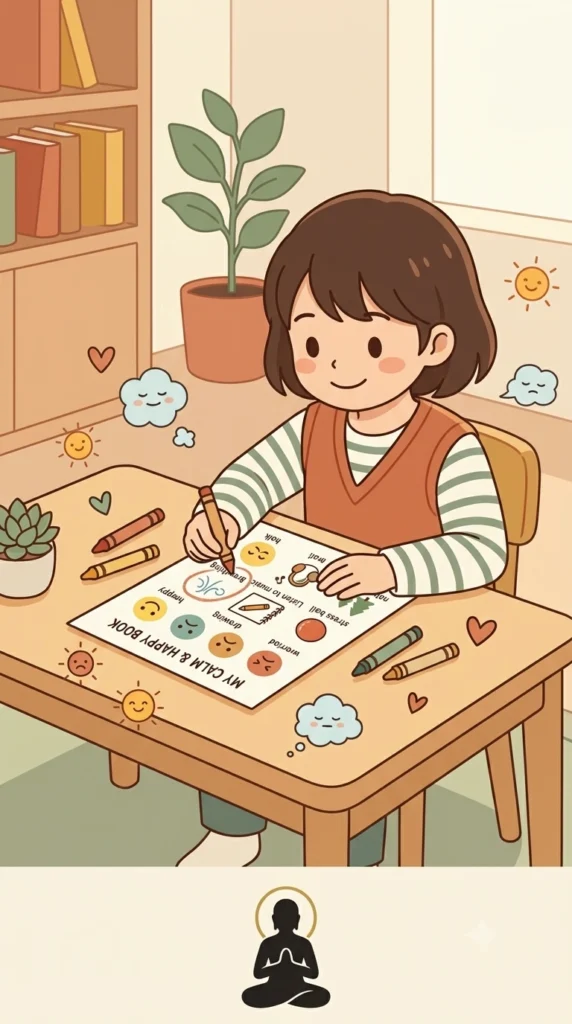
Coping skills worksheets for kids turn a fuzzy instruction like “calm down” into something a child can actually hold. A page. A prompt. A box to check.
They’re simple, guided activities. A child notices what they feel. Names what’s happening in their body. Then practices a real response, not just a wish for one.
Here’s an honest take: these worksheets are practice tools. Not therapy. Not a substitute for it.
If a child is stuck in distress that won’t let up, the worksheets should sit alongside real support, not replace it. More on that later.
Want the full range across ages and situations? The complete coping skills worksheets library covers it.
How Coping Skills Worksheets Help Children
Kids build emotional awareness through practice. Not lectures. The American Psychological Association defines coping as using thinking and behavior strategies to handle stress that outpaces what a person can normally manage.
For a child, that’s smaller than it sounds. Circling “angry” on a feelings chart. Noticing tight fists. Trying five slow breaths. Writing one thing they could do differently.
None of it is complicated. That’s the point.
The real advantage is pre-practice. A kid who tried a breathing exercise on a boring Tuesday afternoon has something to reach for later. Something familiar. That matters more than people think.
Why? Because nobody learns a brand-new skill mid-meltdown. Worksheets give adults a window to teach coping skills for kids while the child is calm, not while they’re falling apart. That’s a completely different learning state.
This connects directly to how kids handle bigger feelings in general. If a child struggles to name what they’re feeling in the first place, an emotions worksheet can help build that vocabulary before coping strategies even come into play.
Who Can Use These Worksheets?
Parents use them at the kitchen table. Teachers and school counselors use them during check-ins or classroom moments. Simple as that.
Therapists often fold age-appropriate therapy worksheets for kids into bigger treatment plans too. These aren’t standalone tools in a clinical setting. They’re one piece.
Older kids can often complete a coping skills for kids worksheet on their own. Younger ones usually need help. An adult reading prompts aloud. Drawing next to them. Helping put a feeling into words when the word won’t come.
Nobody needs a perfect worksheet. That’s not the goal.
The goal is a simple structure. Something a child can lean on when things get hard, whether that’s a printable coping skills for kids page at home or a kids coping skills poster taped up in a classroom.
How to Choose the Right Coping Worksheet for Your Child
Not every kid needs the same tool. A furious eight-year-old and a worried six-year-old are working through completely different problems.
Coping skills worksheets for kids work best when you match the sheet to the feeling, not the other way around. Start with what’s actually happening in front of you. Then hand over a worksheet that gives your child one clear next step, not a whole packet to get through.
Here’s a quick way to sort it:
| If your child is… | Try starting with… |
|---|---|
| Angry or frustrated | Anger Coping Skills or Feelings Thermometer |
| Worried or anxious | Deep Breathing or 5-4-3-2-1 Grounding |
| Sad or having big feelings | Feelings Check-In or Helpful Thoughts |
| Overwhelmed or restless | Sensory Calm-Down Menu or Movement Worksheet |
Still not sure where your child fits? Our emotions worksheet can help you name the feeling first. Naming it usually comes before anything else works.
For Anger and Frustration
Anger shows up in the body long before it shows up in words. Tight fists. Hot face. A voice that gets loud fast.
A good anger coping skills worksheet catches that moment. It asks what happened, where the anger sits in the body, how big it feels, and what a safer move might look like. Nothing complicated. Just a pause built into paper.
These pair well with anger management activities for kids coping skills free printable resources you can rotate through during calm moments, not just meltdowns. Practice on a boring Tuesday. That’s when it actually sinks in.
For Worry and Anxiety
Worry pulls a kid’s attention somewhere that hasn’t happened yet. The whole goal here is dragging it back.
Coping skills activities for kids dealing with anxiety work best when they’re physical and immediate. A breathing worksheet. A 5-4-3-2-1 grounding page. Something a child can do, not just read.
Don’t turn it into a test. That’s the trap. The moment a worksheet becomes one more thing to “get right,” a worried kid just gets more worried. Practice is the point.
Perfection isn’t. For a few more grounding-style prompts you can borrow from, our mindfulness journal prompts work well alongside a breathing worksheet like this.
For Sadness or Big Feelings
Don’t rush a sad kid straight to “calm down.” Let them land first.
A feelings check-in works better as a starting point. Let your child name the feeling. Let them say what happened. Ask what they need. Only after that does it make sense to bring in helpful thoughts, journaling, movement, or a nudge toward a trusted adult.
Sound too slow for a hard moment? It isn’t. Skipping that step is usually why the next worksheet falls flat.
For Overwhelm, Restlessness or Sensory Stress
A long worksheet is the wrong tool here. Full stop.
When a kid is overloaded, their brain has almost nothing left for reading instructions. A sensory calm-down menu or movement worksheet works better because it offers one simple choice: stretch, walk, squeeze something soft, or move to a quieter spot.
Simpler is always better in this state. The CDC notes that helping children manage and cope with symptoms often works best alongside gradual, hands-on strategies rather than complex instruction, which is exactly why a printable coping skills for kids menu with two or three choices beats a full page every time.
Building a small stack of go-to sheets for your child? Our feelings exercise and activities guide has more low-effort options worth adding to the rotation.
10 Simple Coping Skills Worksheets for Kids
Coping skills worksheets for kids work best when they turn a fuzzy feeling into something small enough to see, name, and try. A child rarely says “I’m anxious.” They say “I feel weird.” Or “my tummy hurts.” Or nothing at all.
The ten worksheets below start with noticing a feeling. Then they move into calming the body. From there, into problem-solving and a coping plan the child actually owns.
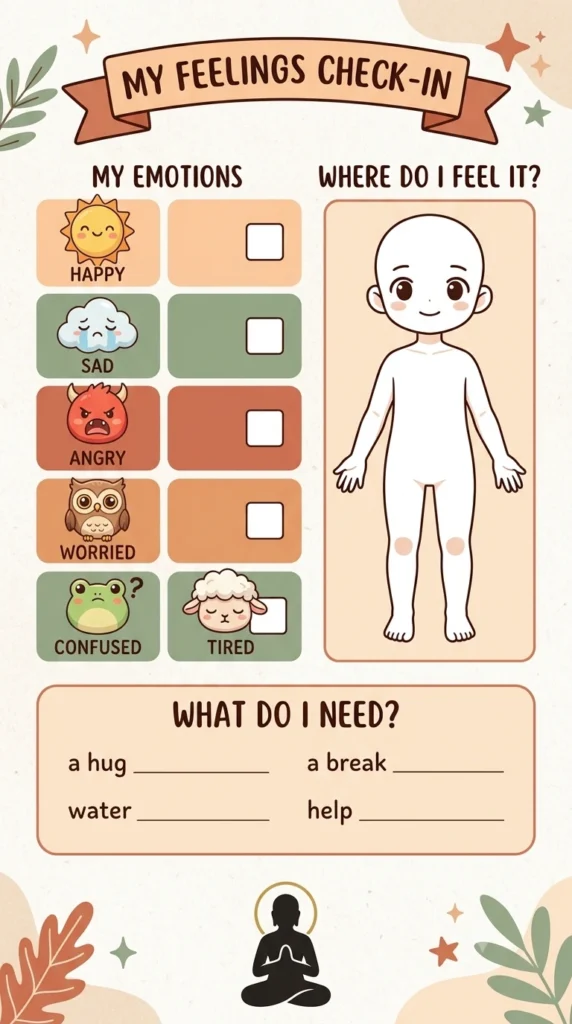
1. My Feelings Check-In Worksheet
Naming the feeling comes first. That’s the whole point of this sheet.
What it teaches: This kids coping skills worksheet teaches a child to notice a feeling first. Deciding what to do comes after. “I feel bad” is a start, not an answer. What is that feeling actually asking for? The real feeling might be anger, worry, embarrassment, loneliness, disappointment, or excitement. Each one calls for something different.
What the child does: Have the child circle or draw the emotion they’re feeling right now. Then work through a few short prompts.
- What happened?
- Where do I feel it in my body?
- How strong is the feeling?
- What do I need right now?
Younger kids can skip the writing. Drawing works just as well.
When to use it: Reach for it after a rough moment. Or as part of a daily check-in. Or right before introducing another coping strategy. It earns its spot most when a child can’t explain what’s wrong, only that something is.
Adult teaching tip: Don’t correct the emotion. Don’t rush to fix it either. Get curious instead. “That looks like a really big feeling. Can we figure out what it is?” goes a lot further than “why are you upset.”
For more support with hard-to-name feelings, try this identifying emotions worksheet. It walks kids through recognizing and naming difficult emotions.
2. Feelings Thermometer Worksheet
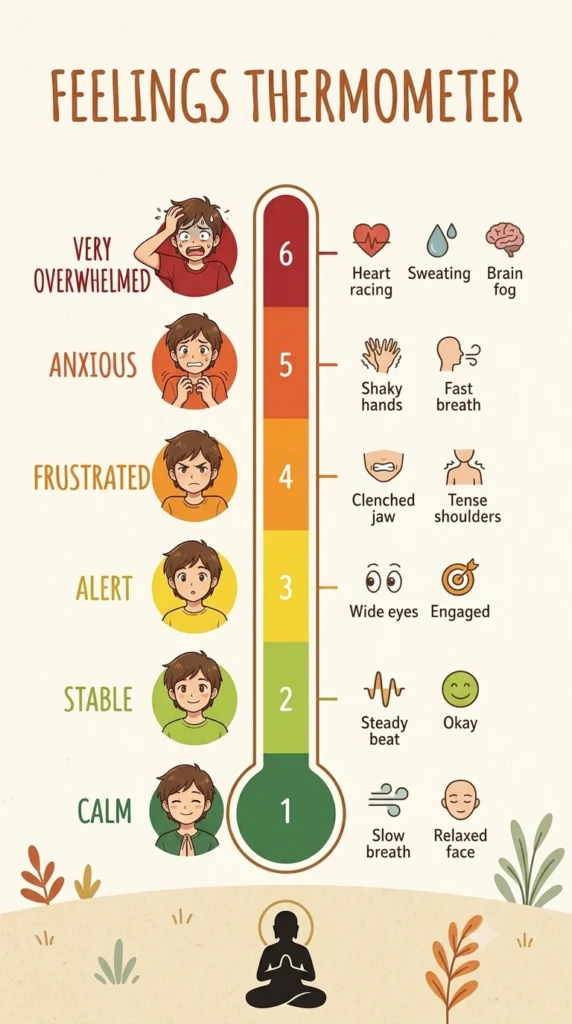
Anger comes in sizes, not just one blast.
What it teaches: A feelings thermometer shows a child that emotions come in different sizes. Mild annoyance and full-blown rage both get called “anger.” Why does that one word have to cover both? They don’t feel anything alike, and each one needs a different response.
What the child does: The child marks where their emotion sits on a visual scale. Then they name what their body and behavior look like at each level. Low on the scale might mean a tight jaw. Higher up, it might mean yelling, crying, hiding, or losing the ability to think straight at all.
When to use it: This one shines for anger, anxiety, frustration, and overstimulation. It also helps kids spot early warning signs. A coping skill is far easier to choose before the number climbs too high.
Adult teaching tip: Ask “what number are you at?” instead of “why are you acting like this?” The first question gathers information. The second just makes a distressed kid feel judged.
3. Deep Breathing Practice Worksheet
This isn’t about making the feeling disappear. It’s about giving the body something to hold onto.
What it teaches: A breathing worksheet hands kids a concrete, physical move for tense, worried, angry, or overwhelmed moments. The goal was never to erase the emotion. It’s to give the child something simple to reach for when things feel loud inside.
What the child does: The child follows a visual breathing pattern, like tracing a circle while slowly breathing in and out. Afterward, they can note how their body felt before and after. Keep it comfortable. This isn’t a contest for who can hold their breath longest.
When to use it: Practice on a calm day first. Then bring the skill out during smaller, more manageable stress. That order matters. Teaching breathing for the first time mid-meltdown rarely sticks.
Adult teaching tip: Breathe along with the child. A caregiver quietly doing the same exercise feels less like an instruction and more like something shared.
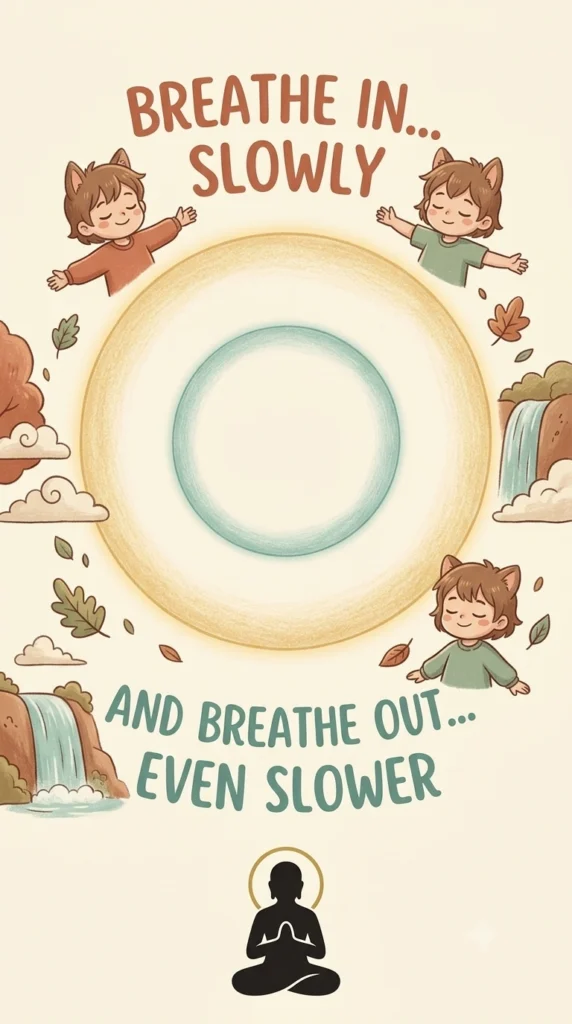
4. 5-4-3-2-1 Grounding Worksheet
Ground the senses first. The racing thoughts settle down after.
What it teaches: The 5-4-3-2-1 grounding worksheet pulls a child’s attention back into the present moment. It uses sight, touch, sound, smell, and taste as anchors when everything feels too big or too fast.
What the child does: What’s actually in the room right now? The child names things they notice through each sense:
- 5 things they can see
- 4 things they can feel or touch
- 3 things they can hear
- 2 things they can smell
- 1 thing they can taste
If a category doesn’t fit the setting, bend it. The noticing matters more than the exact number.
When to use it: Worry, nervousness, emotional overload, and unfamiliar places all respond well here. It also works as a classroom or calm-down-corner activity, since it needs zero equipment. This kind of printable coping skills for kids exercise travels well because it asks for nothing but a room to look around in.
Adult teaching tip: Do it alongside the child instead of reading the steps at them. Naming your own sensory observations out loud makes the whole thing feel less like an assignment.
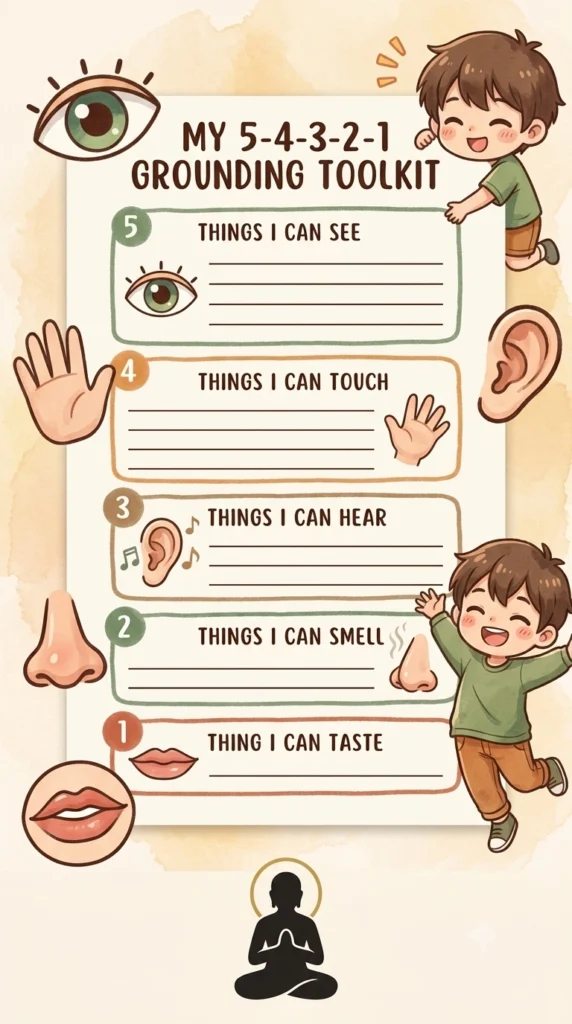
5. My Helpful Thoughts Worksheet
Not every thought a kid has deserves to be believed.
What it teaches: This worksheet introduces the link between thoughts, feelings, and actions. It isn’t about forcing a kid to “think positive.” A more useful goal is noticing an unhelpful thought, then asking whether there’s a kinder, more realistic way to see the situation.
What the child does: The child writes or draws what happened. Then what they thought, how it made them feel, and what they could tell themselves instead. Take a child who thinks, “everyone is going to laugh because I got the answer wrong.” They can practice swapping it for something kinder: “getting one answer wrong doesn’t mean I’m bad at everything.”
When to use it: Reach for this one when worry, embarrassment, frustration, or self-criticism makes a problem feel bigger than it is. It’s a strong pick among therapy activities for kids. Therapists and caregivers use it to help a child spot their own thought patterns.
Adult teaching tip: Don’t swap the thought out for the child. Ask instead, “would you say that to a friend who made the same mistake?” That question usually opens the door to something more balanced on its own.
Naming the feeling before working with the thought behind it makes this exercise land better. This emotions worksheet is a solid place to start first.
The CDC notes that cognitive behavioral therapy helps children become aware of their own thoughts and feelings. From there, kids work through how those thoughts shape their emotions and behavior.
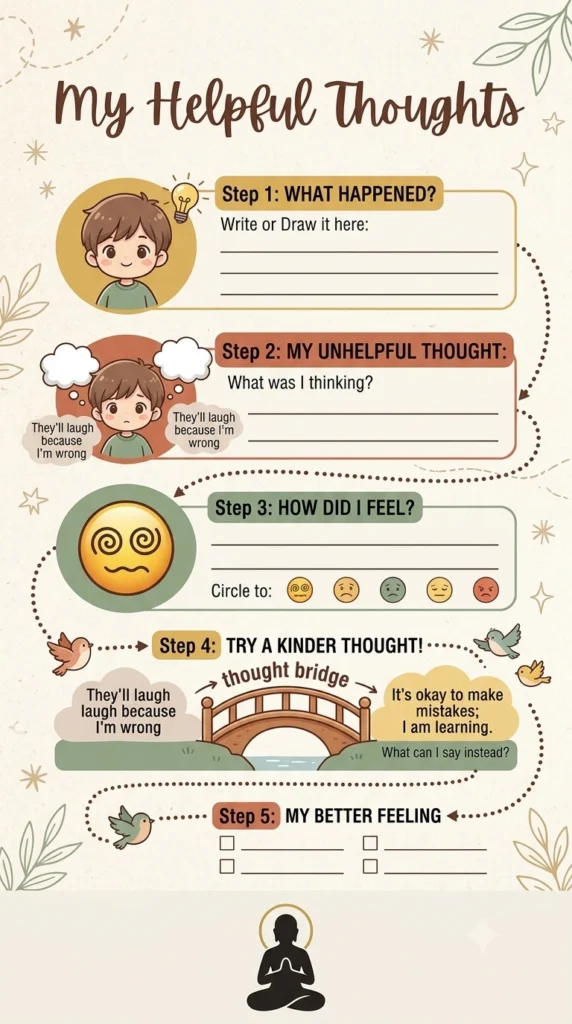
6. Anger Coping Skills Worksheet
Anger isn’t bad. That’s the first thing to get straight.
An anger coping skills worksheet teaches kids to spot what happens before, during, and after anger builds. That’s the point where they still have choices. The skill isn’t suppressing the feeling. It’s learning to express it without hurting themselves, another person, or property.
The child names a trigger. Then draws or writes what their body does when anger starts. Tight fists. Hot face. Fast breathing. From there, they pick safe responses to try. Taking space. Slow breathing. Squeezing a pillow. Drawing it out. Asking for help. Moving their body to burn off the charge.
Use this worksheet once a child has calmed down enough to actually think about what happened. It works just as well during a quiet afternoon, long before the next blowup. That way the plan already exists before the next argument, disappointment, or frustrating homework assignment shows up.
Don’t hand this out as a punishment after an outburst. That turns a coping tool into a consequence, and kids notice the difference fast. Frame it instead as prep work. “Let’s figure out what might help next time” lands very differently than “go fill this out because you yelled.”
The CDC notes that helping children reach developmental and emotional milestones includes learning healthy social skills and how to cope when there are problems, which is exactly what this worksheet builds toward.
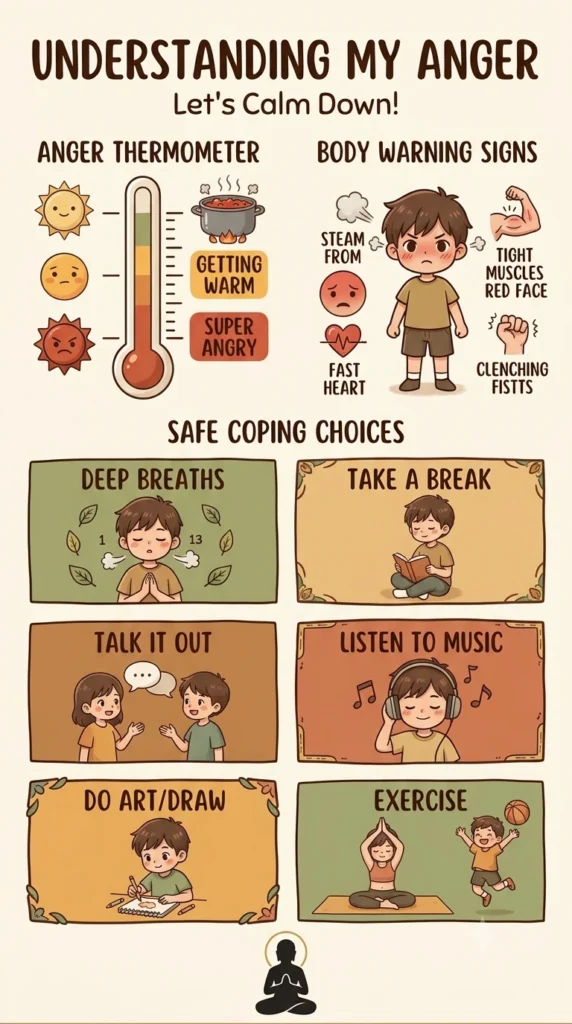
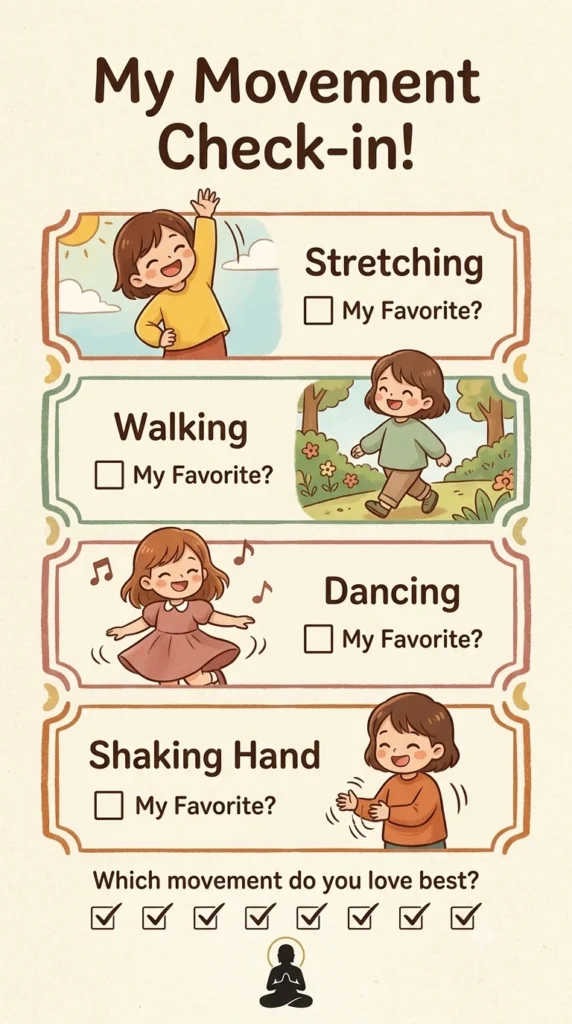
7. Move, Stretch & Shake It Out Worksheet
Not every kid calms down by sitting still.
This worksheet gives movement a real place in the coping toolkit. Some children settle through stretching. Others need to jump, dance, or shake out restless hands. There’s no single right answer here, and the worksheet is built to find out which one fits.
The child picks movement activities they’d actually want to do. Stretching, walking, jumping, dancing, hand shakes, a few simple yoga poses. They rate how they feel before and after, then circle the ones worth remembering. That rating step matters. It turns “this helped” from a guess into something the child can see on the page.
This is one of the more useful coping skills activities for kids after a rough school day, or when a child is wound up and sitting still is only making things worse. A two-minute movement break can beat a talk about feelings when a kid is still buzzing with energy.
Don’t turn this into another task to perform correctly. If two minutes of dancing works better than a full breathing exercise, let it work. The goal is a flexible set of tools. Not one technique every child is forced to use the same way.
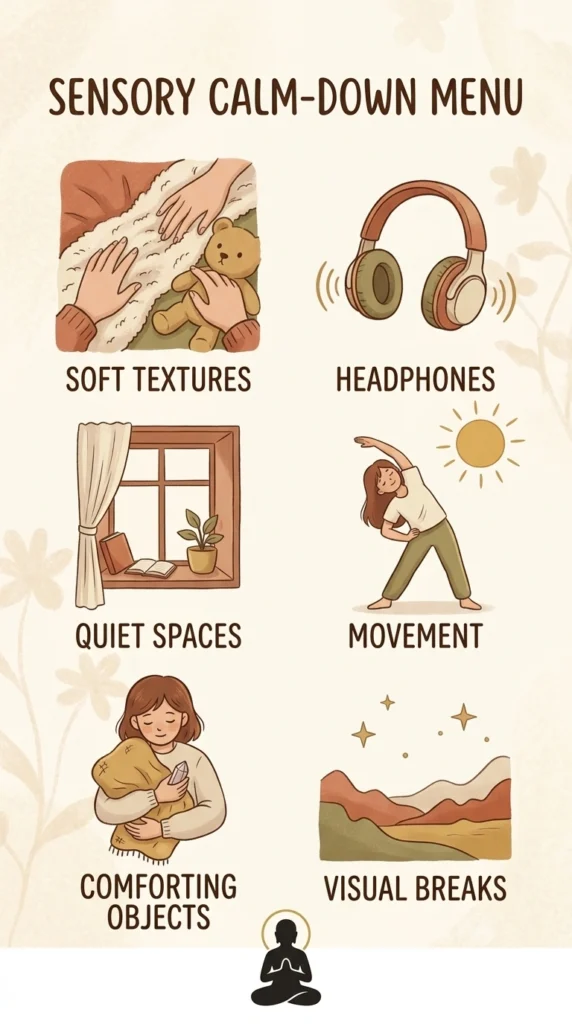
8. My Sensory Calm-Down Menu
Some kids need quiet. Others need noise, texture, or motion to settle.
A sensory calm-down menu helps a child figure out which sensory experiences actually help them refocus. That’s a very individual thing. One child seeks silence. Another regulates better through movement or touch. Neither response is wrong.
The child works through a set of sensory options and marks what feels good. Quiet music. A soft object to hold. A familiar scent. Something calming to look at. A short walk. A quieter corner of the room. From there they build a personal menu, one they can return to when things get loud.
This worksheet earns its place when a child gets overwhelmed by noise, crowds, busy classrooms, or transitions between activities. It fits naturally into a calm-down corner at home or school, right alongside a few grounding techniques from these mindfulness journal prompts if the child is old enough to write a little.
Watch the child’s actual response instead of guessing what should calm them. A weighted blanket comforts one kid and irritates another completely. Kids coping skills activities work best when the child gets a say in what goes on the menu.
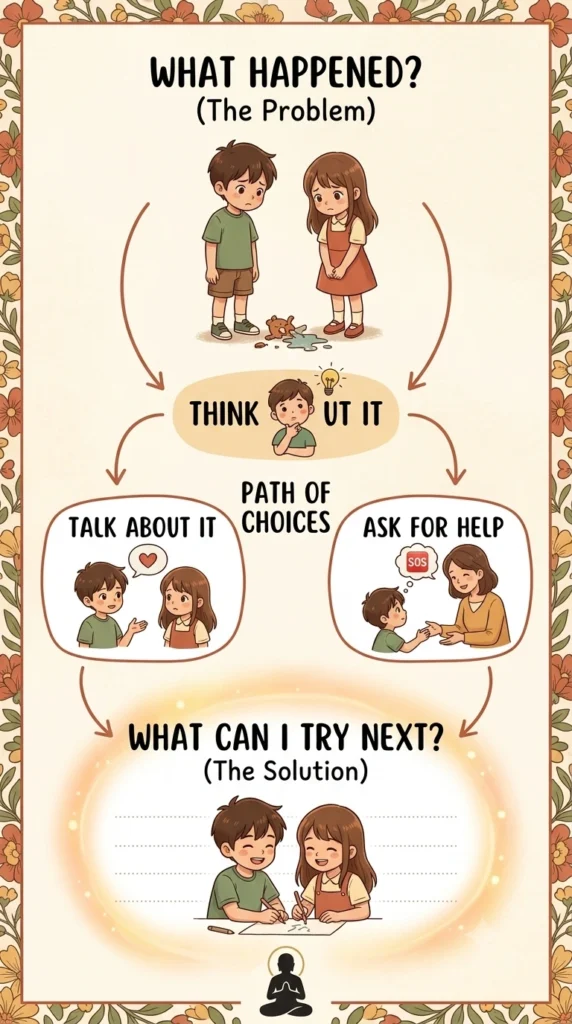
9. My Problem-Solving Worksheet
Sometimes a kid isn’t upset because of a feeling. There’s an actual problem underneath it.
This worksheet teaches children to separate what they feel from what they can actually do next. That split is worth more than it sounds. Once a child sees the two as separate things, problem-solving stops feeling impossible and starts feeling like a next step. It’s one of the more practical coping skills ideas for kids on this whole list.
The child describes what happened. Then identifies what’s within their control, writes down a few possible choices, thinks through what might happen after each one, and picks a safe next move. Take a playground disagreement. A child working through this worksheet might land on talking to the other kid, taking a break, joining a different game, or asking an adult for help.
Use this once the child is calm enough to weigh options, not mid-meltdown. It works especially well for the problems that keep repeating. Sibling conflicts. Friendship fights. Homework frustration. The same classroom situation showing up week after week.
Resist supplying the “right” answer. Ask what the child can think of first. A solution they came up with themselves tends to stick. One handed to them rarely does.
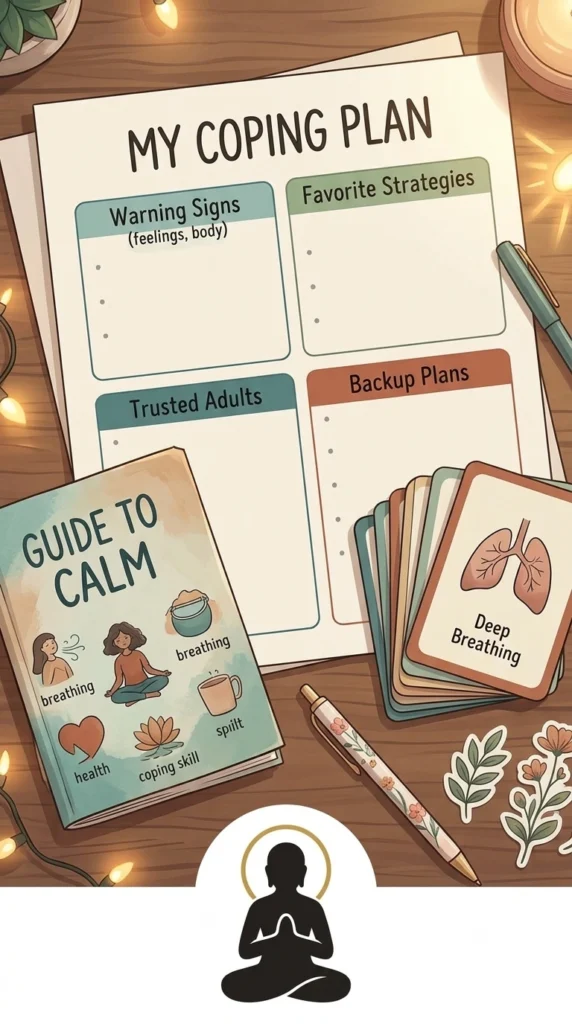
10. My Personal Coping Skills Plan
This is the one I’d give the most attention to.
A personal coping skills plan pulls everything together. Instead of one more generic list, it builds a menu based on the child’s own warning signs, preferences, and situations. That’s what turns a stack of individual activities into something a kid can actually carry forward.
The child identifies how they know they’re becoming overwhelmed. Which feelings tend to show up first. Which strategies have already helped.
From there they fill in a few simple sections: “When I notice…,” “I can try…,” “I can ask…,” “If that doesn’t help…” The finished page becomes a working plan, one they can revisit and rewrite as they learn more about themselves.
If your child journals a little already, pairing this with a few journal prompts for mental health can help them put words to the harder parts.
Build the plan during a calm stretch of time. Never in the middle of a crisis. Keep it somewhere the child can actually reach it. A bedroom folder. A backpack. The counselor’s office. A calm-down space at home. Then check back in every so often, since what works at seven rarely looks the same at ten.
Let the child own it. Their favorite strategy might be drawing. Jumping in place. Sitting somewhere quiet. Talking to someone they trust. A grounding exercise pulled from earlier in this list. That’s all fine. A coping plan doesn’t need to look impressive on paper. It needs to work when the child actually reaches for it.
Combine this personal plan with the other worksheets above and a few favorite coping cards, and it becomes a full coping skills booklet for kids, something worth keeping as a small kids coping skills poster near the calm-down space as a visual reminder.
How to Teach Kids Coping Skills Without Making Them Feel Forced
Coping skills worksheets for kids work best with practice, real choices, and room to figure out what actually helps. A worksheet should feel like an experiment. Not another task piled on an already upset child.
The goal is simple. Build familiarity with the tools before the hard moment hits. That’s it.
Practice When Your Child Is Calm
Teach a coping skill before your child desperately needs it. That’s the whole rule. A kid who’s already furious, scared, or maxed out has zero patience for a brand-new breathing exercise.
Sound too obvious? It is. Most parents skip this step anyway.
Pick a quiet moment. Try the worksheet together. Practice a few slow breaths after breakfast. Test a grounding exercise on some random Tuesday afternoon. Fill out a feelings check-in when nothing dramatic is happening at all.
Strong4Life, a program of Children’s Healthcare of Atlanta, points out that it’s hard to learn something new when a kid is anxious, angry, tired, or distracted. New skills land better on calm days. Not chaotic ones.
Give Two or Three Choices
Don’t turn coping into an order. “You’re upset, so go do your breathing worksheet” isn’t an invitation. It’s homework.
Offer a small menu instead. “Do you want to try breathing, drawing, or a quiet break?” Three options. Not thirty.
A few choices hand kids some control without drowning them in a giant list of coping skills activities for kids. Fewer options, less overwhelm. And the right pick often shifts from one day to the next, which is fine.
Let Your Child Decide What Works
One kid’s favorite coping skill can annoy another kid completely. Some love a breathing exercise. Others would rather squeeze a pillow, stretch, draw, blast music, or just walk in circles around the room.
Treat every worksheet like a test run. Ask “did that help even a little?” instead of assuming yes. Strong4Life backs this up too, noting that what calms a child one day might not work the next.
That’s not inconsistency. That’s just how kids are wired.
If your child struggles to name what they’re feeling in the first place, an emotions worksheet can help them find the word before they even pick a coping tool.
Model the Skill Yourself
Kids watch. Constantly. They learn far more from how you handle your own stress than from anything printed on a page.
Slam your laptop shut and yell that everyone needs to calm down, and no worksheet on emotional regulation is going to land after that. The mismatch is too obvious.
Instead, narrate it out loud. “I’m getting frustrated, so I’m going to take a few breaths before I answer.” Small moment. Big impact.
That one sentence does something a whole lesson can’t. It makes coping look like a normal life skill. Not something reserved for kids who are “bad at feelings.”
Talk About What Helped Afterward
Once your child tries a strategy, keep the follow-up short. What felt useful? What didn’t? Would they try it again?
Add one line to the worksheet if you want: “Would I use this again?” Small question. Big payoff over time.
Those answers turn into something real. A personalized list your child actually recognizes, one they’ll reach for on their own once emotions get big. If you want a gentler way to keep that reflection going between worksheets, a few journal prompts for mental health work well alongside this kind of check-in.
For more structured tools like this, the full coping skills worksheets collection covers options for every age, including plenty built specifically for kids.
Build a Coping Skills Toolkit for Kids
A meltdown doesn’t wait for a child to remember what helps. That’s the whole problem with teaching coping skills once and hoping it sticks. A coping toolkit fixes that gap. It gives kids a ready-to-use kids coping skills list they can grab in the moment, instead of asking an already-overwhelmed brain to invent a plan from scratch.
Keep it simple. Keep it familiar. Keep it within reach.
This isn’t about getting it perfect. It’s about practice, the boring kind, the kind that actually works over time.
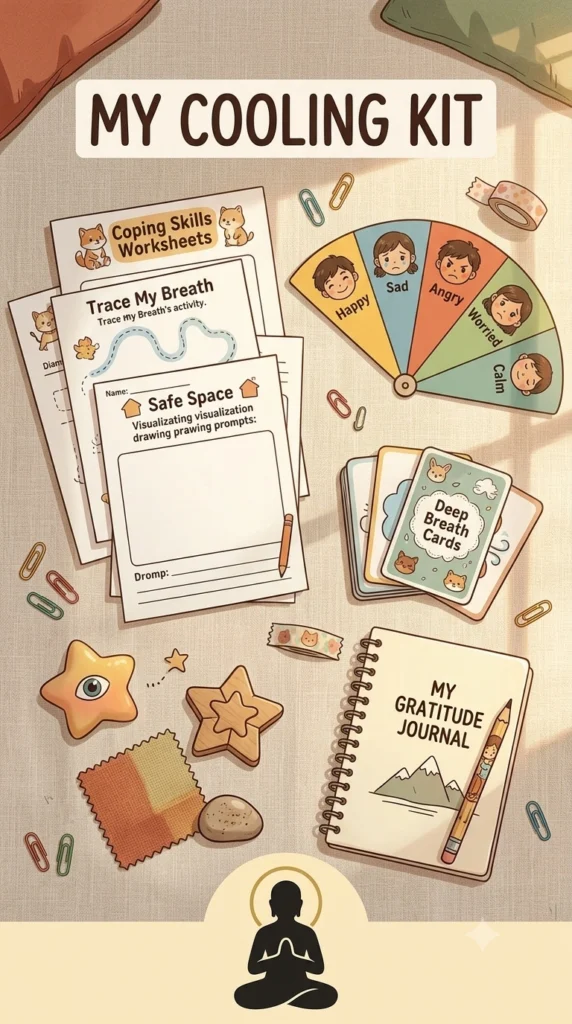
What to Put in a Kids’ Coping Skills Kit
One tool won’t cut it. A strategy that calms one child on a Tuesday might do nothing for the same child on a Friday, or for their sibling ever. That’s why a useful kit needs more than one kind of coping tool.
Here’s what tends to earn its spot:
- Breathing card: A simple visual showing how to slow the breath down.
- Grounding card: A short reminder of a grounding exercise, like naming what you can see, hear, and feel.
- Feelings chart: Faces, colors, or words that help a child name what’s happening inside.
- Movement ideas: A short list of safe options, stretching, walking, shaking out tension, or wall pushes.
- Sensory tools: A soft object, a textured item, headphones, or anything calming the child already likes.
- Positive self-talk cards: Short lines like “I can take a break” or “This feeling will pass.”
- Help-seeking contacts: Names of trusted adults for when coping alone isn’t enough.
Every one of these is a piece of a working kids coping skills list, but the kit only helps if a child actually reaches for it. That’s the real test, not how complete it looks on a shelf.
Turn the Worksheets Into a Coping Skills Booklet
Loose worksheets get lost. They slide under the couch, get crumpled in a backpack, or end up as a paper airplane by Thursday. A coping skills booklet for kids solves that problem just by staying together.
Put the pages in a small folder or binder. Then hand the cover over. Let your child decorate it, pick their favorite activities, and add new strategies as they find ones that work. A booklet they built feels different than a booklet handed to them.
Keep it somewhere your child can actually reach: a backpack, a desk, a bedside table, a calm-down corner. Somewhere close enough that grabbing it doesn’t take effort a stressed kid doesn’t have.
One thing matters more than the format. This has to feel like the child’s own resource. Not another school assignment. The second it feels like homework, it stops getting used.
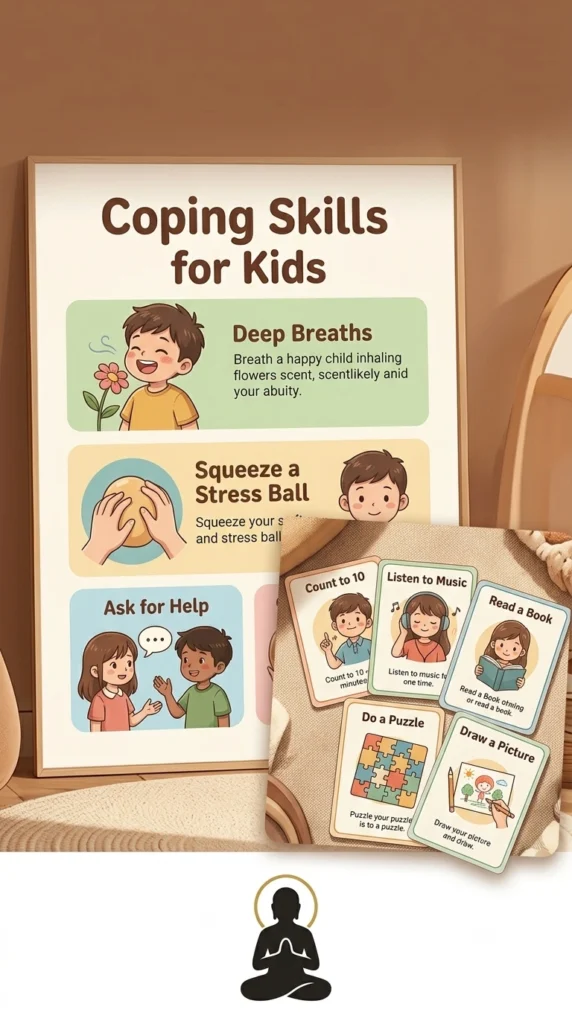
Make a Coping Skills Poster or Card Set
Want something a child can glance at mid-meltdown? Skip the booklet. Go straight to a poster or a card set.
For quick reminders, turn your best strategies into kids coping skills cards or a kids coping skills poster. Use big text. Simple pictures. Short instructions, nothing longer than a breath. A child who’s upset isn’t reading a paragraph. They’re barely reading at all.
A poster can be this short:
Breathe → Ground → Move → Talk → Take a break.
Five words, five steps, done.
Cards go one layer deeper. Each card holds one specific activity instead of a whole sequence. And here’s the part most parents skip: let the child pick the card. Don’t hand them the strategy you think they need.
A child who chooses their own coping card is far more likely to actually use it, which is really the entire point of building printable coping skills for kids in the first place.
Coping Skills for Different Situations
Not every rough moment calls for the same tool. A kid melting down over a broken Lego set needs something different than a kid frozen with worry the night before a test. That’s the whole point behind coping skills worksheets for kids: they hand a child several options, not one fix meant to work for everything.
Anger calls for release. Worry calls for grounding. Sensory overload usually calls for quiet, sometimes movement, rarely conversation. Use whatever’s happening in the moment as your starting point. Not a rulebook.
Coping Skills for Anger
Anger moves fast. The first job isn’t fixing the feeling. It’s buying a few seconds before the reaction fires.
A feelings thermometer helps a kid catch irritation while it’s still small, before it turns into a slammed door. Slow breathing works too. So does squeezing a pillow, drawing it out, or taking a short walk around the block. Simple stuff. Boring, even. That’s why it works.
For younger kids, skip the fancy tools. Just naming the feeling out loud, “I’m mad,” might be the whole coping skill for a five-year-old. Start there.
Coping Skills for Anxiety and Worry
Worry drags attention into a future that hasn’t happened yet. The mind runs scenarios nobody asked for.
Grounding pulls a kid back to right now. Slow breathing does the same. So does drawing the worry on paper, or writing down one single thing they can actually control today. Not the whole problem. Just one piece of it.
The goal was never to make the worry disappear. It’s to help a kid feel like they can handle whatever comes next. That’s a lower bar, and it’s the one that actually works.
Coping Skills for School Stress
School stress rarely comes from one place. Homework piles up. Tests loom. Friendships shift without warning. Transitions between subjects throw kids off more than adults expect. Sometimes it’s just too much noise, too much light, too much everything at once.
A short breathing exercise helps. So does a quick movement break, some positive self-talk, or a problem-solving worksheet that breaks a big mess into smaller steps.
If the stress keeps showing up, don’t treat every hard school day the same. Find the actual trigger first. A kid overwhelmed by tests needs something completely different than a kid overwhelmed by a friend group falling apart.
Coping Skills for Big Changes or Transitions
A new house. A new school. A new sibling suddenly taking up all the attention. Any of it can knock a kid off balance, even changes that are supposed to be good ones.
A personal coping plan gives a child something familiar to reach for exactly when everything else feels foreign. It doesn’t need to be complicated. Just a short list of what’s worked before.
One predictable piece of the day matters more than people think. Bedtime reading. A five-minute check-in before dinner. Small, but it holds the rest of the day together.
Winter Coping Skills for Kids
Winter coping skills for kids aren’t really a separate category. They’re the same strategies, just pointed at a season that makes everything harder.
More time indoors usually means less movement and more sensory frustration. Shorter days mess with routines, and that shows up in a kid’s mood whether anyone names it or not.
Indoor movement helps. So do sensory activities, grounding exercises, creative play, and keeping the daily routine as steady as possible even when the weather won’t cooperate.
Boredom hits hard in winter. Cabin fever is real. When that happens, these feelings identification and expression activities give kids another outlet for whatever they’re carrying, especially when there’s nowhere to run it off outside.
Free Printable Coping Skills for Kids: How to Use Them
Coping worksheets work best when they become part of a child’s routine, not something handed over only during a meltdown. You can use printable-style coping resources for calm practice, quick emotional check-ins, or as part of a small coping toolkit that a child can revisit.
Print Individually
If you’re searching for a kids coping skills free printable, start with only the worksheets your child actually needs. Print a feelings check-in for regular use, a breathing sheet for calming practice, or an anger worksheet if frustration is the main challenge. Too many pages at once can make the activity feel like homework.
Create a Binder or Booklet
Keep several coping skills for kids printables free worksheets together in a simple folder or binder. Your child can add favorite strategies over time, turning individual pages into a personal coping skills booklet for kids. Let them decorate the cover or choose which pages belong inside.
Make a Calm-Down Corner
A calm-down corner can hold a small selection of free printable coping skills for kids, along with crayons, paper, sensory objects, or a comfortable cushion. The goal isn’t to send a child there as punishment. It should be a familiar place where they can choose a strategy when they need a reset.
Practice While Calm
The most useful coping skills for kids activities are practiced before they’re urgently needed. Spend a few minutes trying breathing, grounding, movement, or positive self-talk when your child is already calm. That makes the skill easier to remember during a difficult moment.
Revisit and Update
Coping strategies change as children grow. Revisit the worksheets every few weeks and ask which strategies actually helped. Keep the useful ones, remove strategies your child dislikes, and add new coping skills ideas for kids as their needs change.
Note: This page is using “printable” to describe worksheet formats; it does not claim that downloadable PDF files are available unless they are provided with the page.
When Coping Skills Worksheets for Kids Aren’t Enough
A coping skills worksheet for kids teaches language. It teaches a strategy. It gives a child something concrete to reach for on a hard afternoon.
But a printable page has limits. When distress sticks around, gets worse, or starts touching a child’s safety, the worksheet stops being enough on its own.
When a Child May Need More Support
Watch for change. Not just a rough day, but a shift that lasts and doesn’t look like the child you know.
Ongoing sadness. Anxiety that won’t ease. Anger that flares more than it used to. Withdrawal from friends or family. Trouble sleeping. A drop in how a child manages at school or at home. Any of these, held long enough, points to something bigger than a worksheet can fix.
The same goes for a child who’s lived through something frightening. A scary event at home, at school, or anywhere else can leave reactions that no coping skills worksheet for kids was ever built to handle alone.
Self-harm. Talk of suicide. Threats of harm to someone else. Any moment where a child’s safety feels uncertain. These call for an adult right away, and for a real conversation with someone trained to help. A worksheet was never built for that job. Don’t wait on one to do it.
What to Do When Safety Is a Concern
If a child may be in immediate danger, stay close and get emergency help in your area right away.
In the United States and its territories, the 988 Suicide & Crisis Lifeline offers free, confidential support by call, text, or chat. That includes support for a child in crisis, and support for a parent or caregiver who’s scared for one.
For concerns that feel less urgent but still real, a pediatrician, school counselor, psychologist, or therapist can help figure out what kind of support actually fits.
What These Worksheets Can Do, and What They Can’t
A coping skills worksheet for kids can still do real good. It can help a child notice a feeling. Practice naming it before the big feeling arrives. Ask for what they need in words instead of a meltdown. That’s worth something, especially once a child has practiced the skill before a hard moment lands.
A worksheet can’t assess a child’s mental health. It can’t diagnose. It can’t process trauma, and it can’t replace care built around one specific child.
Use coping skills worksheets for kids as one piece of a larger support system, not the whole plan. Keep a simple kids coping skills list or a few coping skills for kids printables on hand for the ordinary hard days.
Save the professional help for the days that aren’t ordinary. If naming the feeling itself is the sticking point, our emotions worksheet is a solid place to start before picking a coping strategy.
For heavier stretches, pairing a worksheet with something like these journal prompts for mental health can help, used alongside a trusted adult rather than on a child’s own.
For the full set of tools this guide draws from, our roundup of coping skills worksheets covers strategies for kids, teens, and adults side by side.
Conclusion
Coping skills worksheets for kids work best when they become something children practice, not just pages they complete once and forget. A feelings check-in can help a child name what is happening, while breathing, grounding, movement, sensory strategies, and problem-solving give them different ways to respond.
Let your child try several options and keep the ones that actually feel useful to them. Over time, those small practices can become a personal coping toolkit they can reach for when emotions get difficult. The goal isn’t to make big feelings disappear. It’s to help children understand those feelings and learn safe, practical ways to handle them.
Frequently Asked Questions
What are the best coping skills worksheets for kids?
The best coping skills worksheets for kids are simple, visual, and easy to use during everyday emotional challenges.
Feelings check-ins,
emotion thermometers,
breathing exercises,
grounding worksheets,
anger-management pages,
problem-solving activities, and
personalized coping plans
are especially useful because children can practice them before they feel overwhelmed.
How do you teach coping skills to a child?
Teaching coping skills to a child works best when you practice them while the child is calm, rather than waiting for a meltdown. Explain the skill simply, demonstrate it yourself, and let the child choose what feels comfortable.
Repeating the activity regularly helps turn a worksheet strategy into a familiar response.
What are some easy coping skills activities for kids at home?
Easy coping skills activities for kids at home include:
belly breathing,
drawing feelings,
stretching,
listening to calming music,
naming things they can see and hear,
writing helpful thoughts,
squeezing a pillow, or
making a personal calm-down plan.
The goal is to give children several safe options they can practice regularly.
What coping skills can kids use when they are angry?
Kids can use coping skills such as
slow breathing,
taking a short break,
squeezing a pillow,
drawing or writing about their anger,
stretching, walking,
grounding themselves,
talking to a trusted adult.
An anger worksheet can help children recognize their body’s warning signs and choose a safe response before reacting.
Are coping skills worksheets appropriate for children with anxiety?
Coping skills worksheets can be useful for children with anxiety because they provide a concrete way to identify feelings, notice anxious thoughts, and practice calming or grounding strategies.
However, worksheets aren’t a substitute for professional support when anxiety is persistent, severe, or interfering with a child’s sleep, school, relationships, or daily activities.
How can I make a coping skills toolkit or calm-down kit for my child?
Start with a small container and add resources your child actually enjoys using, such as breathing or coping skills cards, a feelings chart, sensory items, drawing supplies, positive self-talk reminders, and a personalized coping list.
Let your child help choose the contents so the toolkit feels supportive rather than like a punishment or mandatory activity.

It’s Bhaskar!
Well, I am not a psychologist a monk, or a philosopher by training. I’m just an engineering graduate.
‘The Empty Self’ is where I write about that idea, and what it actually means for ordinary life, anxiety, identity, habits, the stories we tell ourselves about who we are. I don’t have a psychology degree, and I’m not offering therapy or clinical advice. What I do have is thought and clarity, and genuine curiosity about why we suffer the way we do and how much of it might loose once we shed this ‘fixed identity’.