

A gratitude list isn’t just a collection of nice thoughts. It’s a way to notice what matters most: people, moments, quiet strengths you don’t always see. All of it gets buried under homework, group chats, and constant comparison. Being a teen means noticing what’s wrong first. That’s normal.
But a few minutes with a grateful list can shift how today feels. Not by pretending everything’s fine. Maybe you’re starting a journal. Or maybe you just want gratitude list ideas that don’t feel forced. Either way, these 100+ examples are a solid start. For the fuller picture, the things to be thankful for guide is worth a look too.
Table of Contents
What Is a Gratitude List? (And Why It’s Different for Teenagers)
A gratitude list isn’t just a collection of things that make you smile. For teens, it works differently. It’s a way to pause. To notice what still feels steady during a stage of life packed with change. Over time, it builds a habit of seeing growth, support, and the small moments that slip past unnoticed.
What Is a Gratitude List?
A gratitude list is a written record of people, moments, or qualities you appreciate. That’s the short version. Thinking “that was nice” and letting it go is one thing. Writing it down is another. It turns a passing thought into something you can return to later.
The best lists aren’t about pretending everything’s fine. Not even close. They’re about paying attention to what still holds value, even on stressful or disappointing days. That’s what makes this practice practical, not just a mood boost. If you want a longer breakdown of what counts, this list of things to be thankful for is a solid place to start before building your own grateful list.
Noticing Gratitude vs. Actively Recording It
Everyone notices good moments now and then. You laugh with a friend. You ace a hard quiz. Your favorite song plays on the walk home. These moments matter. But they fade fast once the next stressful thing shows up.
Writing it down slows that fade. Even one or two sentences gives your brain a reason to revisit the good stuff instead of losing it. Think of it like saving photos instead of leaving every memory buried in your camera roll. You create something to come back to when you need a different view.
Why Gratitude Matters More During the Teen Years
The teen years bring nonstop change. Friendships shift. School gets harder. Social media makes comparison almost impossible to avoid. On top of that, you’re figuring out who you even want to become. It’s easy for your attention to land on what’s missing instead of what’s already holding you up.
Gratitude won’t erase anxiety or disappointment. It shouldn’t have to. What it can do is carve out space to notice the people, strengths, and everyday wins still standing next to those hard feelings. Research from the Greater Good Science Center at the University of California, Berkeley suggests that regularly practicing gratitude is associated with greater well-being, stronger relationships, and more positive emotions over time. That’s one reason it gets paired with broader wellness habits instead of sold as a quick fix.
Curious how gratitude fits alongside harder emotions? Can gratitude and anxiety exist at the same time digs into that exact question. And if you want a daily structure instead of a one-time list, gratitude journaling for anxiety or a simple set of daily things to be grateful for can turn a single gratitude list into a habit worth keeping.
How to Start a Gratitude List When You Don’t Know What to Write
A gratitude list doesn’t need some big lightning-bolt moment to get going. Most people start smaller than that. They notice one thing they almost walked right past. Staring at a blank page? The goal isn’t a perfect line. It’s spotting one good thing already sitting in your day. Nothing more dramatic than that. Need a running start? This full list of things to be thankful for has plenty to borrow from.
Start Small: One Sentence, One Moment
One mistake shows up again and again. Teens assume a gratitude list has to sound deep or poetic. It doesn’t. One sentence about one moment is enough to get started. Maybe your best friend cracked you up at lunch. Maybe a song came on during the bus ride and your mood lifted before you noticed. Maybe a math problem that wrecked your week finally clicked. Small moments turn into habits fast.
They show up more often than any big milestone ever will. Want proof that even tiny details count? These unique things to be thankful for make the case.
Categories to Scan
Running out of gratitude list ideas? Stop waiting for inspiration and scan your life by category instead. Scan for people, skills, chances, comforts, and hard moments that helped you grow. Switching categories changes what you see. That’s the trick.
Some categories worth checking off:
- People who show up for you, even in small ways
- Skills or talents you’re sharpening right now
- Everyday comforts, like your bed or morning coffee
- Places that make you feel calm or excited
- Hard moments that ended up teaching you something
All in all, daily comforts count for more than people think.
Prompts for When You’re Blank
Some days gratitude feels harder than others. That’s completely normal. On tough days, forcing thanks can backfire. This piece on whether gratitude and anxiety can exist at the same time explains why.
When your mind goes blank, skip the pressure and try simple prompts instead.
- Who made today a little easier?
- What did you enjoy without even trying?
- What are you better at than you were a year ago?
- What’s one thing you’d miss if it vanished tomorrow?
Questions like these build a more thoughtful grateful list without forcing fake positivity.
Gratitude List of 100+ Things to Be Thankful for
Building a gratitude list doesn’t require some big, life-changing moment to make it worthwhile. In fact, the most meaningful lists usually come from ordinary experiences, quiet victories, people who make your day a little easier, and even challenges that changed you in ways you didn’t expect.
If you’re not sure where to start, the categories below can help. Rather than trying to write everything at once, pick one or two ideas that genuinely resonate with you. After all, the goal isn’t to create the “perfect” list, it’s to notice what already adds value to your life.
Family

Family relationships aren’t always simple, especially during the teenage years. You might be growing more independent, disagreeing more often, or figuring out who you are outside your home. Even so, many of your biggest sources of support, comfort, and life lessons still begin here.
Here are some family-focused ideas for your grateful list:
- A parent or guardian who keeps showing up, even when you argue.
- A sibling who makes you laugh when you’re stressed.
- Grandparents who share family stories and traditions.
- A relative who checks in just because they care.
- Family meals that bring everyone together.
- A safe place to come home to after a difficult day.
- Inside jokes that only your family understands.
- Holiday traditions you look forward to every year.
- Someone who encouraged your interests before you believed in yourself.
- Lessons your family has taught you about kindness, responsibility, or resilience.
- The freedom to grow into your own person.
- Memories from vacations, birthdays, or simple weekends together.
- Forgiveness after disagreements.
- The feeling of knowing someone is on your side.
- Small acts of care, like someone remembering your favorite snack or asking how your day went.
Ultimately, you don’t need a perfect family to appreciate moments of connection. Sometimes gratitude simply means recognizing the people who keep trying, even when relationships feel messy.
Friends & Relationships

Similarly, teenage friendships can shape the way you see yourself. A good friend can make school feel less intimidating, help you laugh through embarrassing moments, or remind you that you’re not alone when life gets overwhelming.
Building a gratitude list around your relationships doesn’t mean pretending every friendship lasts forever. Instead, it means appreciating the people who helped you grow, whether they’re still part of your life or not.
Consider adding these ideas:
- A friend who listens without judging.
- The first person who made you feel like you truly belonged.
- Classmates who make everyday school life more enjoyable.
- Friends who celebrate your successes instead of competing with you.
- Someone who encouraged you to try something new.
- Shared memories you’ll still laugh about years from now.
- Friends who respect your boundaries.
- Online friends who have been a positive influence.
- Coaches, mentors, or club leaders who believed in your potential.
- A teacher who treated you with kindness during a difficult time.
- Conversations that made you feel understood.
- Learning how to apologize and rebuild trust.
- Meeting people with different backgrounds and perspectives.
- Feeling accepted without pretending to be someone else.
- Realizing that it’s okay to outgrow certain friendships.
Not every relationship is meant to last forever. Even so, brief friendships can leave behind confidence, perspective, or memories worth appreciating.
Yourself
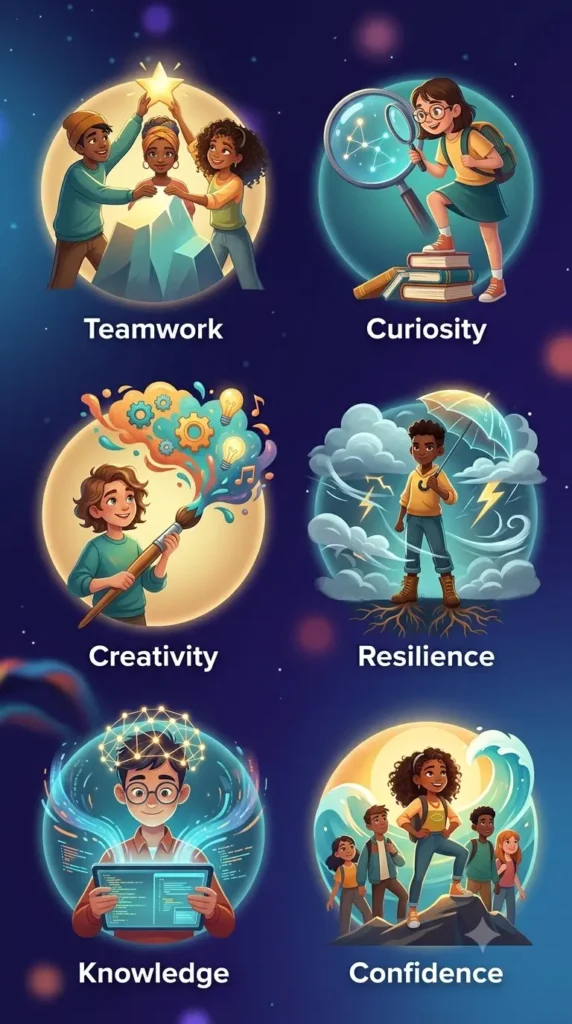
One of the hardest things for teenagers is recognizing that they deserve a place on their own gratitude list.
It’s easy to appreciate other people while constantly criticizing yourself. But gratitude isn’t only about looking outward; it’s also about noticing the qualities that help you keep moving forward.
Here are some ideas:
- Your sense of humor.
- Your creativity.
- Your curiosity.
- Your ability to learn from mistakes.
- The progress you’ve made over the past year.
- Your resilience after disappointing moments.
- Your willingness to keep trying.
- Skills you’ve developed through practice.
- The courage to ask for help when you need it.
- Your unique personality.
- The hobbies that make you lose track of time.
- Your kindness toward other people.
- The confidence you’ve slowly built.
- Times when you stood up for yourself.
- Your ability to adapt when plans change.
- Dreams you’re still excited about.
- Personal values that guide your decisions.
- Every small step you’ve taken toward becoming the person you want to be.
Overall, a grateful list becomes much more meaningful when it includes who you are, not just what you own or who surrounds you. If you’d like even more inspiration for this category, this list of unique things to be thankful for digs into ideas that go beyond the obvious.
School & Learning

School isn’t always enjoyable. Deadlines pile up, exams create pressure, and group projects don’t always go as planned. That said, learning isn’t limited to grades, and many of the experiences you’ll carry into adulthood begin during these years.
You might be thankful for:
- A teacher who explained something until it finally made sense.
- Discovering a subject you genuinely enjoy.
- Learning how to solve problems on your own.
- School clubs that introduced you to new interests.
- Opportunities to perform, compete, or create.
- Books that changed the way you think.
- Friends you met in class.
- Constructive feedback that helped you improve.
- Mistakes that taught you persistence.
- Learning time management, even if you’re still figuring it out.
- Access to education.
- School trips and memorable events.
- The confidence that comes from mastering a difficult skill.
- Technology that makes learning easier.
- Curiosity that pushes you to ask better questions.
Indeed, some of the most valuable lessons you’ll gain from school never appear on a report card.
Everyday Life

Many of the best gratitude list ideas are so ordinary that they’re easy to overlook. That’s exactly why they’re worth noticing.
Comfort, convenience, and routine quietly support your life every single day.
You could include:
- Your favorite playlist.
- A comfortable bed after a long day.
- Warm showers.
- A pet greeting you when you get home.
- Your favorite hoodie.
- Reliable internet for learning and connecting with friends.
- A phone that helps you stay in touch with people you care about.
- Libraries full of free books.
- A peaceful evening walk.
- Fresh air after spending hours indoors.
- Your morning routine.
- Weekend sleep-ins.
- Your favorite snacks.
- Watching a sunset from your window.
- Coffee, tea, or hot chocolate on a rainy afternoon.
- Movies and TV shows that help you relax.
- Video games that let you connect with friends.
- Music that perfectly matches your mood.
- Quiet moments before everyone else wakes up.
- The freedom to choose new hobbies and interests.
These aren’t “small” blessings simply because they’re common. Often, they’re the parts of life you’d miss first if they suddenly disappeared.
Nature and the World Around You
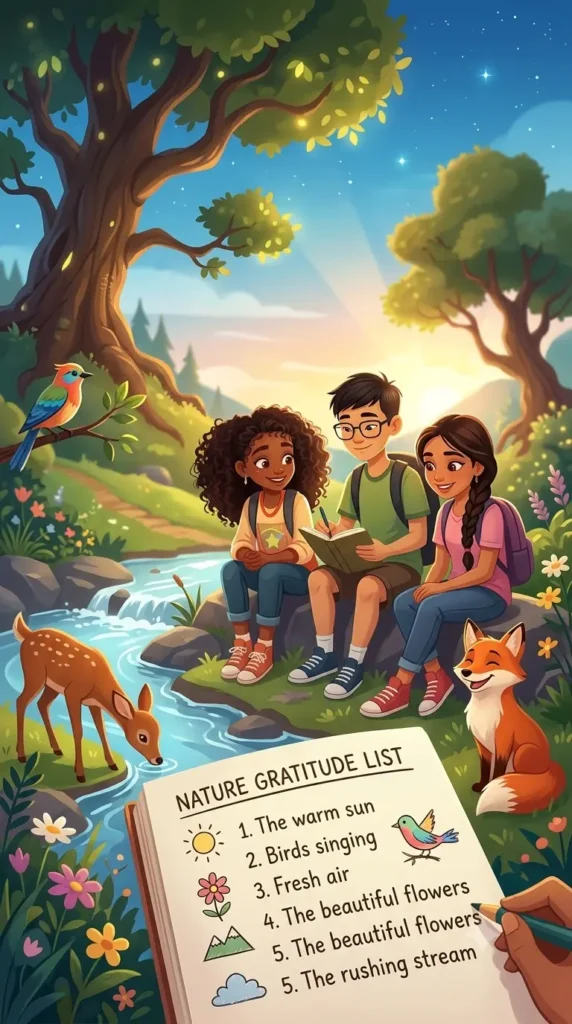
You don’t have to hike mountains to appreciate nature. Sometimes the most restorative moments happen when you simply look up from your phone for a minute.
Adding nature to your gratitude list can help you notice details that are easy to rush past.
Ideas include:
- Sunrises that make an early morning feel worthwhile.
- Rain tapping against your window.
- Trees changing with the seasons.
- Birds singing outside.
- A cool breeze after a hot afternoon.
- Beaches, lakes, or rivers you enjoy visiting.
- Parks where you can clear your head.
- Flowers blooming unexpectedly.
- Star-filled skies.
- Fresh air after it rains.
- Animals and wildlife.
- Mountains you’ve explored or hope to visit someday.
- The changing colors of the sky at sunset.
- Community spaces that bring people together.
- The reminder that the world is much bigger than today’s worries.
Difficult Times

One of the biggest misconceptions about gratitude is that it only belongs in happy seasons. It doesn’t.
Gratitude is not the same as pretending everything is okay. You can acknowledge disappointment, anxiety, grief, or uncertainty while still recognizing people, strengths, or moments that helped you get through them. In fact, the two can exist at the same time, as explored in can gratitude and anxiety exist at the same time?
That perspective often creates the deepest gratitude of all.
Consider reflecting on:
- A mistake that taught you something valuable.
- A setback that redirected you toward a better opportunity.
- A difficult conversation that strengthened a relationship.
- Someone who supported you when you didn’t know how to ask for help.
- Discovering strengths you didn’t realize you had.
- Learning to set healthier boundaries.
- Recovering after failure.
- Becoming more compassionate because of your own struggles.
- Letting go of friendships that no longer felt healthy.
- Realizing you don’t have to handle everything alone.
- The confidence that comes from overcoming something you once thought was impossible.
- Every fresh start you’ve been given.
Looking back, many people discover that their hardest seasons also taught them patience, empathy, resilience, or courage. You don’t have to be grateful for painful experiences themselves. Sometimes it’s enough to be grateful for the growth, support, or perspective that slowly emerged because you made it through.
Gratitude List Ideas Teens Often Forget
A meaningful gratitude list isn’t only about the people you love or the things you own. In fact, some of the most valuable entries are the ones that are easiest to overlook, simply because they don’t stand out in the rush of daily life. Building your grateful list around these quieter, less obvious moments often leads to deeper reflection, and a stronger appreciation for how far you’ve already come.
Personal Growth
Teenagers often measure themselves by grades, achievements, or social milestones. However, personal growth deserves a place on your gratitude list just as much as any visible success does.
Perhaps you’re more patient than you were last year. Or maybe you’ve learned to speak up for yourself, set healthier boundaries, or bounce back more quickly after disappointment. These changes don’t always earn applause, but they quietly shape who you’re becoming.
After all, growth rarely happens in dramatic leaps. More often, it shows up in small decisions you barely notice, until you look back and realize how much has actually changed.
Past Versions of Yourself
It might sound strange to feel grateful for an older version of yourself, especially one you’ve since outgrown. But every past version of you, even the awkward, insecure, or uncertain one, helped you reach where you are now.
The younger you who tried something new, survived an embarrassing moment, or kept going through a difficult season deserves a little kindness instead of criticism. In turn, looking back with compassion can make it much easier to appreciate your own journey as a whole.
The Ability to Change
One of the most hopeful things to appreciate is this: you’re not finished becoming who you are.
Your interests can change. Your opinions can change. Even your friendships can change. And the habits you struggle with today certainly don’t have to define you forever.
While many teenagers feel pressure to have everything figured out, growth simply doesn’t follow a fixed timeline. Ultimately, being able to learn, adapt, and choose differently tomorrow is something worth adding to any gratitude list.
Second Chances
Everyone makes mistakes. A bad grade, an argument with a friend, saying something you regret, or giving up too soon, none of these have to become the end of your story.
Second chances aren’t always dramatic, either. Sometimes they’re simply another ordinary Tuesday where you get to try again, this time with a little more experience than yesterday. That’s a gift many people overlook, until the moment they need it most.
Quiet Moments
Not every meaningful memory has to be exciting.
A peaceful walk home after school. Reading while rain taps against the window. Sitting with a pet after a stressful day. Laughing with a sibling over something completely random. These moments rarely make headlines in your life, and yet they’re often the ones you remember years later.
So if your grateful list only includes life’s biggest milestones, you risk missing the countless smaller moments that quietly make everyday life feel safe, comforting, and worth appreciating.
How to Turn Your Gratitude List Into a Daily Habit
A gratitude list becomes most meaningful when it’s something you return to regularly instead of writing once and forgetting. You don’t need an elaborate routine or pages of perfectly written reflections. In fact, small, consistent moments of appreciation often have a greater impact than occasional bursts of motivation, because they train your attention to notice what’s already going well.
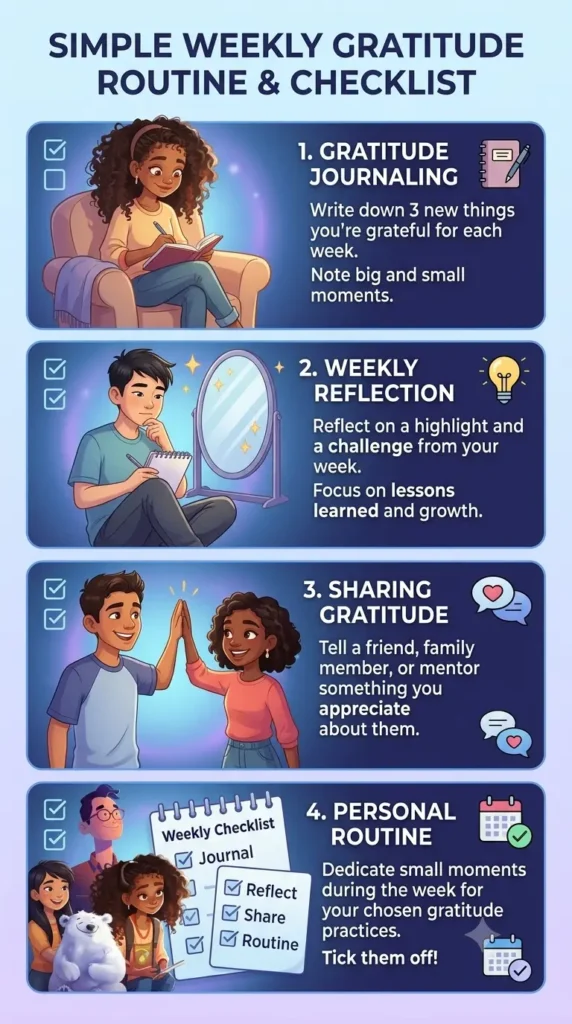
Gratitude Journaling
Writing your grateful list in a journal gives those passing thoughts a place to stay. Instead of simply thinking, “That was a good day,” you’re slowing down long enough to understand why it felt good. Over time, your journal becomes a record of moments you might otherwise forget, like a teacher’s encouraging comment before an exam, an afternoon laughing with friends, or finally solving a problem that had frustrated you for weeks.
If you’re unsure what to write, using prompts can make the habit feel much less intimidating. For instance, 365 journal prompts for mental health is a great resource when your mind goes blank or you want fresh gratitude list ideas that go beyond repeating the same few entries.
If you’d like to explore the research behind reflective writing, Harvard Health Publishing has an accessible overview of how expressive writing can support emotional well-being and stress management.
Weekly Reflection
A daily list is helpful, but looking back once a week adds another layer of perspective. Spend a few minutes rereading what you’ve written, and ask yourself simple questions: What made me smile more than once this week? What challenge taught me something? Which people kept showing up in my gratitude list?
Often, patterns emerge that aren’t obvious day to day. For example, you may realize you’re consistently thankful for creative hobbies, supportive friends, or quiet moments after school. Ultimately, those patterns can tell you a lot about what genuinely helps you feel grounded.
Sharing Gratitude
Not every grateful thought has to stay in your notebook. Telling someone you’re thankful for them, whether it’s a friend, sibling, coach, or teacher, can strengthen relationships in a way that silent appreciation never quite does.
That said, this doesn’t mean posting every grateful moment online. In fact, a private text, handwritten note, or face-to-face conversation often feels more meaningful, because it’s personal rather than performative.
Build a Personal Routine
Ultimately, the best gratitude routine is the one you’ll actually keep. Some teenagers like writing three things before bed, while others prefer adding one sentence after school or during a weekend reset. There isn’t a perfect formula.
And remember, gratitude isn’t meant to erase difficult emotions. You can appreciate something good while still feeling anxious, overwhelmed, or disappointed. If that’s something you’ve struggled with, gratitude journaling for anxiety explains how gratitude can become one helpful coping tool without asking you to pretend everything is okay.
Common Mistakes Teenagers Make When Writing a Gratitude List
A gratitude list works best when it reflects your real life, not the version you think you’re supposed to have. Many teenagers give up because they misunderstand what gratitude is meant to do. After all, the goal isn’t to become endlessly cheerful; instead, it’s to notice what’s still meaningful, even on imperfect days.
Thinking Gratitude Means Ignoring Problems
One of the biggest misconceptions is that being grateful means pretending everything is fine. However, that couldn’t be further from the truth.
For instance, you can feel stressed about exams, upset after an argument with a friend, or worried about your future, and still find one thing you’re genuinely thankful for. These experiences can exist at the same time, and in fact, trying to erase difficult emotions often makes gratitude feel fake rather than helpful.
So, if you’re struggling emotionally, let your gratitude list sit alongside your feelings instead of replacing them. That’s a much healthier approach, and it’s entirely possible for gratitude and anxiety to exist at the same time without one canceling out the other.
Comparing Gratitude Lists With Others
Next, remember that your grateful list isn’t a competition.
Someone else might write about traveling overseas or winning awards, while yours might include a quiet walk home, a supportive teacher, or finally understanding a difficult math concept. Either way, neither list is “better.”
Generally, the more personal your list becomes, the more valuable it tends to be, since gratitude grows from noticing what matters to you, not from matching someone else’s highlights. If you’re looking for inspiration that goes beyond the obvious, these unique things to be thankful for can help you build a list that actually feels like yours.
Only Listing Material Things
Of course, there’s nothing wrong with appreciating your phone, favorite hoodie, or a new pair of headphones, those things can absolutely make life more enjoyable.
That said, if every entry revolves around possessions, your list can start to feel repetitive. Instead, try balancing material comforts with experiences, relationships, personal strengths, memories, moments of kindness, or opportunities you’ve been given. These are often the entries that stay meaningful long after the excitement of a new purchase fades. For a good mix of gratitude list ideas that go deeper than material things, take a look at these deep things to be thankful for.
Forcing Positivity
Some days you’ll fill an entire page with gratitude; other days, finding one honest sentence may feel like enough.
And that’s okay.
Ultimately, a gratitude list doesn’t have to sound inspiring to be effective. Writing, “I’m thankful my friend checked in on me today,” carries more value than forcing a long list of things you don’t genuinely connect with. Consistency matters far more than perfection, and honesty will always make your gratitude practice more sustainable.
Conclusion
At its core, a gratitude list isn’t about pretending every day is great. Rather, it’s about noticing that even on difficult days, there are still moments, people, and strengths worth holding onto. Of course, as a teenager, your life is changing quickly, and the things you appreciate today may look very different a year from now, and that’s perfectly okay. In fact, that’s part of the process.
So, keep adding to your list as you grow, and revisit it whenever life feels overwhelming. If you’re looking for more ways to expand your practice, you might also explore unique things to be thankful for or dive into some deep things to be thankful for for added inspiration. Ultimately, let your list remind you of what hasn’t disappeared. Sometimes, the smallest entry, a conversation, a sunset, a quiet moment, or your own resilience, is the one you’ll be most grateful to read later.
Frequently Asked Questions
What should be on a gratitude list?
A gratitude list can include anything that genuinely improves your life, whether it’s big or small. Family, supportive friends, good health, personal strengths, favorite hobbies, meaningful memories, and even quiet moments all count.
That said, the best gratitude list reflects your own experiences rather than what you think you should appreciate. If you’re looking for more inspiration beyond the obvious choices, this list of unique things to be thankful for is a great place to start.
What are some things teenagers can put on a gratitude list?
Teenagers can include supportive friends, encouraging teachers, family traditions, pets, music, books, sports, creative hobbies, safe places, personal achievements, opportunities to learn, favorite meals, nature, moments of laughter, and even challenges that helped them grow into more confident or resilient people.
In fact, some of the most meaningful entries come from looking a little deeper than the everyday stuff. For those, check out these deep things to be thankful for.
How do you make a gratitude list when you feel like you have nothing to be thankful for?
Start with the smallest things instead of waiting for big moments. A warm shower, a song you love, a classmate who smiled at you, or simply having a place to rest are all valid starting points. After all, gratitude grows through consistent attention, not by pretending everything is perfect. Building a daily habit can help too, this guide on things to be grateful for daily walks you through how to make it stick.
What is the A to Z gratitude list?
An A to Z gratitude list is a fun journaling exercise where you write one thing you’re thankful for for every letter of the alphabet. For example, “A” might be for art, “B” for books, and “C” for courage. Not only does it encourage creativity, but it also helps you notice blessings you might otherwise overlook.
What is an AA gratitude list?
An AA gratitude list is a gratitude practice commonly used within the recovery community, especially in programs like Alcoholics Anonymous. Participants write down things they’re grateful for each day to shift attention toward hope, progress, supportive relationships, and positive habits while maintaining perspective during recovery.
Similarly, gratitude can be a powerful tool for managing anxiety more broadly; you can learn more about that connection in gratitude journaling for anxiety.

It’s Bhaskar!
Well, I am not a psychologist a monk, or a philosopher by training. I’m just an engineering graduate.
‘The Empty Self’ is where I write about that idea, and what it actually means for ordinary life, anxiety, identity, habits, the stories we tell ourselves about who we are. I don’t have a psychology degree, and I’m not offering therapy or clinical advice. What I do have is thought and clarity, and genuine curiosity about why we suffer the way we do and how much of it might loose once we shed this ‘fixed identity’.