
Scrolling past “positive vibes only” posts gets old. Gratitude starts to feel like another box you’re expected to check off. It isn’t. Grateful affirmations don’t work that way. They’re about naming what’s actually good, not pretending everything’s fine. That’s the real difference. It’s what makes them last, long after forced positivity burns out.
Maybe deadlines are drowning you. Or you just started a new job, still figuring out where the bathroom is. Maybe a friendship fell apart. Or your mind won’t stop racing, no matter what you try. None of that goes away. But the right words can shift how you see it. Without asking you to lie to yourself.
This guide packs in 100+ gratitude affirmations. Real tips too, plus small habits that make gratitude feel personal, not performative. Nothing staged about it. Something worth returning to daily, not just on the good days. Curious why this works? Here’s how to practice gratitude in a way that actually sticks.
Table of Contents
Disclaimer
This blog is written and edited with the help of AI, then reviewed by me before publishing. As a result, the content is for general reflection only, not therapy or medical advice, and I’m not a licensed mental health professional. If you’re in crisis, please contact 988 if you’re in US or a local crisis service of your country instead of relying on this site.
What Are Grateful Affirmations?
Grateful affirmations are short lines that help you notice what’s already good in your life. They don’t ask you to become someone new. They start with what’s real, right now. That’s what makes them stick.
Definition
Grateful affirmations do two things. They notice something good. Then they name it on purpose. That’s the whole idea.
They’re not about pretending everything’s fine. Nobody’s life is a highlight reel. Grateful affirmations just point your attention toward people, moments, or small wins that usually go unnoticed.
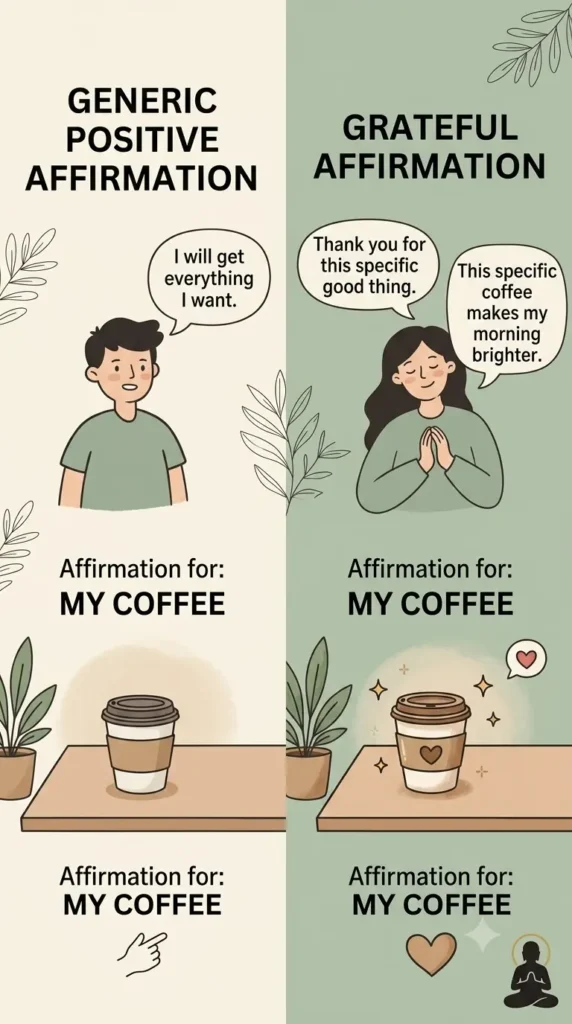
Say you wanted to boost your mood. You could say, “My life is amazing.” Sounds nice. Feels hollow. Or you could say, “I’m grateful for the friend who checked in on me today.” That one’s true. It happened. That’s why it’s easier to believe, and easier to repeat tomorrow.
New to gratitude as a habit? Start with the fundamentals in this guide on how to practice gratitude. It breaks down why noticing small moments builds a stronger habit than forcing yourself to “think positive.”
Gratitude Affirmations vs. Generic Positive Affirmations
Not every affirmation works the same way. Some look forward. Some look at what’s already here.
A generic positive affirmation reaches for the future. “I am completely confident.” Nice thought. Not always true yet.
A gratitude affirmation starts differently. It names something real first. Then it builds the mindset on top of that. Small shift. Big difference in how the words actually land.
Why This Matters More for Gen Z
Manifestation content is everywhere. So is the promise that the right mindset fixes everything. Some of it helps. A lot of it asks you to repeat words that don’t match your actual week.
Grateful affirmations skip that problem.
Between deadlines, a first job, money stress, and a feed full of everyone else’s highlight reel, telling yourself something you don’t believe won’t hold. Starting with gratitude works differently. It only asks you to spot something that’s already there, even something small. That’s not performance. That’s just an honest conversation with yourself.
Do Gratitude Affirmations Actually Work?
Short answer: yes, but not on their own. Research backs up grateful affirmations, though not as a stand-alone trick. They work best when they’re tied to something real. Repeated often. Backed up by habits like gratitude journaling. Just saying words you don’t mean? That barely moves the needle.
Research suggests gratitude changes how you notice the good
One of the biggest studies on this comes from Robert A. Emmons and Michael E. McCullough. Their 2003 counting blessings study found something simple. People who kept naming what they were grateful for reported more optimism. Better well-being. More positive emotion than the comparison groups.
Life didn’t get easier for them. They just started noticing the good parts already there. That’s the real point of gratitude affirmations. They work when they echo something true, not when they paper over a bad day.
Your brain responds to repeated gratitude practice
Here’s another one worth knowing. Published in NeuroImage, Kini et al. (2016) found lasting shifts in brain activity tied to gratitude and emotional processing. Affirmations weren’t the whole exercise. Still, the finding backs a bigger idea.
Keep pointing your attention toward what you appreciate, and your thought patterns start to shift. Think of it like a muscle. One rep won’t do it. Repetition builds the strength.
Why repetition and specificity matter
Psychologist Barbara Fredrickson built the Broaden-and-Build Theory around this idea. Positive emotions widen how we see things. Over time, they help build real psychological resources. Gratitude fits right into that model. But here’s the catch nobody likes to mention. Affirmations by themselves usually fall flat.
Sound too simple? It is. A line like “I’m grateful for everything” rarely sticks. Compare that to “I’m grateful my friend checked in on me today.” One is vague noise. The other is a memory you can actually feel. The more specific and believable your affirmation, and the more often you return to it, the more likely it sticks. Not as a sentence you recite. As a mindset you actually live in.
How to Get the Most Out of Grateful Affirmations
Grateful affirmations work best as a habit, not a one-time mood boost. Say a sentence once and nothing shifts. Say it every day for a month, especially alongside reflection and action, and your attention starts catching what’s already going right. That’s the real payoff, and it’s covered in more depth in our full guide to practicing gratitude. Gratitude stops feeling like a performance at that point. It becomes a practice instead.
Say Your Grateful Affirmations Out Loud
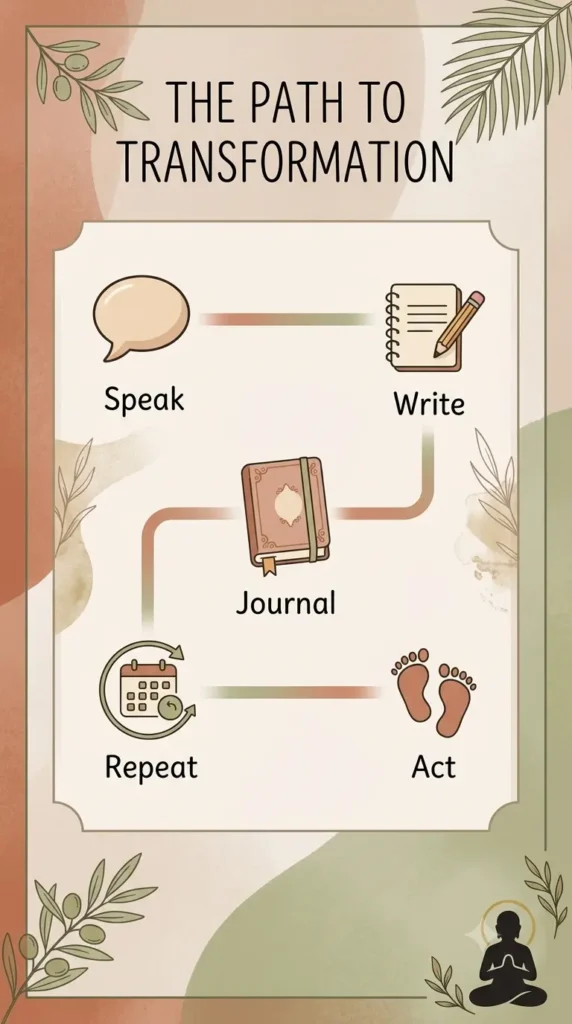
Hearing your own voice say, “I’m grateful for the people who support me,” hits different than just thinking it. Speaking slows you down. It’s harder to skim past words you’ve actually spoken.
No mirror required. No silent room, no elaborate ritual. A few affirmations while you make coffee or commute to class are enough. The goal isn’t to sound convincing. It’s to actually notice what you’re saying.
Write Them Down
Writing forces specifics. Don’t repeat ten affirmations pulled from a random list online. Pick one or two that reflect your actual life, and write them by hand. That pause gives your brain time to sit with the message instead of rushing past it.
Certain affirmations will start showing up again and again. Pay attention to that. Those repeats usually point to what you value most, whether that’s supportive friendships, creative work, better health, or just having somewhere safe to land at the end of the day.
Pair Them With Gratitude Journaling
If there’s one habit worth pairing with gratitude affirmations, it’s journaling. Affirmations name what matters. Journaling proves it’s already true.
Say, “I’m grateful for the kindness in my life.” Now write one thing from today that backs it up, even something as small as a held door or a random check-in text.
That combination sticks. Repeating positive lines on their own doesn’t hit the same way.
[Gratitude Journal Template: downloadable prompts and printable pages]
Anxiety can make gratitude feel forced. Pairing affirmations with short prompts usually softens that.
[Gratitude Journaling for Anxiety: practical prompts for stressful days]
Repeat Them Consistently
Showing up matters more than volume. Five affirmations you actually sit with each morning beat fifty you skim once and forget.
Try stacking the habit onto something you already do. After brushing your teeth. Before opening social media. Right before bed. Routines survive when they attach to something that already has a slot in your day.
Connect Every Affirmation to a Real Action
The strongest grateful affirmations don’t stop at words. They change what you do next.
Grateful for your friends? Text one of them right now. Grateful for your body? Take a short walk instead of picking it apart. Grateful for the chance to learn? Spend twenty minutes studying instead of scrolling.
It’s 9pm. The affirmation is sitting there, said and meant. The phone is easier than the walk. That choice, right there, is what turns gratitude from something you repeat into something you actually live.
100+ Grateful Affirmations for Every Part of Gen Z Life
Real grateful affirmations don’t sound like a script. The best ones match what’s happening in your life right now, not whatever’s trending on your feed. Heading to class, dealing with anxiety, celebrating a win, or winding down before bed. Each moment needs something different. This list covers all of them.
Use it to notice what’s already good, while you keep growing. Think of these gratitude affirmations as a starting point, not a rulebook. For the bigger picture on why this practice works, check out this guide on how to build a real gratitude habit.
Morning Grateful Affirmations
How you start the morning doesn’t decide your whole day. It shapes the mood you carry into it, though. Still, it matters. These affirmations aim for appreciation over pressure. No perfect morning routine required.
- I am grateful for a brand-new day and the opportunities it brings.
- I appreciate another chance to learn, grow, and begin again.
- I am thankful for my body and everything it helps me do today.
- I welcome today’s challenges with curiosity instead of fear.
- I choose to notice small moments of joy throughout my day.
- I am grateful for the people who support and encourage me.
- I trust that today’s progress matters, even if it feels small.
- I appreciate the little comforts that make my mornings peaceful.
- I am thankful for my dreams and my ability to work toward them.
- I begin today with gratitude, patience, and hope.
- I deserve to experience good things today.
- I already have reasons to smile before my day fully begins.
Grateful Affirmations for Difficult or Low-Mood Days
Not every day feels productive or hopeful. Some days just feel heavy. Gratitude on those days isn’t about pretending everything’s fine. It’s not that. It’s about noticing what’s still worth holding onto, even in a rough season.
- I am grateful that difficult emotions don’t define who I am.
- I appreciate my strength, even when I can’t clearly see it.
- I am thankful that every hard day eventually passes.
- I choose to notice one good thing, no matter how small.
- I am grateful for the people who care about me, even when I withdraw.
- My feelings deserve compassion, not criticism.
- I appreciate every small step forward I take.
- I am thankful for moments of rest without guilt.
- I trust that healing rarely happens all at once.
- I can experience gratitude while still having a difficult day.
- I am grateful for the lessons hidden inside setbacks.
- I don’t need a perfect day to find something meaningful.
Grateful Affirmations for Anxiety and Overwhelm
Anxiety convinces you everything needs attention right now. Gratitude pulls your focus toward what’s steady and already here. It won’t erase anxious thoughts. But it stops them from being the only thing you notice.
- I am grateful for this moment and my ability to breathe through it.
- I appreciate every calm breath I take.
- I am safe enough to slow down.
- I choose progress over perfection today.
- I am thankful for the people I can lean on when life feels heavy.
- I trust myself to handle one step at a time.
- I appreciate the moments when my mind becomes quieter.
- I release the pressure to have everything figured out.
- I am grateful that uncertainty doesn’t erase possibility.
- I can pause without falling behind.
- I choose kindness toward myself during stressful moments.
- I have already overcome challenges before, and I can do it again.
Self-Love and Confidence Grateful Affirmations
Confidence grows steadier when it’s rooted in appreciation, not comparison. These lines focus on strengths you already have. Not the version you’re chasing. Just you, right now, appreciated as you are.
- I am grateful for the person I am becoming.
- I appreciate my unique strengths and perspectives.
- I am thankful for my resilience.
- My worth isn’t measured by likes, grades, or followers.
- I choose to celebrate my progress instead of comparing myself to others.
- I appreciate my ability to learn from mistakes.
- I am grateful for the qualities that make me different.
- I trust myself to make thoughtful decisions.
- I deserve kindness from myself as much as from others.
- I am thankful for my creativity, curiosity, and courage.
- I honour my growth instead of expecting perfection.
- I have more to offer than I sometimes realise.
Grateful Affirmations for School and University
Studying turns into a cycle of deadlines and self-pressure fast. Grades aren’t the whole story, though. School also builds skill, patience, and new ways of thinking. One messy semester at a time.
- I am grateful for the opportunity to keep learning.
- I appreciate every lesson that helps me grow.
- I am thankful for teachers, mentors, and classmates who support my journey.
- I trust that consistent effort matters.
- I appreciate my curiosity.
- I am grateful for mistakes because they teach me something valuable.
- I believe I can improve with practice.
- I choose learning over perfection.
- I appreciate every small academic victory.
- I am thankful for my ability to adapt.
- I have everything I need to keep moving forward today.
- I celebrate progress, not just final results.
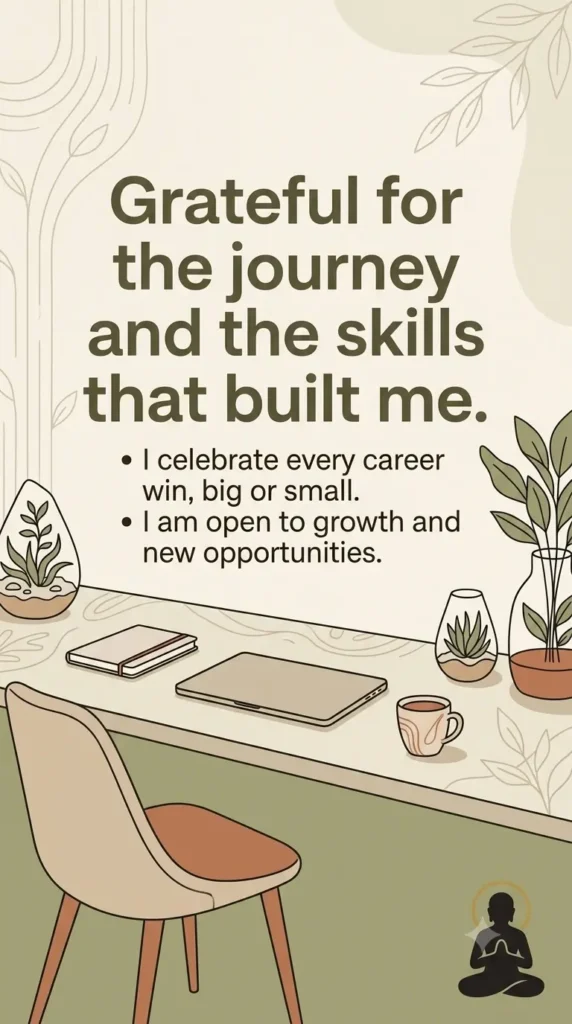
Grateful Affirmations for Work, First Jobs, and Career Anxiety
Here’s an honest take: nobody else has it figured out either. Starting a career can feel like everyone’s ahead of you. They’re not. Gratitude shifts your focus from comparison to the skills you’re building.
- I am grateful for every opportunity to gain experience.
- I appreciate the skills I’m developing.
- I trust that my career doesn’t have to follow someone else’s timeline.
- I am thankful for every lesson, even the difficult ones.
- I choose curiosity over fear when facing new challenges.
- I appreciate mentors who help me grow.
- I am grateful for the progress I’ve already made.
- I deserve opportunities that align with my values.
- I trust that meaningful work takes time to build.
- I appreciate the confidence that comes from experience.
- Every small success deserves recognition.
- I am building a future I can be proud of.
Grateful Affirmations for Friendships and Situationships
For a lot of people in their twenties, relationships get confusing fast. Some friendships deepen, others fade. Situationships mostly leave more questions than answers. Gratitude here isn’t about tolerating anything unhealthy, though. It’s about noticing who actually brings peace and honesty into your life.
- I am grateful for friends who let me be myself.
- I appreciate relationships built on honesty.
- I deserve friendships that feel safe and supportive.
- I am thankful for people who celebrate my successes.
- I appreciate the lessons every relationship has taught me.
- I choose connections that respect my boundaries.
- I am grateful for meaningful conversations.
- I appreciate quality over popularity.
- I trust that the right people will stay.
- I release relationships that no longer help me grow.
- I am thankful for laughter shared with people I care about.
- I make space for healthy, genuine connections.
Grateful Affirmations for Family
Family isn’t simple. Gratitude shouldn’t pretend otherwise. Support can come from relatives, chosen family, or close friends. These lines focus on the people who help you feel seen.
- I am grateful for the people who care about my wellbeing.
- I appreciate the love I receive in different forms.
- I am thankful for shared memories that shaped me.
- I value the traditions that bring comfort.
- I appreciate opportunities to grow through family experiences.
- I choose patience during difficult conversations.
- I am grateful for forgiveness and fresh starts.
- I appreciate acts of kindness, however small.
- I am thankful for people who believe in me.
- I honour both my roots and my own path.
- I appreciate the support I sometimes overlook.
- Love can exist alongside imperfection.
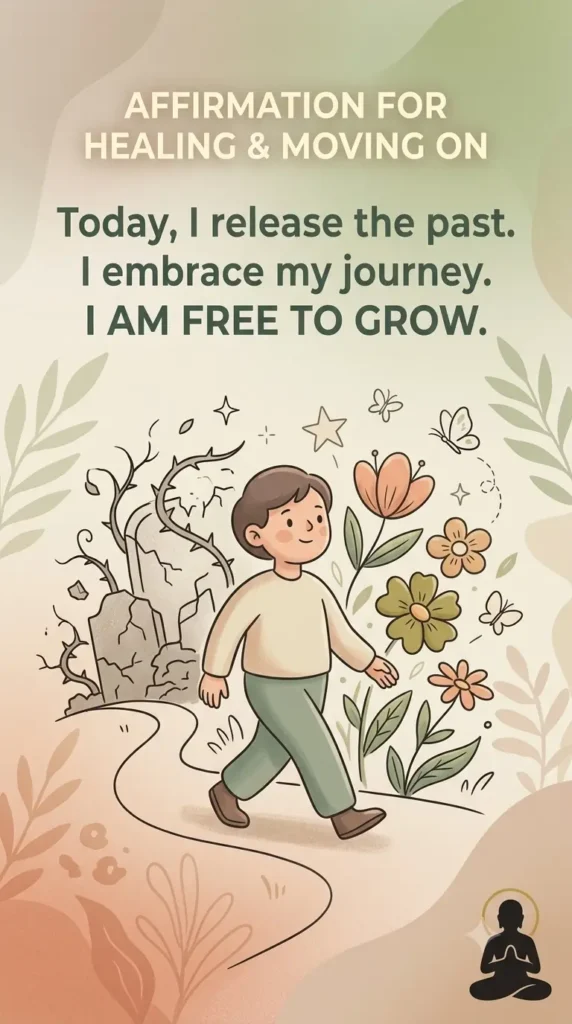
Grateful Affirmations for Healing and Moving On
Healing rarely moves in a straight line. Some days feel stronger. Others feel like a step back. Both can be true without erasing your progress. These gratitude affirmations don’t rush it.
- I am grateful for how far I’ve already come.
- I release the need to rush my healing.
- I appreciate every lesson my past has taught me.
- I am thankful for second chances.
- I choose compassion over self-judgment.
- I trust that healing looks different for everyone.
- I appreciate the strength I’ve built through difficult experiences.
- I am grateful for new beginnings.
- I allow myself to grow beyond old stories.
- My past informs me but doesn’t define me.
- I appreciate each day that feels a little lighter.
- I deserve peace as much as anyone else.
Grateful Affirmations Before Sleep
Ending the day with these gratitude affirmations makes it easier to let go of what’s unfinished. Not even close to perfect, either. You don’t need one to find something worth appreciating. Even a few quiet minutes before bed count.
- I am grateful for everything today taught me.
- I appreciate the moments of peace I experienced today.
- I choose to release what I cannot control.
- I am thankful for the rest my body is about to receive.
- I forgive myself for today’s mistakes.
- I appreciate every small win, even the ones nobody noticed.
- I am grateful for the people who made today brighter.
- I trust that tomorrow offers another fresh start.
- I allow myself to rest without guilt.
- My mind deserves peace tonight.
- I am thankful for the life I am slowly building.
- I end this day with gratitude and quiet hope.
How to Create Your Own Grateful Affirmations
Copying a list of affirmations rarely sticks. Writing your own does. A grateful affirmation built from something real, in your own words, tends to hold up when the day gets hard. Repeat it enough and it becomes a lens. You start spotting the good without trying.
Use the Present Tense
Present tense keeps a grateful affirmation honest. It points at what’s true right now, not some future you. That’s the whole trick.
Skip lines like “I will be grateful when my life is easier.”
Try this instead: “I am grateful for the strength I’m building through today’s challenges.”
Small shift. Big difference. One waits for a finish line. The other notices progress already happening.
Make It Personal
The best affirmations sound like you talking, not a caption you scrolled past. If a phrase feels borrowed from someone else’s feed, drop it. It won’t hold weight.
Think about who and what actually matters here. A college student might lean on supportive classmates. Someone starting a first job might focus on the learning curve, or the confidence creeping in slowly. Details like these make an affirmation believable. Believable is what makes it stick.
Follow a Gratitude-First Structure
One formula does most of the work:
“I am grateful for… because…”
A few examples:
- I am grateful for my curiosity because it keeps me learning.
- I am grateful for my closest friends because I don’t have to face things alone.
- I am grateful for today’s small wins because they add up.
This isn’t just positive talk. It ties gratitude to something you can actually point to.
Avoid Common Mistakes
There’s no “wrong” affirmation. There’s only one that feels fake the second you say it. If your mind talks back, that line won’t survive a week of repetition.
Keep it specific. Keep it believable. Root it in something you already feel, even if it’s small. Confidence builds from there, not the other way around. As your outlook shifts, you can stretch the affirmations further.
For more real examples pulled straight from daily practice, check out these gratitude examples you can adapt into affirmations that sound like you. And if you want the fuller picture of why this practice works at all, this guide on how to practice gratitude breaks it down step by step.
Common Mistakes That Make Gratitude Affirmations Less Effective
Grateful affirmations work best when they feel honest. Personal, too. Grounded in something real. They aren’t meant to bury hard feelings or force a smile you don’t have. Once you spot the common mistakes, your practice starts to feel steady instead of scripted.
Forced positivity
Gratitude isn’t about pretending life is fine when it isn’t. One big mistake? Using affirmations to wave off real struggles. Saying “I have nothing to worry about” during a genuinely rough stretch does exactly that. It doesn’t help. It just buries the problem under a nicer sentence.
This is where gratitude affirmations slide into toxic positivity, and uncomfortable emotions get ignored instead of worked through. For more on keeping the two separate, this guide on balancing gratitude with hard emotions walks through it in more depth.
The research backs this up too. A well-known Psychological Science study on positive self-statements found that forced optimism can backfire, especially for people already struggling. Not everyone. But enough people that it matters.
Unrealistic wording
An affirmation has to feel believable. Your mind pushes back otherwise. “My life is perfect” creates resistance fast if it doesn’t match what you’re actually living. Try something smaller instead. “I am grateful for the small moments of peace I find each day” works better. It’s specific. It’s true. Your brain doesn’t fight it.
Inconsistency
Gratitude affirmations work best as a habit, not a rescue mission. A quick daily practice beats occasional bursts of motivation almost every time. Five minutes a day for a month does more than one long session during a crisis week.
Reciting without reflection
Say the words without meaning them and they turn into noise. Nothing sinks in. Slow down instead. Picture the person, the moment, the exact thing you’re grateful for behind each line. That’s what makes it stick.
Ignoring emotions
Gratitude and hard emotions can sit side by side. Feeling anxious, disappointed, or just worn out doesn’t mean you’re doing gratitude wrong. It means you’re human. The real goal is noticing what still holds value while leaving room for everything else you feel too.
A 5-Minute Daily Gratitude Affirmation Routine for Gen Z
A daily gratitude affirmation routine doesn’t need another slot on an already packed schedule. Five minutes is enough. That’s enough time to slow down, notice what’s already good, and turn grateful affirmations into something repeatable that feels personal instead of forced.
Breathing: Create a Pause Before You Begin
Start with a few slow breaths before repeating anything. No rushing here. This small pause pulls you out of autopilot and helps you actually feel what’s happening instead of skimming past it. Gratitude works better when it’s tied to real awareness, not rushed repetition you barely register.
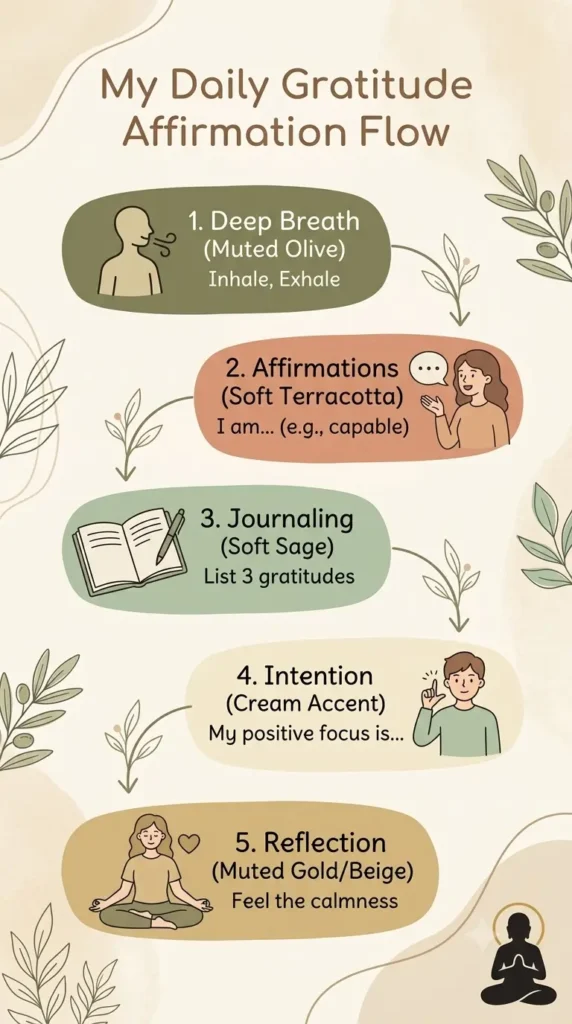
5 Gratitude Affirmations: Focus on What is Already Meaningful
This isn’t about repeating lines that sound nice. It’s about picking five gratitude affirmations you’d actually believe if a friend said them to you. Skip anything that feels like a stretch. Instead, name what you genuinely appreciate: a friend who checks in, a small win at work, a strength you’re proud of, or one quiet moment of peace in your day.
3 Journal Entries: Turn Affirmations Into Reflection
Affirmations open the door. Journaling walks through it. After you finish, write three short entries. Keep them simple. A conversation that made you smile. A skill you’re slowly building. A space that feels comfortable. Or something you handled better this time than last time.
You can build this habit further with the how to practice gratitude guide, which breaks down gratitude practices you can layer into this routine.
1 Intention: Carry Gratitude Into Your Day
Gratitude fades fast without something to hold onto. So pick one intention from what came up in your practice. Maybe it’s telling someone you appreciate them. Maybe it’s going easier on yourself today. Or maybe it’s just noticing one good moment before the day ends.
Closing Reflection: Make the Habit Your Own
Most gratitude routines end the moment you close the notebook. This one doesn’t have to. Ask yourself one question before you move on: “What do I want to remember from this moment?” That’s it. If you want more structure around it, pair this routine with the [7-Day Gratitude Challenge Tracker] to build consistency without adding pressure.
Grateful Affirmations vs. Gratitude Journaling: Which Should You Choose?
Grateful affirmations and gratitude journaling both build a thanks habit. But they work in different ways. Affirmations pull your focus back to what you appreciate, again and again. Journaling gives you room to dig into the story behind those feelings.
So which one fits you? It depends on your personality, your schedule, and what your practice actually needs to do for you. And here’s the thing: you don’t have to pick just one. Plenty of people pair a quick affirmation practice with deeper journaling. That combo often builds the most lasting routine.
For a full breakdown of the practice itself, check out this guide on how to practice gratitude.
| If you are a… | Grateful affirmations may work best when… | Gratitude journaling may work best when… |
|---|---|---|
| Student | You need a quick reset before classes, exams, or assignments | You want to reflect on academic stress, progress, lessons, and personal growth |
| Busy person | You only have a minute between tasks and need a simple reminder | You can set aside a few quiet minutes to process your thoughts |
| Introvert | You prefer a private mental practice you can do anywhere | You enjoy expressing thoughts through writing rather than speaking them |
| Creative person | You want short phrases to inspire your mindset or creative flow | You want space for longer reflections, ideas, sketches, or personal insights |
| Overthinker | You need a grounding statement that brings attention back to the present | You want to understand patterns, emotions, and recurring worries |
No single method wins for everyone. That’s just true. A student cramming for finals might repeat “I am grateful for my ability to learn and grow” between study sessions. Weeks later, writing about a rough stretch could surface patterns they’d have missed completely.
Want a structure that pulls both approaches together? Gratitude worksheets turn quick reflections into something you actually stick with, and they’re worth a look if you want your gratitude affirmations to lead somewhere more consistent than a one-off mood boost.
Final Tips for Building a Lasting Gratitude Habit
A lasting habit doesn’t come from forcing yourself to feel positive every day. That’s not how it works. It comes from noticing small moments, often enough that thanks becomes part of how you see your life. Not a mood. A lens.
Pick a routine you’ll actually keep. One line of grateful affirmations before you touch your phone. A short note after dinner. A quiet minute before sleep. Small and boring beats big and abandoned by week two.
Keep it personal. Choose gratitude affirmations that feel true to you, not ones lifted from a poster. Tie them to something real that happened that day. Let the feeling be uneven. Some days you’ll feel it deeply. Other days, noticing one good thing is enough. That still counts.
The goal isn’t to pretend hard days don’t exist. It’s to train your attention so both things fit. The rough moment and the good one, side by side. Most people skip this part. If you want a fuller walkthrough of building the practice from scratch, this guide on practicing gratitude breaks it down step by step.
A small daily practice, repeated without drama, becomes something sturdier than motivation ever was. Something you return to when life feels like too much. That’s the whole shift.
Frequently Asked Questions
What are the best grateful affirmations?
The best grateful affirmations feel specific. Believable, too. Not some forced-positivity script you don’t buy for a second. The good ones point at real things: a friendship, a small win, a moment you almost missed. Something you can say out loud without cringing.
That’s the whole test. Can you repeat it tomorrow and still mean it? If yes, keep it. If it sounds like a fridge magnet, drop it. Gratitude affirmations work when they’re tied to your actual life, not a generic template borrowed from somewhere else.
What is the most powerful affirmation?
There isn’t one. Not a single phrase that works for every person on earth. The most powerful affirmation is the one that hits something real in you, right now, today.
Strong affirmations usually do three things at once. They name what you’re thankful for. They back your own ability to handle things.
And they stay honest about where you’re actually standing, not some fantasy version of your life. Skip that last part and the affirmation turns hollow fast.
What is the golden rule of gratitude?
Notice what’s already here. That’s it. Not what’s missing, not what you’re still chasing. What’s sitting right in front of you.
Vague thanks doesn’t move the needle much. “I’m grateful for my life” sounds nice and does almost nothing. Name the actual thing instead. The friend who called back at midnight.
The coffee that was, for once, exactly right. Specific gratitude sticks. General gratitude slides right off.
Can affirmations alone improve mental health, or do they need something else?
Affirmations help. On their own, though? Limited. They tend to work best stacked with something else, like reflection or a daily gratitude journaling practice that forces you to slow down and actually notice your day.
They’re also not therapy. Not a stand-in for real support if you’re struggling. What actually moves the needle is repetition plus honesty, not the words alone. Say the line, sure. But pair it with something you do, not just something you recite.
What is a powerful gratitude message?
One that sounds like you wrote it. Not copied off a graphic somewhere. A message about a specific person, a specific moment, a specific thing that actually happened.
Generic lines get skimmed and forgotten. Specific ones land, because they remind you what you’d otherwise walk right past. That’s really the whole point of a gratitude message.
It slows you down long enough to notice what’s already good, which is the same idea behind grateful afirmations in general.

It’s Bhaskar!
Well, I am not a psychologist a monk, or a philosopher by training. I’m just an engineering graduate.
‘The Empty Self’ is where I write about that idea, and what it actually means for ordinary life, anxiety, identity, habits, the stories we tell ourselves about who we are. I don’t have a psychology degree, and I’m not offering therapy or clinical advice. What I do have is thought and clarity, and genuine curiosity about why we suffer the way we do and how much of it might loose once we shed this ‘fixed identity’.