

Being a teenager in 2026 pulls you in five directions at once. School deadlines. Social media. Friendships that shift overnight. Family expectations. Questions about a future nobody hands you a map for.
It’s easy to miss the things to be thankful for that are sitting right in front of you. Not because you’re ungrateful. Because your brain is busy.
Here’s an honest take on gratitude: it isn’t about pretending everything’s fine. It’s not ignoring the hard stuff either. Gratitude just means noticing what’s still good, still standing, still on your side, even on the days that feel like a mess.
Maybe you’ve typed “what are some things to be thankful for” into a search bar at 1 am. Maybe you’re hunting for journaling ideas, or just trying to feel less flat. Either way, this list is for you. A hundred examples, sorted into categories that actually fit a teenager’s life, plus a few ways to turn thanks into a habit instead of a one-time thought.
No forced positivity here. Just the people, moments, and small good things that make the noise a little quieter.
If gratitude and anxiety feel like they’re pulling against each other, this piece breaks down how both can exist at the same time. And if you want a daily prompt to pair with this list, this set of journal prompts for mental health is a solid place to start.
Table of Contents
Why Gratitude Matters More for Teenagers Right Now
Right now, thanks works harder for teenagers than it used to. Naming things to be thankful for helps you notice what’s already good, even when everything else feels shaky. It won’t erase stress. It won’t cancel out anxiety or a bad week. But it pulls your attention away from constant comparison and toward the people, chances, and strengths already sitting in your everyday life.
That’s the whole point. Gratitude and anxiety can actually exist at the same time, which is why this habit isn’t about faking a good mood. It’s about widening what you notice.
Identity Formation: Gratitude Helps You See Who You’re Becoming
The teenage years run on questions. Who am I? What do I actually like? Who am I becoming when nobody’s watching? You’re sorting through interests, values, and friendships, often while feeling pressure to just fit in somewhere. Thankfulness gives you a quiet second to notice what’s shaping you for the better.
Maybe it’s a teacher who bet on you early. Maybe it’s a hobby that swallows time whole. Maybe it’s the toughness you built after a genuinely hard year. Small stuff. It still counts.
Noticing these moments matters. Your identity isn’t just grades, looks, or how popular you are. It’s built from ordinary experiences that quietly grow you into someone new. Writing them down helps, too. If you want a structured way to track this, 365 journal prompts for mental health is a good place to start pulling these moments out of your day.
Social Comparison: Looking at Your Own Life Instead of Everyone Else’s
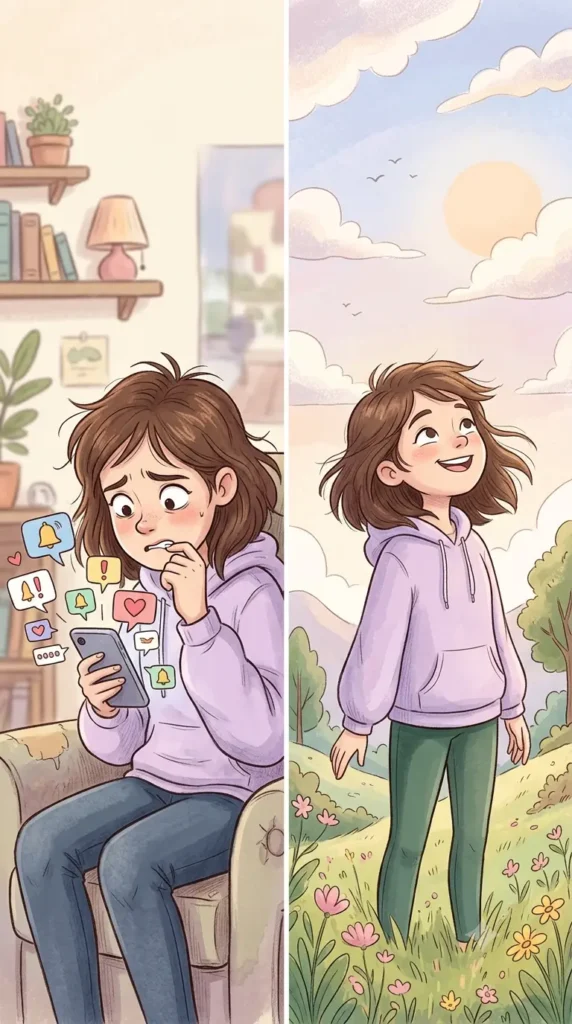
Social media makes it easy to believe everyone else has it better. More confidence. More success. More fun. Here’s the catch. You’re comparing your regular Tuesday to someone else’s highlight reel, carefully cropped and filtered before it ever reached your screen.
Gratitude flips the question. Instead of asking why you don’t have what they have, you start asking what you already have that’s worth noticing. That shift won’t kill comparison overnight. Nothing does. But it makes comparison lose its grip, one small notice at a time.
Over time, paying attention to your own relationships, your own progress, your own wins tends to build more real confidence than any amount of scrolling and measuring ever will. Sound too simple to matter? It is. That’s exactly why it works.
Academic Pressure: Gratitude Doesn’t Lower Standards. It Changes Perspective
School can feel like one long loop. Assignments, exams, applications, expectations, repeat. Gratitude doesn’t pretend that pressure isn’t real. It’s not about lowering the bar.
It’s about remembering that school isn’t only test scores. A classmate who covers for you. The chance to learn something new. Books, tech, another shot to improve. All of it deserves a second look. When you make a habit of noticing these things, setbacks shrink down to size. You can still chase your goals hard while appreciating how far you’ve already come, instead of only measuring the distance left to go. If academic stress is a big part of what’s weighing on you, gratitude journaling for anxiety walks through how to use this habit specifically for that kind of pressure.
100 Things to Be Thankful For
What are things to be grateful for? The answer isn’t some huge win or a perfect day. Most things to be thankful for are already sitting in your daily life. You just stop noticing them after a while. This list is built for teens. Real stuff. School, friends, family, the small moments nobody talks about but everyone remembers later.
Family and Loved Ones
Growing up is messy. Family relationships rarely run smooth. Still, when you sit down to write out things to be thankful for, the people who’ve known your story the longest are usually where the list starts. Traditional family, blended family, adoptive, chosen, or just people who show up for you. Doesn’t matter the shape. These everyday relationships build your confidence. They build your resilience. They build your sense of belonging, whether you notice it happening or not.
- A parent, guardian, or caregiver who believes in you: Someone who talks you up before an exam. Someone who cheers from the sidelines even when you lose. Someone who reminds you that one bad day doesn’t decide your whole future. Most teens don’t clock how much that matters. Not until years later.
- A sibling who gets your weird sense of humor: Older, younger, annoying at breakfast, your ride-or-die by dinner. Siblings flip roles constantly. Rival one minute. Best friend the next. Somehow they end up knowing you better than almost anyone else does.
- Grandparents or older relatives who share their stories: Their stories carry weight. Perspective. Family history. Lessons no textbook teaches, and definitely nothing you’ll find on a social media feed. Listening actually changes how you see your own life.
- A family member who always checks in: Maybe it’s a text asking how your day went. Maybe it’s someone noticing you’ve gone quiet. Small thing. Being seen like that? Worth being grateful for, every time.
- Family meals, even the messy ones: Nobody’s having a deep conversation every night. That’s fine. Just sitting together, no rush, no scrolling, builds memories you won’t recognize as important until much later.
- A safe place to come home to: Home doesn’t need to be perfect. It needs to be yours. A place to rest, recharge, be exactly who you are without performing for anyone. Plenty of people never get that. Don’t skip past it.
- Family traditions that pull everyone together: Holiday routines. Birthday rituals. Movie night every Sunday. Even the same takeout order every single Friday. These little repeats create stability. And teenage years, let’s be honest, rarely feel stable on their own.
- Relatives who celebrate your wins, big or small: Passed a hard test? Made the team? Tried something brand new and scary? Having people genuinely proud of the effort, not just the outcome, means more than any gift wrapped in paper.
- Loved ones who forgive your mistakes: Teen years run on trial and error. That’s the whole design. Family who give you room to mess up, instead of demanding perfection, are the reason you grow into someone more confident. More resilient too.
- The love that survives disagreements: Every family argues. That’s not the story. The story is what happens after. One of the biggest things to be grateful for in life is knowing love doesn’t vanish the second a fight ends. That’s what makes rebuilding trust possible.
Friends and Community
Friendships shape the teenage years more than most people admit. The people around you shift your confidence. They shift your choices. They shift how you see yourself, whether you notice it or not. When you sit down and think about what are some things to be grateful for, a good friend usually comes to mind before anything else does.
- A friend who checks in without being asked. The loudest friendships aren’t always the best ones. Sometimes it’s the quiet ones. The friend who notices you’ve gone silent. The one who texts “you good?” without waiting to be asked. That kind of care is easy to miss. Until you actually need it.
- A group chat that keeps everyone close. Not every buzz on your phone deserves attention. But a group chat full of inside jokes, last-minute plans, and the occasional homework panic does something real. It keeps people close. Even when someone moves, or life gets busy, that chat holds the thread.
- Teachers, coaches, or mentors who see something in you. A trusted adult outside your family can shift everything. Maybe they push your writing. Maybe they see your potential on the field before you do. Their belief in you often becomes the reason you keep showing up. That’s not small. That’s fuel.
- Classmates who make school feel lighter. Someone sharing notes after you missed class. A partner who actually pulls their weight on a group project. Laughing through an assignment neither of you understands. These moments remind you that you’re not supposed to figure it all out solo.
- Neighbors who make a place feel like home. A wave from the porch. Someone who watches your house while you’re gone. A neighbor who still remembers your name years later. None of this feels huge in the moment. But it adds up. It’s what makes a street feel like a community instead of just an address.
- Teammates who cheer effort, not just wins. Sports team. Debate club. School band. Doesn’t matter which. Teammates who clap for your progress, even after you mess up, teach you something most people learn too late. Growth beats perfection. Every time.
- Online communities built around real interests. The internet isn’t only doom-scrolling and comparison. Sound surprising? It shouldn’t. A tight-knit art server. A coding forum. A book club that actually reads the book. These spaces can hand you people who genuinely push you to make something better.
- Volunteers who quietly improve everything around them. Neighborhood cleanups. Coaching younger kids. Showing up at a local shelter on a random Tuesday. Most volunteers aren’t doing it for recognition. They’re doing it because it matters. That kind of quiet effort is a reminder: small actions still move things.
- People who let you be exactly who you are. Real belonging means you stop pretending. Friends who respect your personality, your culture, your weird interests, your goals, give you something rare. Permission to be yourself instead of performing for someone else’s approval.
- The chance to give something back. Community isn’t only about what you receive. It’s also about what you offer. Helping a younger student. Showing up to a charity event. Being the person a friend calls at 11pm. These moments build a kind of purpose that’s hard to find anywhere else. Often, one of the most meaningful things to be grateful for in life isn’t received at all. It’s given.
Health and Your Body
Your body carries you through every class, conversation, and hobby you chase. It shows up for you constantly. Most days, you don’t even notice. Being thankful for your health isn’t about pretending everything feels perfect. It’s about noticing the abilities, energy, and small physical wins that let you actually live your life.
- The ability to move and be active Movement is not something you earn. It’s something your body just gives you. Dancing, walking with friends, or getting through a long school day all depend on it, and none of it happens without your body doing the work behind the scenes. Notice that instead of your reflection. Shifting focus from how your body looks to what it can actually do changes everything.
- Your senses that help you experience life A sunset. Your favorite song. The first bite of a meal you’ve been craving all day. These moments only exist because your senses let them in, and that’s easy to forget when they happen every single day. Ordinary moments stay ordinary until you notice them. Then they become something else entirely.
- A body that keeps adapting and growing The teenage years bring constant change, some of it awkward, some of it frustrating. But growth is proof of something. Your body is working. It’s adjusting. It’s carrying you toward whoever you’re becoming next. Nobody feels fully comfortable in a body that’s still changing, and that’s fine. Comfort isn’t the point yet.
- The energy to explore your interests Where does your energy actually go? Meeting friends, studying, creating, practicing a skill, showing up for the things that make you feel like you. Energy is what makes participation possible in the first place. Without it, even the things you love start to feel like a chore.
- Access to nutritious food and clean water Meals that fuel you. Water you can drink without thinking twice. Millions of people don’t have consistent access to either, which makes this one easy to take for granted and important to notice anyway. Appreciating the basics doesn’t require a crisis to earn it. It just requires paying attention.
- A chance to rest and recharge Sleep isn’t wasted time. It’s repair work. Your body uses rest to recover and prepare you for whatever tomorrow throws at you, and skipping it catches up fast. A comfortable bed after a rough week does more than people give it credit for. That’s not laziness. That’s maintenance.
- The ability to heal after challenges Cuts close. Colds pass. Even the hardest stretches eventually loosen their grip, and your body does most of that work without you asking it to. Healing means setbacks are often temporary, whether it’s a sprained ankle or a stretch of anxiety that felt endless at the time. If gratitude and anxious thoughts feel like they can’t exist together, they actually can, and noticing your body’s ability to recover is part of learning that.
- Your unique appearance and individuality Your body was never meant to match anyone else’s. Your smile, your expressions, the specific features that make you recognizable in a crowd, all of it is part of your story. Not a flaw to fix. Comparison steals more from teenagers than almost anything else on this list, and it’s rarely worth what it takes.
- The ability to care for your mental health Your thoughts and your physical health are more connected than most people admit. Recognizing a feeling, asking for help, or taking a mental break when you need one isn’t weakness. It’s a skill. Writing things down helps more than people expect, and a gratitude journaling practice built for anxiety or a list of journal prompts for mental health is a low-effort place to start.
- The opportunity to improve your health over time Perfect habits today aren’t required for a healthier tomorrow. A short walk. An extra glass of water. Going to bed twenty minutes earlier. None of it looks impressive in the moment, and that’s exactly why it works. Small, boring choices are what a lifelong relationship with your body is actually built on.
School and Learning
Grades matter. Exams matter too. But school gives you something bigger than a report card ever could.
It’s where you find your interests. It’s where confidence starts to build. Teachers, classmates, even random hallway conversations shape who you become. Here’s what’s worth being thankful for when it comes to learning and growth.
- Teachers who genuinely care about your growth A teacher who notices your effort can change everything. Maybe they explain a concept a second way when the first one didn’t land. Maybe they just tell you to try again. That’s it. Small moments like these add up. The right teacher shows you strengths you didn’t know you had.
- The opportunity to learn new things Every class opens a door you might never have found alone. Biology shows you how your own body works. A new language rewires how you think. A tough math problem teaches patience. Each subject stretches your view of the world a little further.
- A classroom where you can ask questions Curiosity needs a safe place to land. A classroom where questions are welcome, not mocked, is rare and valuable. Asking “why” instead of just memorizing an answer is what turns information into real understanding. Why does this matter so much? Because curiosity, once built, sticks with you for life.
- Friends and classmates who make school better School gets easier with people around you. Studying together before a test. Laughing through lunch. Grinding through a group project at 11pm. These moments turn ordinary days into ones you actually remember.
- Access to books, resources, and information Libraries. Textbooks. Online platforms. Together, they hand you knowledge from every corner of the world. Being able to dig deeper on your own, outside class hours, is a privilege plenty of people never get.
- The chance to discover your interests Sometimes you walk into a class expecting to hate it. Then you don’t. School gives you room to test things out, clubs, electives, random hobbies, until something clicks. That’s how passions get found, not planned.
- The ability to improve after mistakesA failed test stings. A confusing lesson feels discouraging. A project that flops feels worse. But none of it means you can’t succeed. It means you’re learning. School quietly teaches this lesson over and over: mistakes aren’t the end. They’re the middle part.
- Extracurricular activities and school experiences Sports. Music. Debate. Art. These aren’t just extras tacked onto the school day. They build teamwork, discipline, and creativity in ways a textbook never could. And they hand you memories that last long after the classes are forgotten.
- Technology that supports learning An app can teach you a language. A video can show you a science experiment happening on the other side of the planet. School technology has made learning something you can access almost anywhere, not just inside four walls. That access alone is worth appreciating.
- The ability to shape your own future through education Learning gives you options. What you study now can open doors later, a career, a passion project, a chance to travel, a more informed version of yourself. Education doesn’t hand you a future. It hands you the tools to build one.
If gratitude feels hard to hold onto some days, that’s normal. For more on working through that tension, gratitude and anxiety can exist at the same time, and gratitude journaling can help ease anxious moments. Want a daily prompt to keep the habit going? 365 journal prompts for mental health is a good place to start.
Personal Strengths
Your personal strengths are the tools you already carry. They help you handle hard days, make decisions, and grow into who you want to be. Most teens brush past these traits. They feel too ordinary to matter. That’s exactly why they deserve a second look.
- Your ability to keep trying when things get difficult Persistence isn’t loud. It’s quiet, and it builds one choice at a time. Fix a bad grade. Learn a new skill. Get back up after a setback. Every one of those counts. Progress rarely shows up on the first attempt. It shows up on the fifth.
- Your curiosity about the world Curiosity keeps your brain hungry. It shows up when you ask one more question in class, watch a random documentary at midnight, or try a hobby just to see what happens. That habit of poking at things keeps you learning long after school ends.
- Your creativity and imagination Creativity isn’t just art class. It’s solving a problem sideways instead of head-on. It’s a story you wrote, a room you rearranged, an idea nobody asked for but you had anyway. You imagine things that don’t exist yet. That’s rarer than it sounds.
- Your ability to adapt to change New school. New friends. New expectations. The teen years throw change at you nonstop. You keep adjusting anyway. That’s not luck. That’s flexibility, and it’s the thing that keeps you steady when everything else moves.
- Your unique personality Nobody else laughs at things quite the way you do. Nobody else thinks the exact way you think. That’s not a small thing. Your sense of humor, your instincts, your weird specific interests, all of it adds up to something worth keeping. You don’t need to copy anyone to matter.
- Your courage to try new things Joining a new club takes nerve. So does raising your hand, or talking to a stranger who might become a friend. There’s a real risk of looking foolish. You do it anyway. Every one of those moments quietly builds courage, even when it doesn’t feel brave at the time.
- Your ability to learn from mistakes Mistakes sting. They also teach the lessons that success skips over. Can you look back at what went wrong, actually sit with it, and choose differently next time? If you can, that’s not just resilience. That’s a skill most adults are still working on.
- Your emotional awareness Knowing why you feel a certain way changes everything. It changes how you talk to people. It changes the choices you make. Reacting on autopilot is easy. Pausing to understand yourself first is not. That pause is a strength.
- Your personal values and beliefs Your values are your compass. They shape how you treat people and what you chase. Outside pressure will always push you to follow the crowd. Knowing what actually matters to you is what keeps your feet on the ground when that pressure hits.
- Your ability to grow into someone new You are not stuck as yesterday’s version of yourself. Interests shift. Opinions change. Identity keeps forming. That’s not confusion. That’s growth in motion, and the ability to keep becoming someone new might be the biggest strength on this whole list.
Nature
Life isn’t just screens, grades, and group chats. Nature proves that, every single day. A quiet sunset after a rough day. Fresh air on a walk when your head won’t stop spinning. These moments don’t ask for anything back. They’re just there. That’s what makes them some of the easiest things to be thankful for in life. No effort required. No cost. Just notice them.
- Fresh air and open spaces Stepping outside and breathing is easy to forget about. Until you actually do it. A short walk through a park, across a school playground, or down a quiet street can clear your head fast. Nothing complicated about it. Nature creates a pause. Notifications stop buzzing. Expectations fade for a minute. That’s the whole point.
- Sunlight and warm days One sunny morning can flip the mood of an entire day. Sunlight after hours of studying indoors feels different. So does walking to class under a clear sky, or sitting outside with friends between classes. These moments aren’t complicated. They don’t need to be.
- Trees that provide shade and beauty Trees do quiet work. A shaded spot at lunch. A tree-lined street on the walk home. Leaves changing color in October. Small things, but they shift how a place feels. Trees also teach patience. Growth takes time. Nobody rushes a tree into blooming, and nothing about that process is fast.
- Animals and pets Animals bring something screens can’t. Curiosity. Connection. A weird kind of joy that shows up without warning. Maybe it’s a dog waiting by the door. Maybe it’s birds outside your window in the morning. Caring for a pet teaches responsibility. Watching wildlife teaches patience. Animals don’t explain any of this out loud. They just show you.
- The changing seasons Every season brings something new. Rainy days. Cold winter mornings. Spring flowers pushing through dirt. Warm summer evenings that stretch late Here’s an honest take on the seasons: they’re proof that life moves in phases, and every phase has something worth noticing. Nothing lasts forever, good or bad. That’s kind of the point.
- The sound of nature Rain hitting a window. Birds at sunrise. Wind moving through leaves. These sounds hit different than anything on a playlisWhy does this work when scrolling doesn’t? Because it asks nothing of you. No response needed. No like button. Just sound, and a few seconds where your brain actually slows down.
- Beautiful views and sunsets A sunset. A mountain ridge at dusk. A beach horizon turning orange. These moments make you stop and just look. That’s rare these days.They don’t cost anything. Yet somehow, they become memories that stick around for years. Beauty shows up in ordinary places more often than people think. You just have to look up.
- Clean water and natural resources Clean water. Fresh food. Basic resources most people never think twice about. Drinking water after practice. A hot shower after a long day. A homemade meal on the table.These aren’t small things to take for granted. For a lot of people around the world, they’re not guaranteed at all.
- Outdoor activities and adventures Nature gives teenagers room to move, explore, and mess up a little. Hiking with friends. Camping with family. Playing sports outside instead of on a screen. Sitting near a lake with nowhere to be.These experiences build confidence. They also build stories, the kind you’re still telling five years later. That’s not nothing.
- A planet to learn from and protect The natural world teaches without saying a word. A plant growing through a crack in the sidewalk. An ecosystem balancing itself out without anyone managing it. Creativity and resilience, built in. Being grateful for the planet means more than noticing it. It means protecting it, too, for whoever comes after us.
If you want to go deeper on gratitude and how it connects to mental health, check out Can Gratitude and Anxiety Exist at the Same Time?, or try pairing these reflections with 365 Journal Prompts for Mental Health and Gratitude Journaling for Anxiety.
Technology That Helps You
Teenagers get blamed for staring at screens too much. Fair enough, sometimes. But blaming the phone skips the bigger picture. The right app or platform can teach you something, connect you to someone, or fix a problem you couldn’t fix alone. That’s worth noticing. Here are some genuine things to be grateful for hiding inside your everyday tech.
- A group chat that keeps you close to friends who moved away Distance used to end friendships fast. Not anymore. A shared meme, a quick voice note, a “you up?” text at midnight. Small stuff. But it keeps people close when they’re not.
- Access to information whenever you need it Stuck on a school topic? Curious about a career? The answer sits in your pocket. What used to mean a library trip now takes ten seconds. That’s not nothing. A random question can turn into a real interest fast, sometimes within the same afternoon.
- Educational apps and online learning platforms Classrooms move at one speed. You don’t have to. Language apps, flashcard tools, full courses online, they let you go slower where you’re stuck and faster where you’re not. Your pace. Your rules.
- Creative tools that help you express yourself Your phone isn’t just for scrolling. Cut a video. Write a scene. Sketch something ugly on purpose. Edit a photo until it looks like a memory instead of a snapshot. These tools turn ideas into things other people can actually see.
- Video calls that help you stay connected with loved ones A phone call is fine. A video call is different. You catch the eye roll, the tired smile, the way someone laughs before they even finish the joke. That’s closeness a text can’t fake.
- Apps that help you stay organized Teen schedules get messy fast. Calendars, reminders, note apps, they catch what your brain drops. An assignment. A goal. A routine you keep forgetting. Small tools, real backup.
- Technology that supports your mental well-being Meditation apps. Mood trackers. Journaling platforms. None of them replace a real conversation. But they can teach you to notice your own patterns before they spiral.
- Opportunities to discover new interests Ever fallen down a rabbit hole and come out the other side obsessed with something new? That’s the internet doing its job. Coding, photography, fitness, writing, business, it’s all sitting there waiting for someone curious enough to click.
- Accessibility features that make learning easier Voice typing. Screen readers. Live captions. Instant translation. These aren’t extras. For a lot of people, they’re the difference between being included and being left out. Technology, done right, removes barriers instead of building new ones.
- The ability to share your voice with the world You don’t need permission anymore. A phone and a platform are enough to say something that matters, support a cause, or just show people what you make. Used with intention, that’s a real kind of power. Not everyone gets that at sixteen.
Notice how many of these run quietly in the background of an ordinary day. That’s the thing about gratitude. It’s rarely loud. It’s just there, waiting to be noticed.
Simple Everyday Comforts
Some comforts only get noticed once they’re gone. A missed nap. A skipped meal. A phone that won’t charge. For teens, being thankful for life isn’t only about trophies or big wins. It’s about the small stuff too. The stuff you’d miss first.
Here’s where that quiet noticing starts.
- A comfortable place to sleep Sleep changes everything. Mood, focus, energy. All of it. A bed, a blanket, a quiet corner to crash in. Easy to overlook. Hard to live without. School stress, social pressure, a long day. Sleep is what lets your mind and body catch up.
- Your favorite food or snack Maybe it’s a home-cooked meal. Maybe it’s chips after school. Small food moments count. They stick in memory longer than you’d expect. Happiness doesn’t need a special occasion. It shows up in ordinary bites too.
- A hot shower after a long day Water hits your shoulders. The day starts to fade. That’s the reset button right there. After exams or practice or just a rough one, a shower buys you a few private minutes. Time to breathe. Time to think straight again.
- A favorite song or playlist One song can shift a whole mood. Something upbeat before a test. Something slow to calm your nerves. Music carries memory in a way words can’t. Your favorite playlist becomes a small, portable comfort. Always there when you need it.
- A place where you feel safe A room. A home. A corner of the school library. Somewhere you don’t have to perform. Somewhere you can just exist. That kind of space matters more than people admit. It’s where you get to drop the act and just be yourself.
- A relaxing hobby or activity Drawing. Gaming. Writing. Gardening. Doesn’t matter what it is. What matters is that it’s yours. Hobbies remind you that life isn’t only deadlines and responsibilities. There’s room for curiosity too. Room for things you just like doing.
- Fresh clothes and personal belongings Clean clothes. A favorite hoodie. Shoes that actually fit right. Small things. Easy to take for granted. But they shape how you carry yourself through the day. They’re part of how you show up as you.
- Moments of quiet and personal space No notifications. No assignments pinging. Just you, alone with your thoughts for a bit. Journaling, resting, doing absolutely nothing. Sounds boring? It isn’t. Quiet time is where you actually reconnect with yourself.
- A good internet connection and everyday conveniences Electricity. Transportation. Wifi that doesn’t drop mid-video-call. These things run quietly in the background of daily life. Until they don’t work. Then everything stalls. Homework stalls. Friendships stall. Learning stalls. That’s when you notice what they were doing all along.
- Small moments that make you smile A dumb joke at lunch. A sunset that looks unreal. A dog doing something ridiculous on your walk home. These moments are tiny. They’re also proof that being thankful for life doesn’t need a big reason. Ordinary moments carry plenty on their own.
Future Opportunities
Nobody hands you a map for the years ahead. That’s not a flaw. It’s the point.
Being thankful for opportunities means noticing every chance to learn, explore, decide, and grow into someone you actually want to be. Most of these chances start small. A conversation. A class you almost skipped. One of the simplest things to be thankful for is a future that hasn’t been written yet.
- The chance to discover your passions You don’t need to know your whole future right now. That’s normal. Every hobby, class, and random conversation can reveal something new about what you’re good at.
- Access to education and learning Every lesson and assignment builds knowledge that shapes what comes next. Grades aren’t the point. Curiosity is. So is confidence, and the habit of solving problems nobody solved for you.
- The ability to try new things A new sport. A club you almost didn’t join. An instrument you picked up on a whim. Small tries like these often turn into the biggest turning points.
- Opportunities to build real skills Communication. Creativity. Teamwork. Managing your time without someone reminding you. These stick around long after school ends. Every project is practice for something bigger.
- Mentors and people who guide you A teacher. A coach. An older friend who tells you the truth. Their advice can shift your choices in ways you won’t fully see until later. Good guidance helps you dodge mistakes you’d never have spotted alone.
- The freedom to imagine a different future Your situation right now does not have to be your whole story. These years give you room to dream, experiment, and change your mind more than once. If you want a way to track how that future takes shape, journaling through anxiety and gratitude together is a good place to start.
- Technology that opens new doors Online courses. Creative tools. The internet on your phone. Used well, technology connects you to knowledge and people far outside your neighborhood. Used badly, it just eats your time.
- Second chances and fresh starts A failed test doesn’t close every door. Neither does one bad decision. Getting another shot to improve is worth more gratitude than most people give it.
- The chance to make your own choices Independence grows slowly. Your values, your friendships, your goals. Learning to choose well is part of becoming the person you’re aiming for. For a daily habit that sharpens this kind of reflection, these journal prompts can help.
- The unknown possibilities ahead Future friendships. Achievements you haven’t earned yet. Discoveries still waiting. Not knowing what’s next isn’t scary. It’s exciting. Your story is still being written, one page at a time.
Difficult Experiences That Help You Grow
Hard moments rarely feel like something to be thankful for. Not at first. But look back later, and a lot of your confidence traces straight to the stuff that hurt. Gratitude here doesn’t mean pretending the pain was easy. It means noticing what got left behind once the pain passed.
- A failure that taught you something important Failing a test stings. Losing a competition stings worse. But here’s what nobody tells you: the sting is doing something. It’s pointing at a gap. A setback shows you exactly what skill needs work, and it reminds you that nobody improves without messing up first. Progress and mistakes come as a package deal.
- A difficult friendship that helped you understand yourself Not every friendship survives. Some fall apart badly. Still, a rough friendship teaches things a good one never will, like where your boundaries actually sit, or how you want to be spoken to. Those lessons don’t disappear. They follow you into every relationship you build after.
- A time you had to face something unfamiliar Joining a new club. Speaking in front of a class. Meeting people you don’t know yet. All of it feels intimidating in the moment. But you did it anyway. That single fact proves something bigger than the moment itself: you can handle uncertainty. You already have.
- A challenge that made you stronger Struggles have a strange way of showing you strength you didn’t know was there. Maybe it was disappointment. Maybe pressure, or a rough transition nobody prepared you for. Getting through it left proof behind. You’re tougher than you thought. That’s not a slogan. It’s evidence.
- Honest feedback that helped you improve Hearing you need to work on something never feels good. A teacher’s note. A coach’s blunt correction. Advice from someone who actually cares enough to be honest. None of it flatters you. All of it helps you grow, if you let it.
- A mistake that taught you responsibility Everyone messes up. That part’s not optional. What happens next is. Owning a mistake teaches you something a perfect record never could: how your choices ripple out to the people around you. That’s the part that sticks.
- A period of uncertainty that taught patience Waiting for answers is its own kind of hard. Waiting on friendships, grades, or what comes next in life. None of it moves on your schedule. And that’s the lesson. Patience isn’t something you’re born with. It’s something uncertainty forces you to build.
- A time when you had to speak up for yourself Sharing an opinion when it’s easier to stay quiet. Asking for help when you’d rather struggle alone. Standing up for what you need, even when your voice shakes. Do it once, and something shifts. You start to believe your thoughts deserve to be heard.
- A comparison that pushed you toward accepting yourself Watching someone else succeed can quietly wreck your confidence. It happens to everyone, whether they admit it or not. But those comparisons carry a hidden gift. They remind you that no two paths look the same, and your worth was never measured against someone else’s highlight reel.
- A difficult season that changed how you see things Hard chapters rearrange your perspective. They make you notice the people who stuck around. The ordinary mornings. The quiet growth you almost missed while you were struggling. Sometimes the roughest season teaches you the most about who you actually are.
How to Think of Things You’re Thankful For When Your Mind Goes Blank
Someone asks “what are you thankful for?” and your mind just stalls. Total blank. That doesn’t mean you have nothing good going on. It usually means you’re hunting for something huge, something life-changing, when the real answer is smaller than that.
Stop looking for the big win. Look at what’s already holding your day together.
Start With the Things You Use Every Day
Here’s a shortcut. Look at what you touch constantly and never think about twice. The hoodie you grab on a cold morning. Wifi that actually works when homework’s due at midnight. A bed that’s comfortable enough to fall asleep in without a fight. Music you can put on when your brain needs five minutes off.
None of that feels special. That’s the trap.
Most teens skip these because they feel too normal to count. But normal isn’t the same as meaningless. A thing can be boring and still matter. Your charger. Your shoes. The bus that shows up on time. These are things to be grateful for in life that never get named out loud, mostly because nobody stops to look at them.
Think About People Who Make Life Better
When you’re stuck, shift from things to people. Who makes your day slightly easier without trying hard?
A parent who texts “you good?” for no reason. A friend who gets you laughing right after a rough class. A teacher who actually believes you’ll figure it out. Someone who showed up the one time you needed it and didn’t make it weird.
You don’t need a perfect relationship to feel thankful for someone. Life gets messy. People let you down and still do something kind the next week. Both things can be true. That’s not a contradiction. That’s just how people actually work.
Look Back at Moments That Helped You Grow
Not everything worth thanking is comfortable. Some of it stings.
A mistake that taught you something the easy way never would have. A hard conversation that forced you to see yourself clearer. A setback that showed you what you can actually handle. These moments don’t feel good going through them. Looking back, they’re often the ones that shaped you the most.
Still blank? Try finishing one of these:
- “Something I’m thankful for today is…”
- “Something I used to take for granted is…”
- “A person who has helped me become who I am is…”
Remember, the goal isn’t fake positivity. It’s training your eyes to catch the good that was already there.
How to Start a Daily Gratitude Habit
A daily gratitude habit doesn’t need another slot on your calendar. Keep it small. The real goal is one quiet moment where you notice what’s going right, who’s actually in your corner, and what gives the day some weight. Naming even one of the things to be thankful for each night trains your brain to spot the good stuff faster. Perfection isn’t the point here. Showing up, most days, is.
Start With One Small Gratitude Note
Pick one thing you’re grateful for. Write it down. That’s the whole first step. It might be something big, like a friend who checked in when things got hard. Or something small, like a good meal, or a quiet walk home after school. Small notices count. In fact, they count more than people expect.
Writing them down, even messily, teaches your mind to look for the good stuff on its own. If anxiety tends to crowd out the positive for you, gratitude and anxiety can coexist, so this habit isn’t about erasing hard feelings. It’s about giving the good moments a place to land too.
Attach Gratitude to an Existing Routine
The easiest habits ride on ones you already have. You don’t need a new time slot. Borrow one that already exists. Try writing your gratitude line right after brushing your teeth at night. Or while packing your school bag for tomorrow. Or right before you turn off the light. Sound too simple to work? It is simple. That’s exactly why it sticks. If you want more structure than a single line each night, a longer prompt list can help build the habit further.
Be Specific Instead of Generic
Generic gratitude fades fast. “I’m grateful for my family” barely registers after the tenth time you write it. Try this instead: “I’m grateful my sibling checked on me after a rough day.” Specific beats vague, every time. A specific memory pulls up an actual feeling. A vague one just sits on the page.
That’s the real difference. Specific gratitude sticks because it points to something that really happened, not a category you’re supposed to feel thankful for. If naming these moments daily feels harder than it should, working through structured prompts can make the habit easier to keep.
More Gratitude Resources
Thanks isn’t one thing. Some days you need a quick list to get unstuck. Other days you want something deeper, the kind of reflection that makes you stop and actually notice what matters. Below are a few different angles on gratitude, each one built to fit a different mood or moment.
- [gratitude list]: A gratitude list is just a running record of what you appreciate. Small comforts. Big life moments. Everything in between. Check this one out when you need a starting point for journaling, or just a fast reminder that things are going okay.
- [gratitude examples]: Staring at a blank page? This guide hands you real examples, “today I am grateful for” lines, gratitude statements, ways to say thanks when the right words won’t come.
- [deep things to be thankful for]: Not everything worth being thankful for is obvious. Sometimes it’s the hard stuff. Personal growth. Second chances. The strength you didn’t know you had until a bad year forced it out of you.
- [unique things to be thankful for]: Gratitude doesn’t have to sound like everyone else’s list. This one digs into the unusual and the overlooked, small experiences, odd little moments, the parts of daily life nobody talks about.
- [things to be grateful for everyday]: Daily gratitude isn’t built in one big moment. It’s built in small ones, repeated. This resource walks through simple things to be grateful for each day, ordinary routines included.
- [be thankful of what you have]: It’s easy to fixate on what’s missing. This one flips that. It’s about noticing the people, the abilities, the chances already sitting in front of you.
Simple Gratitude Exercises Teenagers Can Try Today
Gratitude works best as a habit, not a one-time thought. It needs a place to land. These small exercises help teenagers notice good moments, sit with their feelings, and slowly build the habit of naming things to be thankful for, even on rough days.
Start a Gratitude Journal
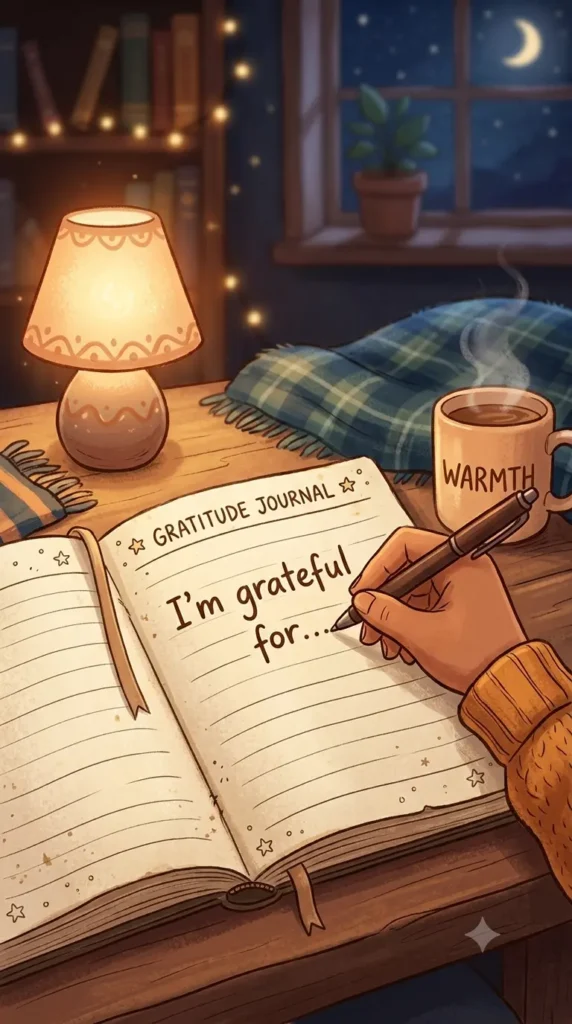
A journal is the easiest entry point. No long paragraphs needed. Just a few lines about something that made the day lighter, a person worth appreciating, or a small moment worth keeping.
Sound too simple? It is. That’s exactly why it works.
Skip the dramatic stuff. A friend who checked in counts. So does a teacher who finally made a confusing topic click, a favorite song on repeat, a quiet walk home, or just having a safe bed to sleep in that night.
Journaling like this also does something for anxious thoughts specifically. It gives the mind a smaller, calmer thing to focus on instead of spiraling. For more on that connection, this piece on gratitude journaling for anxiety breaks down how the habit supports emotional well-being over time.
Pause for Daily Reflection
Reflection goes one step past listing. It asks why something mattered, not just that it happened. A few minutes is enough. Try questions like:
- What went better than expected today?
- Who made today a little easier?
- What’s something I usually skip past but actually appreciate?
These pauses matter more during stressful weeks. That’s when good moments get buried the fastest, and a two-minute check-in can dig them back up.
Take a Gratitude Walk
Movement and mindfulness pair well. During a walk, pay attention to the stuff that usually blurs past: the weather, a familiar tree, a passing conversation, the plain feeling of being outside.
Journaling isn’t for everyone. Some teens find sitting still with a notebook forces the feeling instead of finding it. Walking removes that pressure. The gratitude shows up on its own, one detail at a time.
For a deeper look at how attention and presence work together, Mindful.org’s guide to mindfulness is a solid next stop.
Create a Gratitude Jar
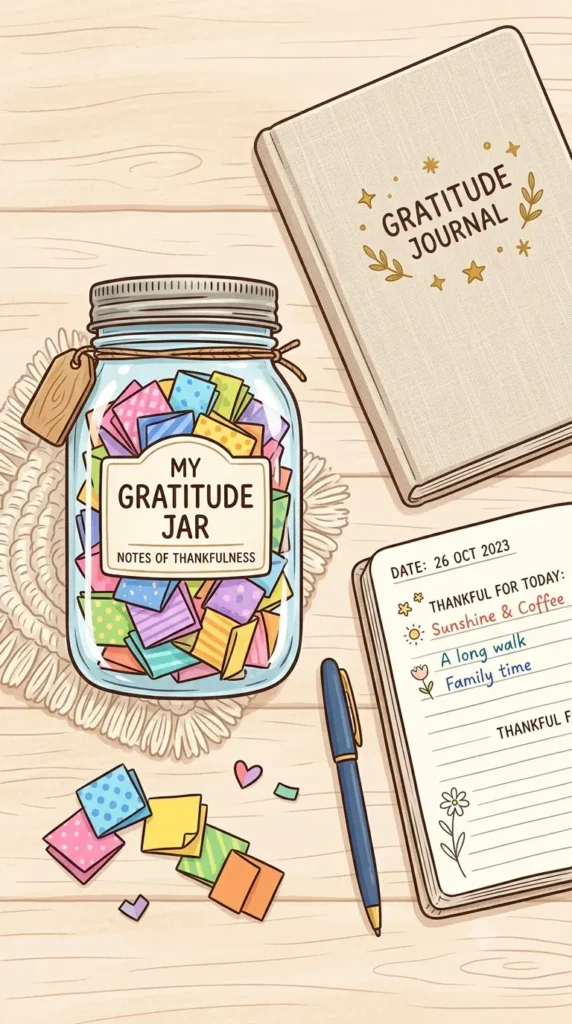
A jar turns thankfulness into something you can hold. Write one thing down. Fold it. Drop it in. That’s the whole exercise.
Over weeks, the jar fills up. On a hard day, dumping it out and rereading old notes can shift the whole mood in minutes. It’s proof, on paper, that good things kept happening even when they were hard to remember.
Try Nightly Gratitude
Before sleep, name one or two things that brought comfort, laughter, or meaning that day. Nothing complicated. Just a mental note before the lights go out.
This one matters because of timing. Most people replay what went wrong right before bed. This flips that script. The day ends on what went right instead.
Curious about the research behind why this actually helps mood and sleep? The Science Direct’s article has real data on it, not just encouragement.
Common Gratitude Mistakes
Gratitude works best when it feels honest. Not like a chore you’re forced to finish. For teenagers, appreciation should open up perspective and growth. It shouldn’t pressure you to ignore struggles. Or compare lives. Or pretend hard feelings don’t exist. At its core, this is about noticing things to be thankful for, not performing them perfectly.
Turning Gratitude Into Toxic Positivity
This isn’t about convincing yourself everything is fine when it clearly isn’t. One of the biggest mistakes is using thanks to dismiss real problems. Saying “others have it worse” to someone who’s stressed, lonely, or drowning in schoolwork doesn’t help. That’s not gratitude.
Being thankful and struggling can live in the same day. A teenager can love their friends and still feel anxious about school. They can appreciate family and still fight with them at home. Both things are true.
Real gratitude adds perspective. Toxic positivity erases honesty.
Research on emotional well-being backs this up. Accepting hard emotions is part of healthy coping, not the opposite of it. The American Psychological Association PsycNet explains that naming and accepting feelings plays a real role in mental health.
Forcing Yourself to Feel Grateful
Gratitude loses its meaning fast when it becomes a nightly checkbox. Writing “I’m grateful for my life” every night sounds nice. But it rarely lands.
A better move: get specific.
Skip “I’m grateful for my friends.” Notice the friend who checked on you after a rough day. Or the classmate who slid you notes before the exam. Or the person who made you laugh right when you needed it.
Small details matter. The goal isn’t a flawless list. It’s training yourself to notice what already counts.
Comparing Your Gratitude to Someone Else’s Life
Gratitude should pull you closer to your own life. Not stack it against someone else’s highlight reel.
Teenagers scroll past curated versions of other people online. New achievements, trips, friendships, milestones. Never the mess behind them. Just the highlight reel. Turning gratitude into a contest, asking “why don’t I have that,” kills the whole point.
Your list doesn’t need to impress anyone. A quiet morning counts. So does a favorite song. So does a teacher who believes in you. So does a safe place to rest.
Ignoring Hard Emotions Instead of Processing Them
Gratitude was never about skipping sadness, frustration, anger, or disappointment. Hard emotions carry real information. They tell you what you need, what matters, and what needs attention.
A teenager who bombs a test can still be thankful for another shot at it. Someone going through a breakup can hold onto the good memories while admitting it still hurts. Both fit at once.
Gratitude doesn’t replace dealing with problems. It’s a tool. It helps you carry problems with a little more perspective. If journaling feels hard during rough stretches, pair it with reflective writing prompts instead.
Final Reflection Questions
Reading a list of things to be thankful for only goes so far. Real change happens when you stop scanning words and start checking your own life against them. That’s the whole point of this section.
These questions push past the surface. They help you notice what you’re grateful for in specific, personal terms. Not vague statements. Actual moments, actual people, actual habits you’d miss if they vanished tomorrow.
What I’m Thankful For Right Now
Finish this sentence: “I’m thankful for…”
Don’t reach for something broad. Broad answers fade fast. Instead, get specific. A friend who called during a rough week counts. So does the fifteen minutes of quiet before everyone else wakes up. So does a habit that finally stopped being hard.
Think about a person, a place, or a part of yourself you’re only just learning to appreciate. That’s where the real answer usually hides.
What I’m Grateful For That I Often Forget
Some of the best things to be thankful for in life disappear the moment they become routine. You stop seeing them. That’s not ingratitude. It’s just how attention works.
So ask yourself a few pointed questions:
- What do I use every single day without a second thought?
- Who improves my life quietly, without asking for credit?
- What chance do I have today that would have thrilled my younger self?
Sit with these for a minute. Don’t rush to answer. The forgotten stuff usually surfaces slower than the obvious stuff.
What Is One Thing I’m Proud of Myself For?
Gratitude isn’t only about what’s outside you. Your own effort counts too. Your own growth counts too. Even the messy, half-finished kind of growth.
Try finishing these:
- A challenge I handled better than expected was…
- A strength I’m grateful to have is…
- Something I’ve gotten better at over time is…
Notice something? None of these ask for perfection. They ask for proof you’re still trying. That’s enough.
What Are Some Things I Want to Appreciate More?
Sometimes gratitude isn’t about finding something new. It’s about paying closer attention to what’s already sitting right in front of you.
Here’s a short list to start noticing more often:
- conversations with people you actually care about
- moments when you feel calm, or just okay
- small freedoms and choices most people overlook
- skills you’re still building, even slowly
Pick one from this list today. Just one. Watch it for the rest of the week.
What Can I Be Thankful For During Difficult Times?
Gratitude doesn’t mean pretending everything’s fine. It doesn’t erase a hard season either. What it can do is sit next to the hard part and still find something worth holding onto.
If anxiety and gratitude feel like they can’t coexist, they can. It’s worth reading more on how gratitude and anxiety can exist at the same time if that tension feels familiar.
Ask yourself:
- What has this experience actually taught me?
- Who or what helped me get through it?
- What strength did I discover that I didn’t know I had?
If naming feelings during hard stretches feels difficult on its own, a gratitude journaling practice built for anxiety can make the process less overwhelming and more concrete.
What Are Three Words That Describe What I’m Grateful For Today?
Sometimes a short answer says more than a long one. Three words can hold more truth than three paragraphs.
Pick three words for today. A person’s name. A feeling. A memory, or a hope for what’s coming. There’s no right answer here. Not really. The goal is just to notice what actually matters to you, right now, today.
Want more structured ways to reflect like this? A resource like 365 journal prompts for mental health gives you a new question for almost every day of the year.
Conclusion
Being thankful isn’t about pretending your life is perfect. Being a teenager is hard enough as it is. Nobody’s asking you to ignore that.
Real thanks starts smaller than people think. It’s a friend who texts back at midnight. A lesson that finally clicked after three tries. A body that gets you through the day, even the rough ones. A second chance you didn’t expect. Five quiet minutes before everyone else wakes up.
Most things to be thankful for hide in plain sight. That’s the whole point. You don’t need a big win or a perfect day to find one. Here’s what actually works: pick one thing today. Just one. Write it down, say it out loud, whatever fits. Then do it again tomorrow.
Sound too simple? It is. That’s exactly why it sticks.
The habit grows on its own after that. One thing becomes three. Three becomes a lens you carry into hard weeks, not just easy ones. That shift matters most when things feel heaviest, not when life’s already going your way.
Start small. Let it build. That’s really all there is to it.
Frequently Asked Questions
What are some things to be thankful for every day?
Everyday thanks doesn’t need a big reason. A steady friend, a full night’s sleep, a small comfort you almost missed count. So does a strength you used without even noticing. That’s the start.
Add a favorite meal, a quiet walk outside, or one talk that made you feel truly heard. Most of this sits in plain view until you stop and look for it. Being thankful for every day usually starts there, not with something huge.
What are 10 things to be grateful for?
List ten things and family lands near the top for most people. Friends. Health. A safe place to sleep at night. Add education, room to grow, and chances that came your way. Nature counts too, along with creativity and the small comforts you lean on daily.
Sound generic? It is, until you swap in your own details. The most useful gratitude list is personal. Yours won’t match anyone else’s, and it shouldn’t.
What are people most thankful for?
Adults and teens don’t always name the same things. Grown-ups tend to point to relationships, health, and past wins that still feel good. Memories show up too, along with moments that brought calm instead of chaos. Teens lean somewhere else. Friendships.
A teacher who noticed them. A hobby that made them feel like themselves. What people are most thankful for usually says something about the stage of life they’re in.
How do I think of things I’m grateful for?
This isn’t about finding something impressive to say. Start smaller. Think of someone who backs you up, or something that made today easier than it could’ve been. A lesson learned the hard way counts too. So does a small moment that handed you a bit of comfort or joy.
And if gratitude feels complicated on the days you’re anxious, can gratitude and anxiety exist at the same time? covers that in more depth. If the question “what are you grateful for” stumps you, ordinary beats extraordinary almost every time.
What are some deep things to be thankful for?
Real thanks isn’t only for the easy stuff. Growth counts. So does a second chance nobody owed you. Bouncing back from something hard belongs on the list too, along with the people who stayed through it.
Some lessons only show up after a rough stretch. That’s still worth naming. Deep gratitude isn’t about what made life easy. It’s about what made you stronger.
What are some unique things to be thankful for?
Most gratitude lists sound the same because most people copy the same ten items. Yours doesn’t have to. A childhood memory nobody else shares. A skill you built slowly, on your own.
A person who shifted how you see things, or a place where your mind finally goes quiet. Those small, specific details are what make a list feel like yours instead of a template.
How do I make a gratitude list?
Write it down. Don’t judge it as you go. People, moments, things you own, skills you’ve built, memories that still land. All of it counts. A short list written honestly beats a long one written on autopilot.
Need a place to start? 365 journal prompts for mental health can hand you a prompt for every day you’re stuck.
What should I write in a gratitude journal?
Keep it plain. “I’m thankful for my best friend.” “I’m grateful for the chance to keep learning.” “Today gave me one peaceful moment.” Lines like that are enough.
Write them often and you’ll start catching the good stuff before it slips past unnoticed. If anxiety makes journaling harder some days, gratitude journaling for anxiety walks through why that happens and what still helps.

It’s Bhaskar!
Well, I am not a psychologist a monk, or a philosopher by training. I’m just an engineering graduate.
‘The Empty Self’ is where I write about that idea, and what it actually means for ordinary life, anxiety, identity, habits, the stories we tell ourselves about who we are. I don’t have a psychology degree, and I’m not offering therapy or clinical advice. What I do have is thought and clarity, and genuine curiosity about why we suffer the way we do and how much of it might loose once we shed this ‘fixed identity’.